

If you searched for “dentist near me crowns”, you may be wondering whether a crown is the right way to protect a weakened tooth or whether a simpler option, such as a filling, could be enough. A dental crown may be recommended when a tooth has lost significant strength, has a large crack or filling, has had certain types of root canal treatment or needs to support a bridge or implant restoration. The right choice depends on your oral health, bite, tooth structure, symptoms, medical history and personal treatment goals.
A dental crown is a custom-made cover that fits over the visible part of a tooth. It can help protect remaining tooth structure, restore chewing function and improve the shape or appearance of a tooth when appropriate. It is not the only option for a damaged tooth, and it is not suitable for every situation, so a dental examination is needed before a dentist can recommend treatment.
When a dental crown may be recommended
A crown is usually considered when a tooth needs more support than a direct filling can provide. Fillings can work well for smaller to moderate areas of decay or damage, but they rely on enough healthy tooth structure around them. When too much tooth is missing, a large filling may place extra stress on the remaining walls of the tooth.
Common situations where a crown may be discussed include:
- A tooth with a very large existing filling that is breaking down or leaving the tooth weak.
- A cracked tooth where the crack pattern suggests the tooth may need extra support.
- A tooth that has been heavily worn by grinding, erosion or an uneven bite.
- A tooth treated with root canal therapy, particularly a back tooth that carries strong chewing forces.
- A tooth with significant decay or fracture that can still be restored.
- A tooth used to support a dental bridge.
- The visible crown attached to a dental implant after healing and planning.
- A tooth with shape, colour or structural concerns where more conservative options are not suitable.
If your “dentist near me crowns” search started because a tooth feels weak, cracked or heavily filled, the aim of an assessment is to understand whether a crown is actually needed or whether a more conservative option may still be suitable.
If you are comparing options for a damaged tooth, this related article on when dental restore treatment can help a damaged tooth explains how dentists may weigh fillings, bonding, crowns, root canal treatment and extraction.
What a dentist near me crowns search can help you clarify
A “dentist near me crowns” search often comes from a practical concern: you may have been told you need a crown, you may have broken a tooth or you may be trying to understand what treatment involves before booking. When choosing where to have an assessment, it can help to look beyond location and ask whether the dentist will explain all reasonable options, including the option of monitoring the tooth if that is clinically appropriate.
For patients in Geelong and nearby areas such as Newtown, Geelong West, East Geelong, Belmont and Highton, a local appointment can also make follow-up visits easier. Crowns often require more than one appointment, and the tooth may need review if you develop sensitivity, discomfort or bite changes after the crown is fitted.
Crown, filling, onlay or veneer: how are they different?
Dental restorations vary in how much tooth they cover and what problem they are designed to manage. A crown covers most or all of the visible tooth above the gumline. A filling replaces a smaller area of missing tooth structure. An onlay is a custom restoration that covers part of the tooth, often one or more cusps, which are the raised chewing points on back teeth. A veneer is usually a thin facing on the front surface of a tooth and is more often considered for selected cosmetic or structural concerns on front teeth.
| Option | What it generally does | When it may be considered |
|---|---|---|
| Filling | Replaces a smaller area of tooth affected by decay or damage | Minor to moderate cavities or chips where enough tooth remains |
| Onlay | Covers and protects part of the tooth surface | Some larger fractures or weakened cusps where a full crown may not be needed |
| Crown | Covers the visible part of the tooth | Heavily restored, cracked, worn or structurally weakened teeth |
| Veneer | Covers the front surface of selected teeth | Certain appearance concerns or minor structural issues, depending on the tooth |
No table can replace an examination. Two teeth that look similar in the mirror may need different care because of crack depth, gum support, nerve health, bite pressure or past dental work.
When a crown may follow root canal treatment
Root canal treatment removes infected or inflamed tissue from inside a tooth, then the inside space is cleaned, shaped and sealed. After treatment, the tooth may need a restoration to protect it and reduce the chance of fracture. A crown is often discussed for back teeth because molars and premolars absorb heavy chewing loads.
That said, not every root canal treated tooth automatically needs the same restoration. A front tooth with good remaining structure may sometimes be restored differently. Your dentist will assess how much tooth remains, where the tooth sits in your bite and whether there are cracks or large existing fillings.
The public health information service Healthdirect explains dental crowns as caps placed over teeth to restore shape, size, strength or appearance. Your own recommendation should still be based on a clinical assessment, not general information alone.
When a crown may not be the right option
A crown can only help if there is enough sound tooth structure, gum support and surrounding bone to make the restoration reasonably stable. If a tooth is split below the gumline, has advanced gum disease or has decay extending too far under the gum, another option may need to be considered.
In some cases, a dentist may discuss root canal treatment before a crown if the tooth nerve is infected or severely inflamed. In other cases, removal may be the more appropriate option, especially if the tooth cannot be predictably restored. If you have been told extraction may be needed, you may find this article on when teeth removal may be the best treatment option helpful for understanding the kinds of factors a dentist may consider.
A dental crown also does not make a tooth immune to future problems. Decay can still develop at the crown edge if plaque collects there, and gum health remains important. Grinding or clenching can also place extra force on a crown and may increase the risk of chipping, wear or loosening.
What happens at a dental crown appointment?
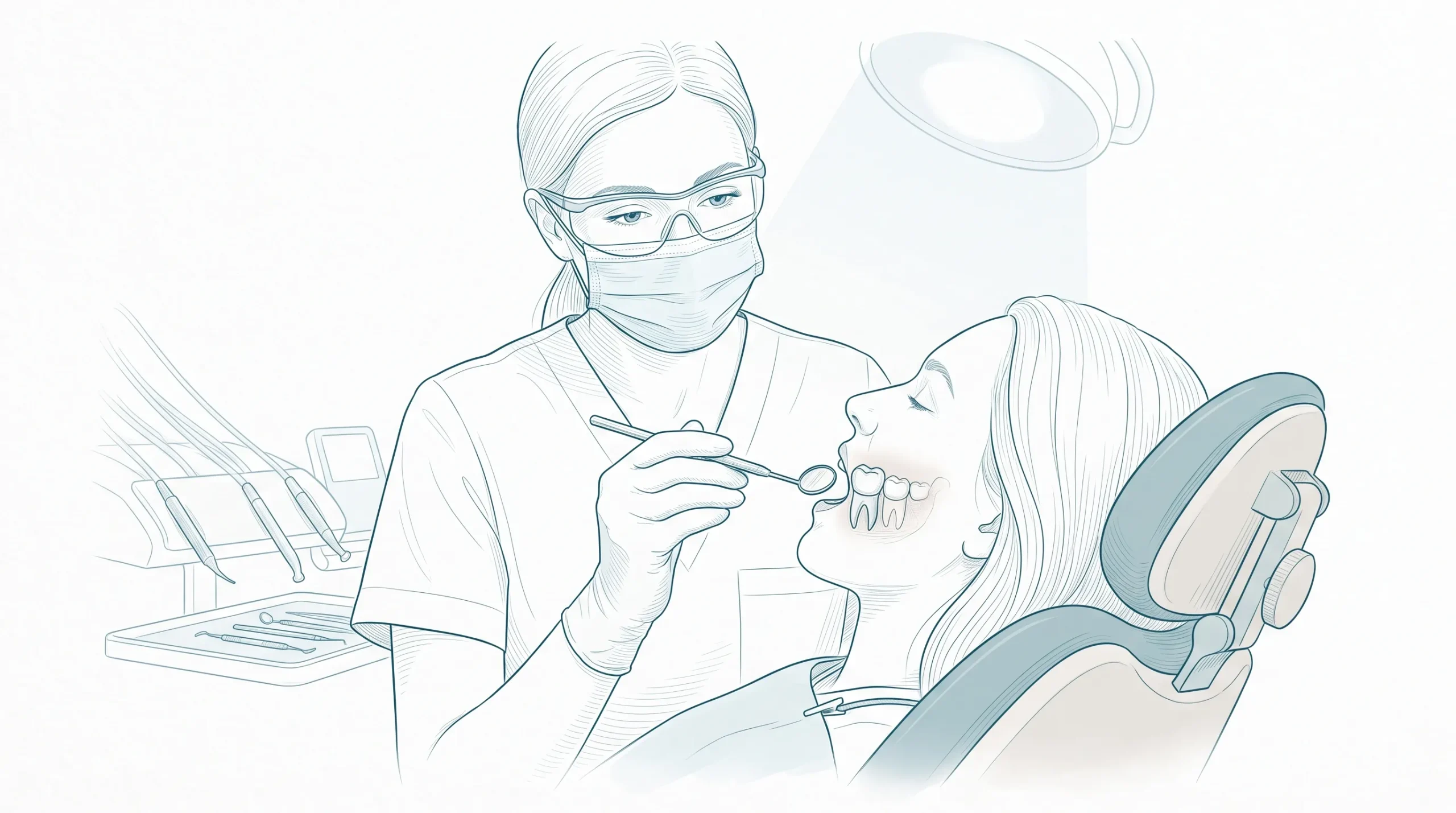
If you book because of a “dentist near me crowns” search, the first visit is usually about assessment rather than immediately committing to treatment. Your dentist may ask about symptoms, check the tooth and surrounding gums, assess your bite and take an X-ray if needed. X-rays can help show decay, old fillings, bone levels and signs of infection, although they do not reveal every crack.
If a crown is suitable, your dentist will explain the likely steps, the materials that may be considered, the expected number of appointments, fees, payment options if available and any alternatives. At Gentle Dental Geelong, treatment planning is based on a consultation tailored to the individual treatment, including general and advanced dental options where appropriate.
A typical crown process may involve reshaping the tooth, taking a scan or impression, placing a temporary crown and then fitting the final crown once it has been made. Some teeth need other treatment first, such as a new foundation filling, gum care or root canal treatment. Your dentist should explain why any additional treatment is recommended.
Crown materials your dentist may discuss
Dental crowns can be made from different materials. The most suitable option depends on the tooth location, bite forces, appearance goals, available space, gum health and whether you have habits such as clenching or grinding.
Ceramic and porcelain crowns are often used where appearance is a key consideration, especially for teeth that show when smiling or speaking. Zirconia is a strong ceramic material that may be considered for teeth exposed to heavier biting forces. Porcelain fused to metal crowns have a metal base with porcelain on top. Full metal crowns are less common for visible areas, but may still be considered in some back tooth situations.
Each material has advantages and limitations. For example, some materials may look more natural in certain areas, while others may be chosen for strength or available tooth space. During a “dentist near me crowns” consultation, your dentist can explain which options are suitable for your tooth rather than treating crown materials as one-size-fits-all.
Possible benefits, risks and limitations
A crown may help protect a weakened tooth and restore a more usable chewing surface. It may also improve the appearance of a damaged or heavily restored tooth when that is part of the treatment goal. These are possible benefits, not guaranteed outcomes, and results vary between patients.
All dental procedures carry potential risks and benefits. With crowns, possible issues can include temporary sensitivity, gum tenderness, bite adjustment, crown loosening, porcelain chipping, decay around the crown edge or the need for further treatment if the tooth nerve becomes inflamed. In some cases, a crown may not last as long as expected because of tooth fracture, decay, gum disease or heavy biting forces.
Good home care and regular dental reviews may help reduce the risk of problems developing around a crown. If you want practical prevention tips, this guide on caring for your teeth between dental visits covers brushing, interdental cleaning and food and drink habits in plain language.
Signs you should have a tooth assessed
You do not need to know whether you need a crown before seeing a dentist. It is reasonable to book an assessment if you notice a broken tooth, a large old filling that feels rough, pain when biting, lingering sensitivity or food repeatedly catching around one tooth. These symptoms do not always mean a crown is needed, but they can indicate that the tooth should be checked.
Prompt care may be appropriate if you have facial swelling, fever, spreading pain, trauma, uncontrolled bleeding or difficulty opening your mouth. These symptoms may suggest infection or another problem that needs timely professional assessment.
For less urgent concerns, bring any relevant information to your appointment, including when symptoms started, what triggers them and whether the tooth has had previous root canal treatment or large fillings. If your search for “dentist near me crowns” is mainly about getting a second opinion, you can ask the dentist to explain what they can see clinically and why one option may be preferred over another.
Questions to ask before agreeing to a crown
A clear conversation can make dental decisions easier. Before going ahead with a crown, consider asking your dentist:
- What is the main reason this tooth may need a crown?
- Are there alternatives such as a filling, onlay, root canal treatment, monitoring or removal?
- What are the benefits, limitations and risks in my situation?
- Which crown materials may be suitable for this tooth and why?
- How many appointments are likely to be needed?
- What should I expect while wearing a temporary crown?
- What fees apply, and will I receive a written treatment plan?
- How should I care for the crown at home?
Your dentist can also explain whether other issues, such as gum inflammation, tooth grinding or an uneven bite, should be managed before or during crown treatment.
Frequently asked questions
Does needing a crown mean my tooth is in bad condition? Not necessarily. A crown may be recommended when a tooth needs more protection than a filling can provide, but the reasons vary. Some crowns are placed on teeth that have large old restorations, cracks, heavy wear or previous root canal treatment.
Can a crown be done in one visit? Some clinics may offer same-day crown technology, while others use a dental laboratory and require more than one visit. The appropriate process depends on the tooth, materials, equipment available and your treatment plan.
Will a crowned tooth still need cleaning? Yes. A crown covers the tooth, but the edge where it meets the natural tooth can still collect plaque. Brushing, cleaning between the teeth and attending recommended check-ups remain important.
Is a crown better than a filling? One is not automatically better than the other. A filling may be suitable for smaller areas of damage, while a crown may be considered when more tooth structure needs protection. Your dentist can assess which option may be appropriate.
What should I do if my crown feels high or uncomfortable? Contact your dentist for advice. A crown that feels high when you bite may need assessment and adjustment. Do not try to adjust it yourself.
How do I choose a dentist near me crowns appointment in Geelong? Look for a dental practice that can assess the tooth, explain your options clearly and provide a treatment plan based on your individual needs. Location matters, but so do communication, follow-up care and a balanced discussion of risks and alternatives.
Discuss dental crowns in Geelong
If you have a cracked, broken or heavily filled tooth, a dental examination can help determine whether a crown may be suitable or whether another option should be considered. Gentle Dental Geelong provides general and advanced dentistry, including crowns and bridges, with treatment discussions tailored to each patient’s needs.
To discuss your concerns after a “dentist near me crowns” search, you can contact Gentle Dental Geelong to arrange an assessment in Geelong. Your dentist can assess your oral health and explain the potential benefits, risks, limitations and alternatives before you decide whether to proceed.