

A damaged tooth can often be restored when enough healthy tooth structure remains and the surrounding gum, bone and bite can support a repair. If you are looking into dental restore options, the right choice depends on what caused the damage, how deep it goes and whether the nerve inside the tooth has been affected.
For some people, restoration may be as straightforward as a filling or bonding. For others, a crown, root canal treatment or a discussion about tooth removal may be more appropriate. A dentist needs to assess the tooth before recommending treatment, as cracks, decay and trauma are not always visible from the outside.
What does it mean to restore a damaged tooth?
Restoring a tooth means repairing or rebuilding it so it can function more comfortably and be easier to clean. Depending on the situation, this may also improve the tooth’s appearance, especially if the damage is on a front tooth.
Common reasons a tooth may need restoration include:
- Tooth decay that has created a hole or weakened the tooth
- A chipped or broken edge
- A crack caused by biting pressure, grinding or trauma
- An old filling that has cracked, leaked or broken down
- Tooth wear from grinding, acid erosion or heavy biting forces
- Damage after an injury or accident
- A tooth that has had root canal treatment and needs protection
Healthdirect explains that tooth decay can lead to holes in teeth, pain, infection and, in some cases, tooth loss if it is not managed. That does not mean every damaged tooth is in danger of being lost. It does mean early assessment can give you more treatment options.
What affects whether dental restore treatment is suitable?
A tooth is more likely to be restorable when the damage is limited, the remaining tooth is strong enough and the supporting tissues are healthy. Your dentist will look at the tooth as part of the whole mouth, not just as a single broken area.
How much healthy tooth remains
Restorations need something stable to attach to. A small chip or cavity may be repaired with a filling or bonding material. If a large part of the tooth is missing, a crown or partial crown may be considered because it can cover and protect more of the remaining structure.
If very little sound tooth remains above the gumline, restoring it may be difficult or may not be predictable. In that situation, your dentist may explain the limitations of trying to repair the tooth as well as alternatives.
Whether the nerve is healthy
Inside each tooth is the pulp, which contains nerves and blood vessels. If decay, a crack or trauma reaches this area, the tooth may become inflamed or infected. Symptoms can include lingering sensitivity, throbbing pain, swelling or tenderness when biting.
When the pulp is affected, a filling alone may not be enough. Root canal treatment may be discussed if the tooth can otherwise be restored. If you are unsure what that involves, Gentle Dental Geelong has a plain-English explanation of what to expect with root canal treatment.
The type and direction of a crack
Not all cracks behave the same way. Some are shallow and mainly affect enamel, the hard outer layer of the tooth. Others travel deeper into the tooth or extend under the gum.
A crack that stops within the crown of the tooth may sometimes be managed with a restoration such as a crown. A crack that travels down the root is more difficult and may mean the tooth cannot be predictably saved. Dental X-rays, bite tests and careful examination help your dentist understand how far the crack may extend, although fine cracks can still be challenging to assess.
Gum and bone support
A tooth also needs healthy support from the gums and jawbone. If there is advanced gum disease, significant bone loss or mobility, restoration may not be suitable even if the visible tooth could be repaired.
This is why a dental examination often includes checking the gums as well as the tooth itself. A restoration placed on an unstable tooth may not last as expected, so the foundation matters.
Your bite and habits
Heavy biting forces, tooth grinding and clenching can place extra pressure on restorations. This does not automatically rule out treatment, but it can influence the material used, the design of the restoration and whether protective options such as a night guard may be discussed.
Your dentist may also ask about diet, reflux, dry mouth or habits such as chewing ice or pens, as these can contribute to tooth wear or repeated fractures.
Common ways a damaged tooth may be restored
The most suitable treatment depends on the diagnosis. The table below gives a general guide, but it should not replace a dental examination.
| Type of damage | Possible restoration options | Important considerations |
|---|---|---|
| Small chip or rough edge | Smoothing, bonding or a small filling | May be suitable when damage is shallow and the tooth is otherwise healthy |
| Small to moderate decay | Tooth-coloured filling | The decay must be removed first and enough tooth must remain to support the filling |
| Larger fracture or weakened tooth | Crown, onlay or partial crown | May help protect remaining tooth structure, but tooth preparation is usually required |
| Front tooth chip or surface concern | Bonding or veneer in selected cases | Suitability depends on bite, enamel, oral health and cosmetic goals |
| Damage reaching the pulp | Root canal treatment followed by a filling or crown | Not every infected or painful tooth is suitable for root canal treatment |
| Tooth too damaged to support repair | Extraction may be discussed | Replacement options can be considered after assessment |
Fillings, crowns and cosmetic options
A filling is often used for smaller areas of decay or damage. The dentist removes the weakened tooth material, shapes the area and places a restorative material. Tooth-coloured filling materials are commonly used, although the choice of material depends on the tooth, size of the repair and biting forces.
A crown covers more of the visible tooth and may be considered when a tooth is heavily filled, cracked or weakened. Crowns can be made from different dental materials. Your dentist can explain the advantages, limitations and maintenance needs of each option.
Bonding and veneers may be discussed for selected front teeth, especially when appearance is also a concern. These options still require healthy teeth and gums. Veneers are not suitable for every chipped or worn tooth, particularly where there is heavy grinding or not enough enamel for bonding. You can read more about this option in Gentle Dental Geelong’s article that explains what veneers may involve.
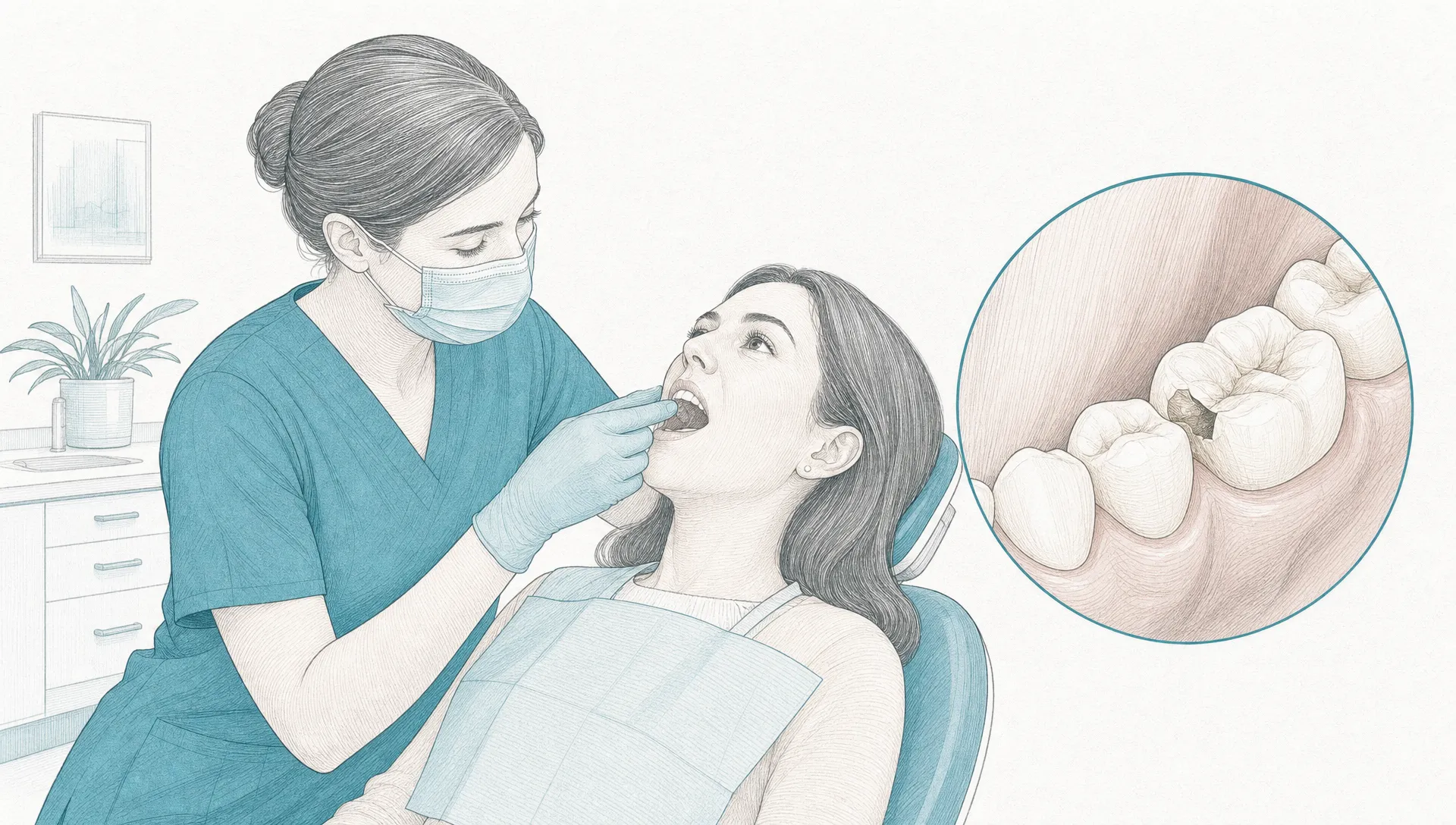
What happens during an appointment for a damaged tooth?
An appointment usually starts with a discussion about your symptoms and what happened. Your dentist may ask when the tooth broke, whether it hurts to bite, whether sensitivity lingers and whether there has been swelling, a bad taste or fever.
The examination may include:
- Looking closely at the tooth and surrounding gums
- Checking old fillings, cracks, bite marks and areas of decay
- Testing sensitivity to cold or tapping in some cases
- Asking you to bite on a small instrument to help locate cracks
- Taking dental X-rays if needed to assess decay, roots, bone or infection
- Discussing your medical history, medications and treatment preferences
After this, your dentist can explain whether the tooth appears restorable and what options may be reasonable. You should be given information about potential benefits, risks, likely steps, alternatives and what may happen if treatment is delayed or not undertaken.
In some cases, treatment can start at the same visit. In others, the dentist may need more information or may recommend staged care, especially if pain, infection, swelling or complex cracks are involved.
When might a tooth not be restorable?
Dentists generally consider saving natural teeth where it is appropriate, but restoration is not always the safest or most predictable option. A tooth may be difficult or unsuitable to restore if:
- A crack extends below the gumline or down the root
- Decay has destroyed too much tooth structure
- The tooth has severe bone loss or mobility
- The root is fractured
- Infection cannot be predictably managed
- The tooth cannot be restored in a way that allows cleaning and function
- The expected risks or limitations outweigh the likely benefit
If a tooth cannot be reasonably restored, your dentist may discuss removal and, where suitable, replacement options such as a bridge, denture or dental implant. For a more detailed explanation of this decision, you may find Gentle Dental Geelong’s article on when teeth removal may be the best treatment option helpful.
Tooth removal is not the only next step for every severely damaged tooth, but it is sometimes the most appropriate option after assessment. If a tooth is removed, replacement is a separate discussion and depends on your oral health, bone, budget, medical history and preferences.
What are the possible risks or limitations of restoring a tooth?
All dental procedures have potential benefits and risks. A restored tooth may feel more comfortable, function better or be easier to clean, but outcomes vary between patients and no restoration lasts forever.
Possible limitations can include short-term sensitivity, the need for further treatment if symptoms continue, fracture of the tooth or restoration, wear over time and the possibility that deeper damage is found once treatment begins. A tooth with a large restoration may also need a crown later. A tooth that has had root canal treatment may still require monitoring.
The lifespan of a restoration depends on many factors, including oral hygiene, diet, grinding, the size of the repair, material choice and regular dental care. Your dentist can explain what maintenance may be needed for your situation.
When should you seek prompt dental advice?
Some damaged teeth can wait for a routine appointment, but certain symptoms should be assessed promptly. Contact a dentist if you have facial swelling, swelling inside the mouth, fever, pus, a bad taste, severe pain, a broken tooth with exposed inner tissue or pain when biting that is getting worse.
If an injury has knocked a permanent tooth out, time matters. Handle the tooth by the crown, not the root, and seek urgent dental advice. If there is difficulty breathing, difficulty swallowing, significant facial trauma or spreading swelling, seek emergency medical care.
For less urgent damage, such as a small chip without pain, it is still sensible to arrange an assessment. Small cracks and rough edges can trap plaque or worsen with chewing, and early advice may help you understand your options before the tooth becomes more difficult to repair.
Can you prevent a restored tooth from breaking again?
Not every fracture can be prevented, but daily habits can reduce avoidable stress on teeth and restorations. Brush twice daily with fluoride toothpaste, clean between teeth, limit frequent sugary snacks and drinks and avoid chewing hard objects.
If you grind or clench your teeth, mention this at your appointment. A dentist can check for signs of wear and discuss whether a protective appliance or other management may be suitable. Regular check-ups can also help identify leaking fillings, early decay or small cracks before they become more complex.
If you play contact sport, a professionally fitted mouthguard may be worth discussing. Over-the-counter mouthguards vary in fit and protection, so your dentist can explain options based on the sport and your mouth.
Dental restore options in Geelong
If you have a chipped, cracked, painful or heavily filled tooth, a dental examination can help determine whether it may be restored and which options are appropriate. Gentle Dental Geelong provides general and restorative dental care in Geelong, with treatment planning based on your oral health, symptoms and individual needs.
People visit the clinic from Geelong and nearby areas such as Newtown, Geelong West, East Geelong, Belmont and Highton. Local care can be helpful when a tooth needs review, staged treatment or follow-up after a restoration.
A dental restore appointment is not about committing to a particular procedure before you understand your options. It is an opportunity to find out what has happened to the tooth, what choices may be available and what the risks and limitations are for each approach.
Frequently Asked Questions
Can every broken tooth be restored? No. Some broken teeth can be restored with a filling, crown, bonding or root canal treatment, but others may have cracks, decay or gum support problems that make restoration unsuitable. A dentist needs to assess the tooth before advising you.
Is a crown always needed for a damaged tooth? Not always. A small chip or cavity may only need smoothing, bonding or a filling. A crown may be considered when a tooth is weakened, cracked or heavily filled, but suitability depends on the amount of tooth remaining and your bite.
Can a tooth with an infection still be restored? Sometimes. If the tooth has enough remaining structure and the infection can be managed, root canal treatment followed by a restoration may be considered. In other cases, removal may be more appropriate. Your dentist can explain the options after an examination.
What if my tooth does not hurt? A damaged tooth can still need assessment even if it is not painful. Some cracks, decay or failing fillings cause little discomfort at first. Pain is only one sign your dentist considers.
How soon should I see a dentist for a chipped or cracked tooth? If there is swelling, severe pain, fever, trauma or a tooth has been knocked out, seek urgent advice. For smaller chips without pain, book a routine dental appointment so the tooth can be checked and smoothed or restored if needed.
A damaged tooth is not always a lost tooth. With the right assessment, your dentist can explain whether restoration may be suitable, what treatment could involve and what alternatives should be considered. To discuss a damaged tooth, you can book an appointment with the team at Gentle Dental Geelong.