

Advanced dental treatment may be considered when a tooth, bite or oral health concern needs more than a routine check-up, clean or simple filling. If you have searched for “dentist advanced dental” because you have been told you may need a crown, implant, wisdom tooth removal or another involved procedure, the main thing to know is that these options should only be recommended after a proper dental assessment.
For patients in Geelong and nearby areas such as Newtown, Geelong West, Belmont, Highton and East Geelong, understanding why a treatment is being discussed can make the decision feel clearer. Your dentist should explain the reason for treatment, the likely alternatives, the possible risks and what may happen if you decide not to proceed.
What advanced dental treatment can mean
Advanced dental treatment generally refers to care that is more involved than routine preventive dentistry. It may require additional planning, multiple appointments, dental imaging, laboratory-made restorations, surgical care or coordination with other dental professionals.
This does not mean the treatment is automatically urgent or that it is right for every patient. A search for “dentist advanced dental” care often starts when someone wants to understand whether a more complex option is genuinely necessary for their situation.
Common examples may include:
- Crowns, bridges or onlays for teeth that need more support than a filling can provide
- Root canal treatment when the nerve inside a tooth is inflamed or infected
- Dental implants to replace certain missing teeth, where clinically suitable
- Wisdom teeth removal, especially when teeth are impacted or repeatedly causing problems
- Invisalign or other orthodontic options for selected bite or alignment concerns
- Porcelain veneers or cosmetic dentistry where appearance concerns are being assessed
- Sedation or sleep dentistry options for suitable patients and procedures
If your needs are simpler, general care may be enough. For background on routine dental services, Gentle Dental Geelong has a separate guide on what general dental treatment may include.
When a dentist advanced dental assessment may be considered
A more detailed assessment may be recommended when the decision is not as straightforward as “fill it” or “monitor it”. The aim is to work out what is happening, what options are realistic and which approach may suit your oral health, medical history and preferences.
When a tooth is cracked, heavily filled or badly damaged
Teeth can sometimes be restored with a standard filling. In other cases, there may not be enough strong tooth structure left to predictably support a simple restoration.
During a dentist advanced dental assessment, the dentist may check how much tooth remains, whether the crack extends below the gum, whether the nerve is affected and how the tooth meets the opposing teeth when you bite. Depending on these findings, options may include a larger filling, bonded restoration, onlay, crown, root canal treatment or removal of the tooth.
A damaged tooth is not always automatically lost. The decision depends on factors such as symptoms, the depth of decay or fracture, gum support, bite forces and whether the tooth can be cleaned and maintained. You can read more about this decision process in the article on when dental restore treatment can help a damaged tooth.
When a tooth has nerve infection or ongoing pain
The pulp is the soft tissue inside the tooth that contains nerves and blood vessels. If it becomes inflamed or infected due to deep decay, trauma or a crack, a dentist may discuss root canal treatment or extraction.
Root canal treatment aims to clean and seal the inside of the tooth so it can potentially be kept. It is not suitable in every case, and some teeth still require further treatment such as a crown to reduce the risk of fracture. Extraction may be discussed when a tooth cannot be restored predictably or when the patient prefers a different option after understanding the benefits and limitations.
When teeth are missing or may need to be removed
Missing teeth can affect chewing, speech, the way nearby teeth move and the way bite forces are distributed. Not every missing tooth needs replacement, but it is worth discussing the consequences of leaving a gap compared with replacing it.
Possible options may include a denture, bridge or dental implant, depending on the location of the gap, gum and bone health, medical history, budget and personal preference. Implant treatment involves surgery and healing time, so suitability needs to be assessed carefully. For a more detailed outline, see Gentle Dental Geelong’s guide to dental implant treatment stages in Geelong.
When wisdom teeth are impacted or repeatedly causing problems
Wisdom teeth are the last adult molars to develop. Some come through without trouble, some remain partly covered by gum and others sit at an angle against neighbouring teeth.
A dentist may consider advanced planning for wisdom teeth when there is repeated gum infection around the tooth, decay that cannot be cleaned properly, cyst-related concerns, damage to nearby teeth or orthodontic reasons. X-rays are often used to assess the tooth position and its relationship to important nearby structures, such as nerves or the sinus.
All surgical procedures carry potential risks. With wisdom tooth removal, these can include swelling, bleeding, dry socket, infection, altered sensation and delayed healing. The likelihood and seriousness of these risks varies, so they should be discussed before treatment.
When bite, crowding or tooth position affects function
Some patients ask about orthodontic treatment because of crowding or spacing. Others are referred for an assessment because their bite may be contributing to tooth wear, chipping, difficulty cleaning or uneven pressure on certain teeth.
A dentist advanced dental discussion should also include whether alignment treatment is suitable, whether gum and bone support are healthy enough and whether other dental work is needed first. Invisalign and similar clear aligner systems can be considered for selected cases, but they are not suitable for every bite problem. More complex orthodontic concerns may require referral to an appropriately qualified dental specialist.
What an appointment for advanced care may involve
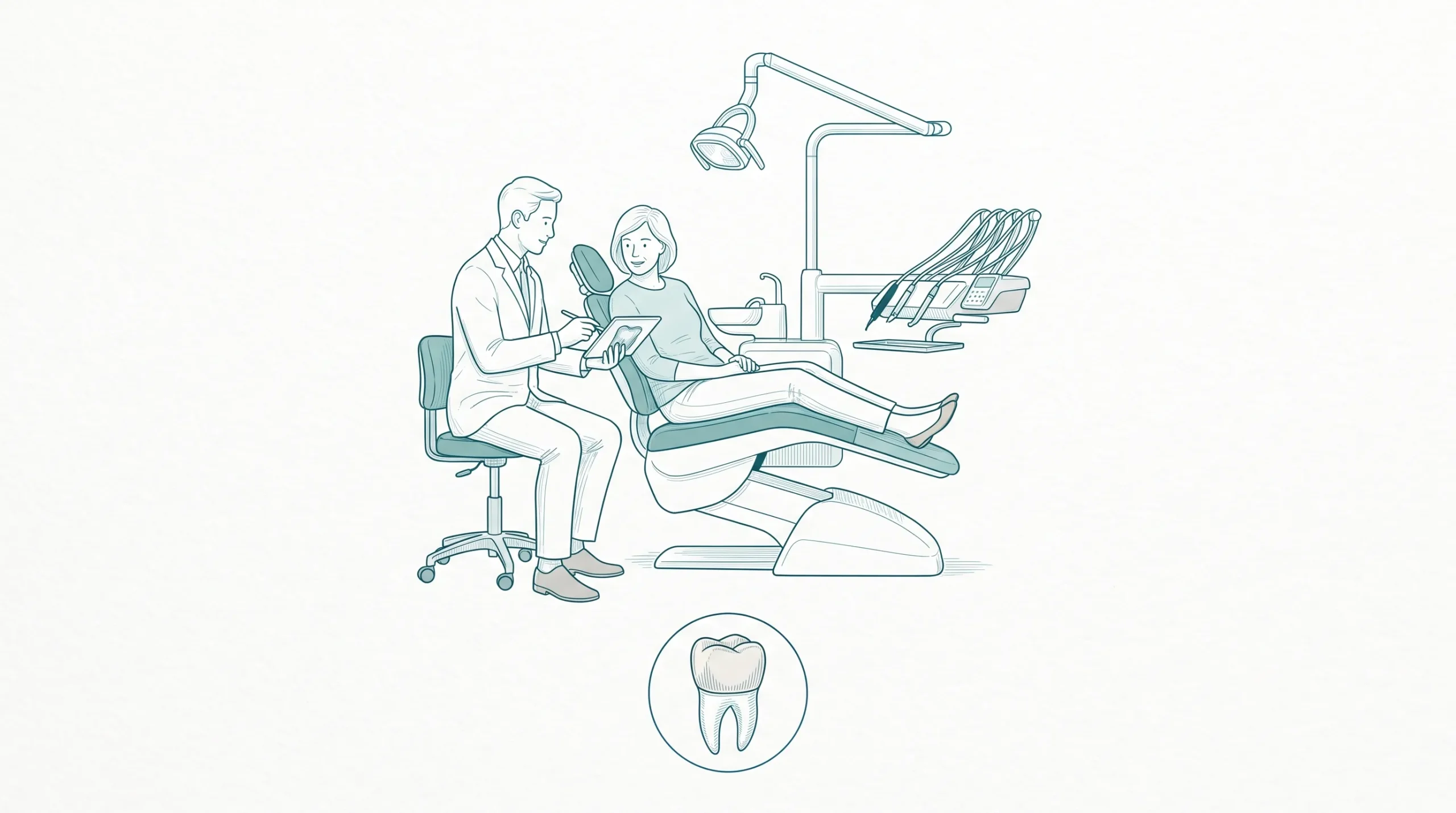
An advanced dental appointment is usually about information gathering before a treatment recommendation is made. The dentist may ask about your symptoms, dental history, medical conditions, medications, previous dental experiences and what you want to understand or improve.
The assessment may involve:
- Checking the teeth, gums, bite and soft tissues of the mouth
- Taking dental X-rays when clinically appropriate
- Assessing old restorations, cracks, tooth wear or missing teeth
- Discussing options, including doing nothing for now if monitoring is reasonable
- Explaining likely treatment stages, limitations and possible risks
- Providing an estimate or plan before you decide whether to proceed
For patients who feel anxious, clear explanations and a slower pace can make appointments easier to manage. Sedation or sleep dentistry may be discussed for some procedures and some patients, but suitability depends on health history, the type of procedure and clinical judgement.
Benefits, limitations and risks to weigh up
A dentist advanced dental plan should not be presented as the only path unless there is a clear clinical reason. Good treatment planning usually compares the likely benefits, limits and risks of each option.
| Situation being assessed | Options that may be discussed | Key considerations |
|---|---|---|
| Large broken filling or cracked tooth | Filling, onlay, crown, root canal treatment or extraction | How much tooth remains, symptoms, bite pressure and long-term maintenance |
| Missing tooth | No replacement, denture, bridge or implant | Gum health, bone levels, cleaning access, cost, surgery and personal preference |
| Impacted wisdom tooth | Monitoring, cleaning advice, removal or referral | Symptoms, tooth position, age, anatomy and surgical risk |
| Crowding or bite concern | Monitoring, aligners, braces or referral | Gum health, severity, compliance and whether the bite can be treated predictably |
| Cosmetic concern | Whitening, bonding, veneers, crowns or no treatment | Tooth structure, reversibility, maintenance and realistic expectations |
All dental procedures carry potential risks and benefits. For example, crowns can help protect weakened teeth in suitable cases, but they involve removing some tooth structure and may need future maintenance or replacement. Implants can be useful for some missing teeth, but they require surgery, healing and ongoing cleaning, and they may not be suitable for everyone.
Cosmetic procedures also need careful discussion. Veneers, crowns and bonding can change the appearance of teeth, but outcomes vary and maintenance is usually required over time. Normal differences in tooth shape, colour and alignment do not automatically need treatment.
Alternatives are part of the conversation
For some patients, dentist advanced dental planning involves comparing active treatment with simpler alternatives. This is especially relevant when symptoms are mild, the condition is stable or the patient has practical concerns such as time, finances or health considerations.
Alternatives may include monitoring, preventive advice, improving home care, replacing an old filling, using a mouthguard for grinding, choosing a removable denture instead of a fixed option or seeking a specialist opinion. Sometimes a staged plan is appropriate, where the most important issue is managed first and other decisions are made later.
A balanced discussion should also include what may happen if treatment is delayed or declined. In some cases, monitoring is reasonable. In others, delaying care may allow decay, infection or fracture to progress. Your dentist can explain the specific risks based on your examination rather than making general assumptions.
Cost and planning considerations in Australia
Advanced treatment often involves more planning and may cost more than routine care. Fees can vary because procedures differ in complexity, materials, laboratory involvement, imaging needs, appointment time and whether referral is required.
If cost is a concern, dentist advanced dental treatment can usually be discussed in stages where clinically appropriate. Gentle Dental Geelong offers payment plans, and your dentist can explain what is included in a proposed plan before you decide how to proceed. Always ask for a written estimate if you are unsure.
For children, some basic dental services may be covered under Medicare’s Child Dental Benefits Schedule if eligibility requirements are met. This scheme does not cover every type of treatment, and limits apply. You can check current eligibility information through Services Australia’s Child Dental Benefits Schedule.
Private health insurance can also vary. Before starting significant treatment, it may be worth contacting your health fund with the item numbers from your dentist so you can understand any rebate that may apply.
When to seek dental advice sooner
You do not need to wait until a concern becomes severe before asking for advice. A dental examination can help identify whether a problem can be monitored, managed simply or assessed for more advanced care.
Consider arranging an appointment if you have:
- Persistent toothache or pain when biting
- Facial swelling, gum swelling or a bad taste near a tooth
- A broken tooth, lost filling or loose crown
- Wisdom tooth pain that keeps returning
- Bleeding gums that do not improve with routine care
- A missing tooth and you want to understand replacement options
- Concerns about tooth wear, crowding or bite changes
If you have facial swelling, fever, difficulty swallowing, difficulty breathing or spreading infection symptoms, seek urgent medical or dental advice. Healthdirect provides general Australian guidance on toothache and when to get help.
Questions to ask before agreeing to treatment
Before starting any advanced dental procedure, it is reasonable to ask questions. This does not make you difficult, it helps you make an informed decision.
Useful questions include:
- What is the diagnosis or main concern?
- What are my treatment options, including no treatment for now?
- What are the benefits, risks and limitations of each option?
- How many appointments may be involved?
- Will I need X-rays, scans, laboratory work or referral?
- What ongoing maintenance might be needed?
- What are the estimated costs and item numbers?
- What should I expect during recovery, if surgery is involved?
The Australian Dental Association’s patient website, Teeth.org.au, also provides general oral health information for Australians who want to understand dental topics in plain language.
Frequently Asked Questions
What is the difference between general and advanced dental treatment? General dental treatment usually includes check-ups, cleans, fillings, gum care and preventive advice. Advanced treatment is often more involved and may include crowns, implants, wisdom teeth removal, root canal treatment, orthodontic planning or cosmetic procedures.
Does needing advanced dental treatment mean my teeth are in very poor condition? Not necessarily. Advanced care may be considered for many reasons, including a single cracked tooth, a missing tooth, an impacted wisdom tooth or a bite concern. A clinical assessment is needed to understand the cause and suitable options.
Is advanced dental treatment suitable for everyone? No. Suitability depends on oral health, medical history, anatomy, treatment goals, budget and personal preferences. Your dentist can explain whether an option may be suitable and discuss alternatives.
Can I choose not to go ahead with advanced treatment? In many cases, yes. Your dentist should explain the likely consequences of delaying or declining treatment so you can make an informed choice. Some conditions need prompt care, especially infection, swelling or significant pain.
Can anxious patients discuss sedation or sleep dentistry? Yes, anxious patients can ask about comfort options. Sedation may be considered for some patients and procedures, but it is not appropriate for everyone and requires a suitability assessment.
Making an informed decision in Geelong
Advanced dental care is not about doing more treatment for the sake of it. It is about understanding when a more involved option may be appropriate, what the alternatives are and what risks or maintenance may come with each choice.
If you are unsure whether you need routine care or a more detailed assessment, Gentle Dental Geelong can examine your teeth and explain your options in plain language. To discuss your concerns, you can book an appointment with Gentle Dental Geelong and ask what may be suitable for your individual circumstances.