

If you are researching dental implants Geelong, you may already know the treatment is not usually completed in one appointment. Implant treatment is staged because your dentist needs to assess your oral health, plan the position of the implant, allow healing time and fit the final tooth replacement safely.
A dental implant is a small fixture placed into the jaw to support a crown, bridge or denture. It may be considered when one or more teeth are missing, but it is not suitable for everyone. Your dentist will need to assess factors such as gum health, bone volume, bite forces, medical history, smoking status, medications and your treatment goals before recommending any option.
This guide explains the usual dental implant treatment stages, what you can expect at each point and when to ask questions before making a decision.
Dental implants Geelong: why treatment is completed in stages
Implant treatment involves both a surgical stage and a restorative stage. The surgical stage is where the implant fixture is placed into the bone. The restorative stage is where the visible tooth replacement, such as a crown, is attached after healing.
The staged approach allows time for planning, tissue healing and review. It also gives your dentist the opportunity to check that the implant site is stable before moving to the next step. Treatment experiences and timeframes vary, especially if a tooth needs to be removed first or if additional procedures are required.
A staged process is familiar in many areas where the final result depends on sound planning and preparation. For example, renovation and interior transformation work also tends to move through assessment, design, preparation and completion rather than happening all at once. Dental implants are different in purpose and clinical requirements, but the same general idea applies: careful sequencing matters.
Stage 1: consultation and suitability assessment
The first stage is a consultation. This appointment is about understanding your oral health, the missing tooth or teeth and whether an implant may be an appropriate option. Your dentist may ask about your dental history, medical conditions, medications, smoking or vaping and what you would like to achieve from treatment.
A clinical examination usually includes checking the teeth, gums, bite and the space where the tooth is missing. X-rays or three-dimensional imaging may be recommended to assess the jawbone and surrounding structures. Imaging helps your dentist review bone height, bone width and the position of nearby nerves or sinuses.
This appointment should also include a discussion about alternatives. Depending on your circumstances, these may include:
- A dental bridge
- A partial or full denture
- Orthodontic space management in selected cases
- Leaving the space untreated, where appropriate
- Referral for specialist assessment if your needs are complex
If you are still deciding whether implants are worth discussing, Gentle Dental Geelong has a separate guide on when to consider dental implants for missing teeth that explains common situations where this option may be raised.
Stage 2: treatment planning and informed consent
If implant treatment appears suitable, the next step is planning. This is where your dentist explains the proposed treatment sequence, likely appointments, estimated timeframe, fees, alternatives and possible risks. You should have enough information to make an informed decision without feeling rushed.
Planning may involve deciding:
- The number of implants needed
- Whether a crown, bridge or denture will attach to the implant
- Whether a tooth needs to be removed before implant placement
- Whether healing time is needed after an extraction
- Whether additional procedures, such as bone grafting, may be needed
- Whether any medical clearance or referral is appropriate
Dental implant treatment carries potential risks and benefits, as with all dental procedures. Possible risks may include infection, swelling, bleeding, discomfort, delayed healing, implant failure, damage to nearby structures, sinus-related complications for upper back teeth or altered sensation if nerves are affected. The risk profile is different for each person, which is why a clinical assessment matters.
The Australian Dental Association’s patient information site, Teeth.org.au, provides a useful overview of dental implants and general considerations for patients who want to understand the topic further.
Stage 3: preparing the mouth for implant treatment
Some patients can move from planning to implant placement. Others may need preparation first. This does not mean anything has gone wrong. It simply means the mouth may need to be made healthier or more stable before implant treatment can be considered.
Preparation may include treating gum disease, managing tooth decay, adjusting oral hygiene routines or removing a tooth that cannot be restored. If a tooth has been missing for some time, the bone in that area may have changed. In some situations, your dentist may discuss grafting or referral for more advanced assessment.
Gum health is particularly important. Dental implants do not get tooth decay, but the tissues around them can still become inflamed or infected. A condition known as peri-implant disease can affect the gum and bone supporting an implant. Good oral hygiene, regular maintenance and early management of inflammation are important for long-term care.
For patients from Geelong, Newtown, Geelong West, East Geelong, Belmont or Highton, the preparation stage can also be a practical time to discuss appointment timing, work commitments, transport and support after surgical appointments if needed.
Stage 4: implant placement
Implant placement is the surgical appointment where the implant fixture is positioned in the jawbone. The details vary according to the tooth position, the number of implants and the treatment plan.
Your dentist will explain the anaesthetic or sedation options that may be suitable for your circumstances. Gentle Dental Geelong offers sleep dentistry, although suitability depends on your medical history, anxiety level, procedure type and clinical needs. It is reasonable to ask what options are available, what they involve and whether someone needs to accompany you after the appointment.
During implant placement, the dentist creates access to the bone, prepares the site and places the implant fixture. The gum is then managed according to the planned healing approach. Some implants heal under the gum, while others have a healing cap visible above the gum. Your dentist will explain which approach is being used and why.
After the appointment, you will usually receive instructions about eating, cleaning, medication if prescribed and signs that require follow-up. Mild swelling, bruising or discomfort can occur after oral surgery. If pain worsens, bleeding is difficult to control, swelling increases significantly or you feel unwell, you should contact your dentist or seek medical advice.
Stage 5: healing and integration
After placement, the implant needs time to heal within the bone. This process is often called osseointegration, which means the bone forms a close connection with the implant surface. Healing time varies and depends on your health, bone quality, the implant site and whether additional procedures were done.
This stage may feel quiet because there may not be much to see day to day. It is still an important part of treatment. Your dentist may schedule review appointments to check healing, remove sutures if required and confirm that the gum tissues are settling as expected.
You may have a temporary tooth replacement during healing in some cases. Temporary options vary and are not suitable for every situation. Your dentist can explain whether a temporary denture, temporary crown or another option is appropriate for your mouth and bite.
Stage 6: impressions, scans and the final restoration
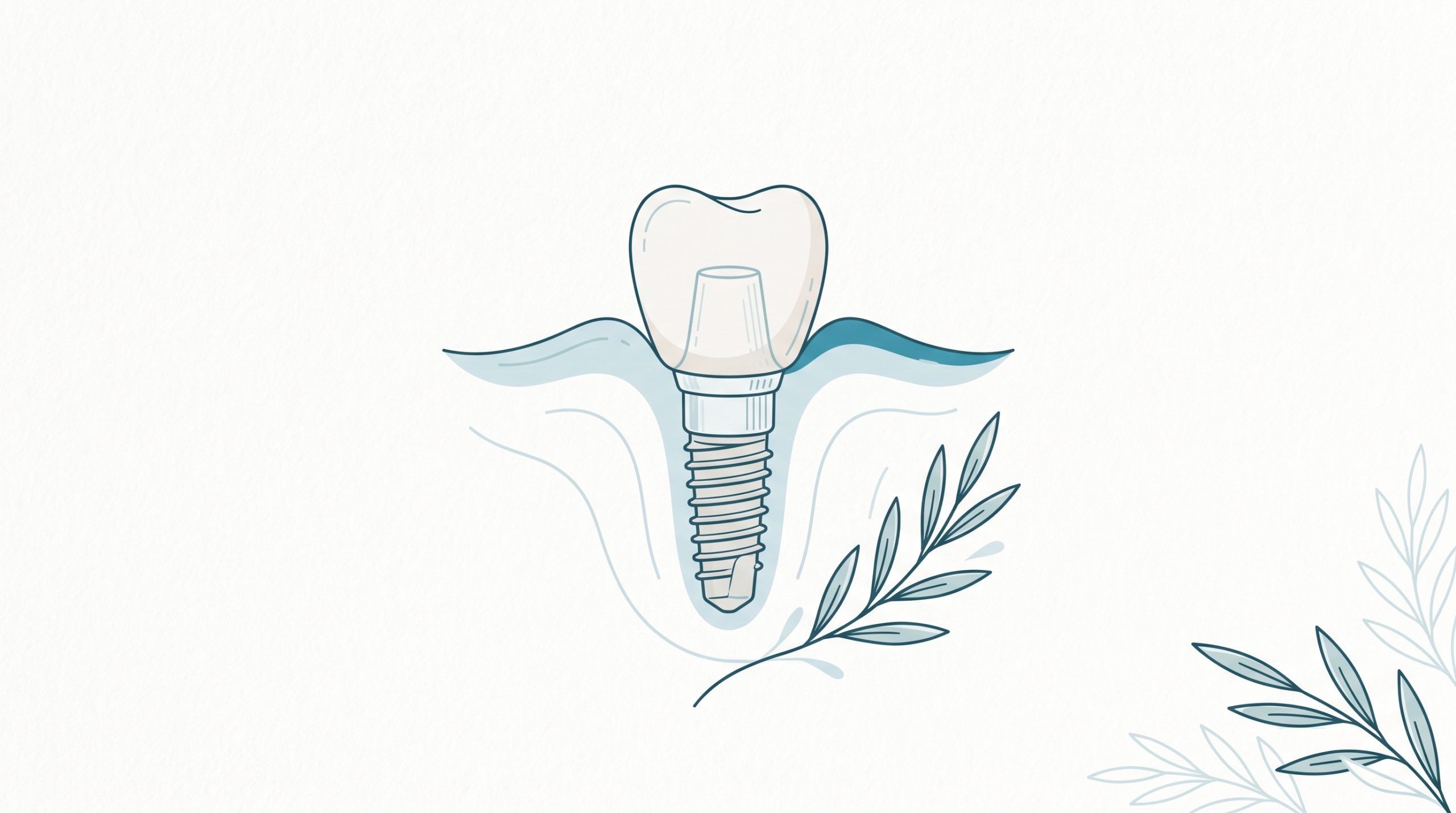
Once the implant has healed sufficiently, your dentist can plan the final restoration. This is the part that looks and functions like a tooth or set of teeth. It may be a single crown, an implant-supported bridge or an implant-supported denture, depending on the treatment plan.
Your dentist may take impressions or digital scans to record the shape of your mouth and the implant position. The bite is checked so the new tooth replacement can be designed to fit with the opposing teeth. The final restoration is then made to attach to the implant via a connector called an abutment.
At the fitting appointment, your dentist checks the restoration’s fit, bite and appearance. Adjustments may be made if needed. It is normal to need time to adapt to a new tooth replacement, particularly if the tooth has been missing for a while or if several teeth are being replaced.
Implant crowns and bridges are designed for function and appearance, but they are not identical to natural teeth. They can chip, loosen or wear over time. The gum and bone around an implant also need ongoing care.
Stage 7: maintenance and review
Dental implant treatment does not end when the crown or bridge is fitted. Regular review appointments allow your dentist to check the implant, surrounding gum, bite and restoration. Professional cleaning may also be recommended to manage plaque and calculus around the implant.
Good home care is important. Your dentist or oral health professional may show you how to clean around the implant using a toothbrush, floss, interdental brushes or other aids suited to your mouth. The right technique depends on the shape of the restoration and the spaces between teeth.
Maintenance is particularly important if you have a history of gum disease, smoke or clench and grind your teeth. Your dentist may recommend a night guard if there are signs that bite forces could affect the restoration, although this depends on your individual assessment.
A simple overview of the dental implant stages
The exact order may vary, but the table below shows how implant treatment is commonly structured.
| Stage | What usually happens | Key questions to ask |
|---|---|---|
| Consultation | Oral examination, medical history and imaging if required | Am I suitable for an implant or should I consider other options? |
| Planning | Treatment sequence, risks, alternatives, fees and consent | What are the benefits, risks and limitations in my case? |
| Preparation | Gum treatment, extraction or additional assessment if needed | Do I need any treatment before implant placement? |
| Implant placement | Surgical placement of the implant fixture | What should I expect after the appointment? |
| Healing | Bone and gum healing, reviews and temporary options if suitable | How long might healing take for me? |
| Final restoration | Crown, bridge or denture made and fitted | How do I care for the restoration? |
| Maintenance | Ongoing checks and professional cleaning | How often should my implant be reviewed? |
How long does dental implant treatment take?
There is no single timeline that applies to every patient. Some treatment plans are relatively straightforward. Others take longer because they include extraction healing, gum treatment, bone grafting, medical review or staged restorative work.
As a broad guide, implant treatment often takes several months from assessment to final restoration. This is because the implant site needs time to heal before the final crown or bridge is fitted. Your dentist can give you a more personalised estimate after examining your mouth and reviewing imaging.
Be cautious with any claim that makes implant treatment sound instant or suitable for everyone. Some patients may be offered faster approaches in specific circumstances, but this depends on bone quality, bite forces, infection risk and the type of restoration. A faster timeline is not automatically better or safer.
What affects dental implant suitability?
Implants may be considered for adults who have finished jaw growth and have suitable oral and general health. Suitability is assessed case by case.
Factors that may affect treatment include:
- Active gum disease or untreated tooth decay
- Bone volume and bone quality at the implant site
- Smoking or vaping
- Diabetes control and other medical conditions
- Certain medications, including some bone-related medicines
- Previous radiation therapy to the jaw area
- Bite pressure, clenching or grinding
- Oral hygiene habits and ability to attend maintenance visits
Having one of these factors does not always rule out implant treatment. It may mean treatment needs to be modified, delayed or discussed with another health professional. Your dentist can explain what is relevant to your situation.
Cost, payment planning and health fund questions
Dental implant fees vary because treatment plans vary. A single implant crown is different from replacing several teeth. Fees may also be affected by imaging, extraction, grafting, sedation, laboratory work and follow-up appointments.
Before agreeing to treatment, ask for a written estimate that explains the stages and what is included. If you have private health insurance, you can ask whether item numbers are available so you can check potential rebates with your fund. Rebates and out-of-pocket costs depend on your policy, waiting periods and annual limits.
Gentle Dental Geelong offers payment plans, but payment options can depend on the treatment and provider terms. If you are considering paying over time, this guide on using Afterpay for dental treatment explains useful questions to ask before deciding.
Choosing where to discuss dental implants in Geelong
When comparing implant treatment options, look for clear communication rather than big promises. A good consultation should explain what has been found, what options may be suitable, what the risks are and what the stages involve.
It is reasonable to ask:
- Who will be involved in each stage of treatment?
- What imaging is needed and why?
- What alternatives should I consider?
- What risks are most relevant to my mouth and health history?
- What happens if the implant does not integrate as expected?
- What maintenance will be needed after the crown or bridge is fitted?
- What costs are expected at each stage?
If you are comparing clinics, the article on private dental care options in Geelong may help you think through access, fees, communication and ongoing care.
Frequently asked questions
Are dental implants suitable for everyone? No. Suitability depends on your oral health, bone, gums, medical history, medications and personal circumstances. A dentist needs to assess these factors before recommending implant treatment.
Is a dental implant the same as a natural tooth? No. An implant-supported crown can replace the visible part of a missing tooth and provide function, but it is not a natural tooth. It still needs careful cleaning and regular dental review.
Can I have a tooth removed and an implant placed on the same day? Sometimes this may be considered, but it is not suitable for every patient or every tooth site. Your dentist needs to assess infection, bone support, gum condition and bite forces before advising on timing.
What are the risks of dental implant treatment? Risks can include infection, swelling, bleeding, discomfort, delayed healing, implant failure, damage to nearby structures, sinus complications or altered sensation. Your dentist should explain the risks that are most relevant to your treatment plan.
How do I care for a dental implant after treatment? Care usually involves thorough brushing, cleaning between the teeth or around the implant, regular dental reviews and professional cleaning. Your dentist can recommend tools that suit the shape of your restoration.
Will I need time off work after implant placement? Some people return to normal activities quickly, while others need more time depending on the procedure, sedation used and their recovery. Your dentist can give you guidance based on the planned treatment.
When to book an assessment
If you have a missing tooth, a failing tooth or a denture that is difficult to manage, a dental examination can help clarify your options. Dental implants may be one option, but they should be considered alongside the benefits, risks, limitations and alternatives.
To discuss dental implants in Geelong, you can book an appointment with Gentle Dental Geelong. Your dentist can assess your oral health, explain whether implant treatment may be suitable and outline the stages that may apply to your situation.