
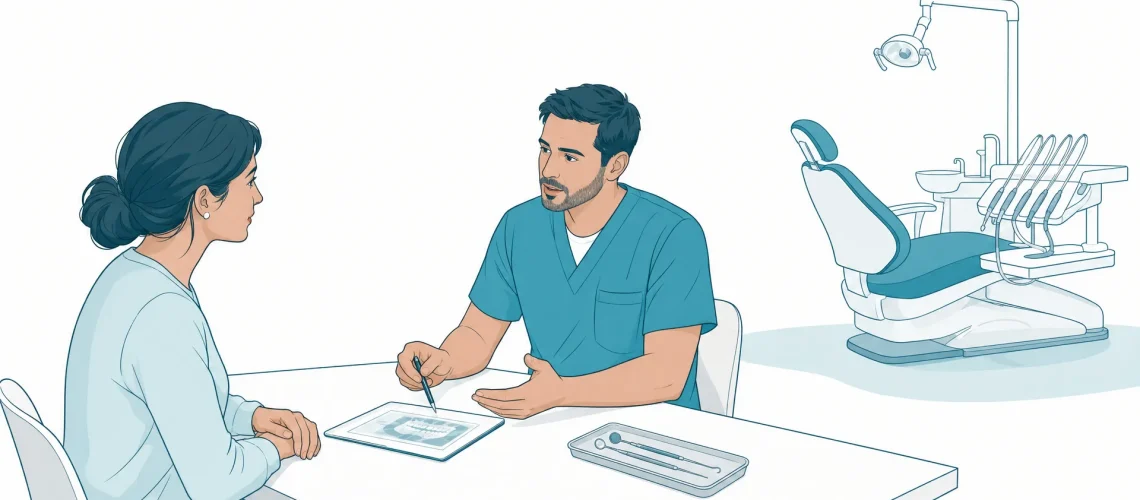
A dental visit usually starts with a conversation, not treatment. Your dentist will ask about your concerns, medical history and what you would like help with, then examine your teeth, gums, bite and soft tissues. Depending on what they find, your appointment may also include dental X-rays, a clean, preventive advice or a discussion about treatment options.
If you have not seen a dentist for a while, or you are booking for a child, a sore tooth or cosmetic concerns, it is reasonable to want to know what the appointment may involve before you arrive.
What usually happens during a dental visit?
A routine dental visit is designed to assess your oral health and help you understand what, if anything, needs attention. It may feel like a simple check-up, but your dentist is looking at several areas at once, including teeth, gums, jaw joints, soft tissues, previous dental work and signs of tooth wear.
At Gentle Dental Geelong, the exact appointment structure depends on the reason for your visit. A check-up for an adult with no symptoms may be different from an emergency appointment, a wisdom tooth assessment or a consultation about cosmetic dentistry. Even so, most appointments follow a similar pattern.
| Part of the visit | What it may involve | Why it matters |
|---|---|---|
| Reception and forms | Updating contact details, medical history and consent information | Helps the dental team understand relevant health factors |
| Conversation with the dentist | Discussing symptoms, concerns, goals and past dental experiences | Gives context before any examination or treatment planning |
| Oral examination | Checking teeth, gums, fillings, bite, jaw and soft tissues | Helps identify existing or potential dental issues |
| X-rays or photos if needed | Taking images when clinically appropriate | Shows areas not visible during a visual examination |
| Cleaning or preventive care | Removing plaque or calculus, polishing, fluoride advice if suitable | Supports gum health and home care |
| Treatment discussion | Explaining findings, options, risks, fees and timing | Helps you make an informed decision |
Your visit may not include every item in this table. For example, X-rays are not automatically taken at every appointment. They are recommended when your dentist considers them clinically useful.
Before your appointment: what to bring and mention
Before a dental visit, it helps to bring your Medicare card if relevant, private health insurance details if you have them and a list of current medications. If you have been referred by another dentist, doctor or orthodontist, bring any letters or recent X-rays if available.
Your medical history is important in dentistry. Conditions such as diabetes, heart conditions, osteoporosis, bleeding disorders, allergies and pregnancy can influence dental care. Some medications can also affect the mouth, including medicines that contribute to dry mouth or change bleeding risk.
You should also mention anything that makes dental care difficult for you. This may include dental anxiety, a strong gag reflex, difficulty lying back, previous uncomfortable experiences or concerns about cost. These details allow the dentist to adapt the appointment where possible and explain options in a way that suits you.
Many people check a clinic website before booking so they know what services are offered, where the practice is located and what to expect. Clear online information is part of a good patient experience, and healthcare practices sometimes work with specialised providers such as Louisville Web Lab to make practice information easier to find and understand online.
The check-in and initial conversation
When you arrive, the team may ask you to complete or update a medical history form. This is not just paperwork. It helps your dentist make safer decisions about local anaesthetic, medication advice, X-rays, bleeding risk and whether your dental concern may be connected to a broader health issue.
Once you are in the dental room, the dentist will usually ask what brought you in. If you have pain, try to describe where it is, when it started, what triggers it and whether it comes and goes. If your concern is cosmetic, the dentist may ask what you would like to change and whether you have had previous treatments such as whitening, veneers, crowns or orthodontics.
You do not need to know dental terminology. Simple descriptions such as “cold drinks make it ache”, “food keeps catching near this tooth” or “my gums bleed when I brush” are useful.
The dental examination
During the examination, your dentist will use a small mirror, light and dental instruments to check your mouth. They may call out numbers or notes to the dental assistant. This is usually a charting process, where the dentist records which teeth are present, which have fillings or crowns and whether there are signs of decay, cracks, wear or gum concerns.
A dental examination may include checking:
- Teeth for decay, cracks, wear, chips or sensitivity
- Existing fillings, crowns, bridges, implants or veneers
- Gums for bleeding, inflammation or pocketing around teeth
- Bite and jaw movement, particularly if there is clenching, grinding or jaw discomfort
- Tongue, cheeks, palate and other soft tissues
- Wisdom teeth, if they are present or causing symptoms
The Australian Dental Association provides patient information on oral health through Teeth.org.au, including guidance on prevention and common dental conditions. These resources can be helpful if you want general information before or after your appointment.
Will you need dental X-rays?
Dental X-rays are images that help dentists see areas that are not visible during a normal examination. They may show decay between teeth, bone levels around teeth, tooth roots, infections, unerupted teeth or wisdom tooth position.
Your dentist may recommend X-rays if you are a new patient, have symptoms, have a higher risk of decay, are planning treatment or need assessment of wisdom teeth, implants, root canals, crowns or other dental work. They should explain why an X-ray is being recommended and how it may help with diagnosis or treatment planning.
Dental X-rays involve radiation, so they are only used when the expected benefit justifies taking the image. If you are pregnant, may be pregnant or have concerns about X-rays, tell your dentist before any images are taken.

Cleaning, polishing and preventive care
A dental clean may be included in a routine appointment, or it may be booked separately depending on your oral health needs and appointment type. Cleaning generally involves removing plaque and calculus, also called tartar, from the teeth. Calculus is hardened plaque that cannot be removed with normal brushing.
Your dentist or hygienist may use hand instruments or an ultrasonic scaler. Some people feel vibration, water spray or pressure during this process. If your teeth are sensitive, let the dental team know so they can adjust the approach where possible.
A polish may follow the clean to remove surface staining and leave the teeth feeling smoother. Your dentist may also talk about fluoride, brushing technique, flossing or interdental brushes, depending on what they see during the examination. Preventive advice should be tailored to your mouth rather than presented as a one-size-fits-all routine.
If you want a broader overview of the types of care that may be discussed at a check-up, Gentle Dental Geelong has a practical article on what general dental treatment may include.
If the visit is for pain or an emergency
An emergency dental visit is usually more focused than a routine check-up. The dentist will aim to identify the likely cause of your symptoms and discuss suitable next steps. This may involve examining one area, testing the tooth, taking an X-ray or providing temporary care where appropriate.
Toothache can have many causes, including decay, cracked teeth, gum infection, trauma, wisdom teeth or sinus-related discomfort. Because the cause is not always obvious from symptoms alone, a dental examination is important before treatment is recommended.
Prompt assessment may be appropriate if you have facial swelling, fever, difficulty swallowing, trauma, uncontrolled bleeding, severe pain or a tooth that has been knocked out. If symptoms affect breathing or swallowing, seek urgent medical care.
Discussing findings and treatment options
After the examination, your dentist should explain what they found in clear language. If treatment is recommended, you can ask what the issue is, what options are available, what may happen if you delay treatment, what the risks and limitations are and what the costs may be.
Some issues may have more than one option. For example, a damaged tooth may be assessed for a filling, crown, root canal treatment or removal depending on the amount of tooth structure, symptoms, gum health and the surrounding teeth. Cosmetic concerns may involve whitening, bonding, veneers, crowns, orthodontic treatment or no treatment, depending on your goals and clinical findings.
It is appropriate to ask for time to consider non-urgent treatment. Dental care should be based on your individual needs, oral health, medical history, anatomy, budget and preferences. Treatment outcomes and experiences vary between patients, and all dental procedures carry potential benefits, limitations and risks.
What if you feel nervous about going to the dentist?
Feeling anxious before a dental visit is common. You can tell the dentist at the start of the appointment, even if you are unsure exactly what worries you. Some people are concerned about discomfort, sounds, loss of control, cost, embarrassment or a previous experience.
Small adjustments may make the appointment feel more manageable. You might agree on a hand signal to pause, ask the dentist to explain each stage before it happens or request short breaks. For some appointments, your dentist may also discuss comfort options such as local anaesthetic or sleep dentistry, depending on what treatment is being considered and whether it is suitable for you.
Gentle Dental Geelong has a separate article on what to do if you feel afraid of the dentist, including communication strategies that may help you feel more prepared.
What happens at a child’s dental visit?
A child’s dental visit is usually adapted to their age, confidence and stage of development. For young children, the first visits may be brief and focused on becoming familiar with the dental setting. The dentist may count teeth, check growth and development, assess brushing habits and discuss diet, dummy use, thumb sucking or injury prevention where relevant.
For older children and teenagers, the appointment may include checks for decay, gum health, tooth alignment, sports mouthguards, wisdom teeth development and oral hygiene around braces or aligners if they have them.
Some children may be eligible for dental benefits through Medicare’s Child Dental Benefits Schedule. Eligibility and claiming rules can change, so it is worth checking current information through Services Australia or asking the clinic before booking.
Families may also find this guide to family dental care at every age useful when planning appointments for children, adults and older family members.
How often should you book a dental visit?
There is no single recall interval that suits everyone. Some people are advised to attend every six months, while others may need more frequent reviews due to gum disease, high decay risk, dry mouth, medical conditions, orthodontic treatment or complex dental work. Some low-risk patients may be advised that a longer interval is appropriate.
Your dentist can recommend a recall schedule after assessing your mouth and risk factors. The goal is not to encourage unnecessary appointments, but to review problems early enough that you can make informed decisions about care.
Questions to ask during your appointment
If you are unsure what to ask, these questions can help you understand your oral health and any recommended treatment:
- What did you find during the examination?
- Are there any areas I should monitor at home?
- Do I need X-rays today, and why?
- What are my treatment options?
- What are the potential benefits, risks and limitations?
- What might happen if I wait?
- What costs should I consider before deciding?
A good dental visit should leave you with a clearer understanding of your mouth, even if you decide not to proceed with treatment on the day.
Frequently Asked Questions
Does a dental visit always include treatment? No. Many visits are for examination, advice and treatment planning only. If treatment is recommended, your dentist should explain the options, risks, limitations and likely fees before you decide what to do.
Will my first dental visit hurt? A first visit often involves talking, examination and possibly X-rays or cleaning. Some parts may feel uncomfortable if you have sensitive teeth or gums, but you can ask the dentist to pause or adjust the approach where possible.
How long does a dental visit take? Appointment length varies depending on the reason for the visit. A routine check-up may be shorter than an emergency appointment, new patient assessment, wisdom tooth consultation or cosmetic dentistry discussion.
Do I need to see a dentist if nothing hurts? Dental problems can develop before they cause pain. A dental examination can help identify early signs of decay, gum concerns, wear or failing dental work, although your recommended visit frequency should be based on your individual risk.
Can I bring someone with me to the appointment? In many cases, yes. If having a support person helps you feel more comfortable, ask the clinic when booking. For children, a parent or guardian will usually need to attend.
Booking a dental visit in Geelong
If you are due for a check-up, have a dental concern or would like to understand your treatment options, a dental examination can help clarify what is happening and what care may be appropriate.
To discuss your concerns, you can contact Gentle Dental Geelong to arrange an appointment in Geelong. Your dentist can assess your oral health, explain the findings and talk through the potential benefits, risks and alternatives before any treatment decisions are made.