
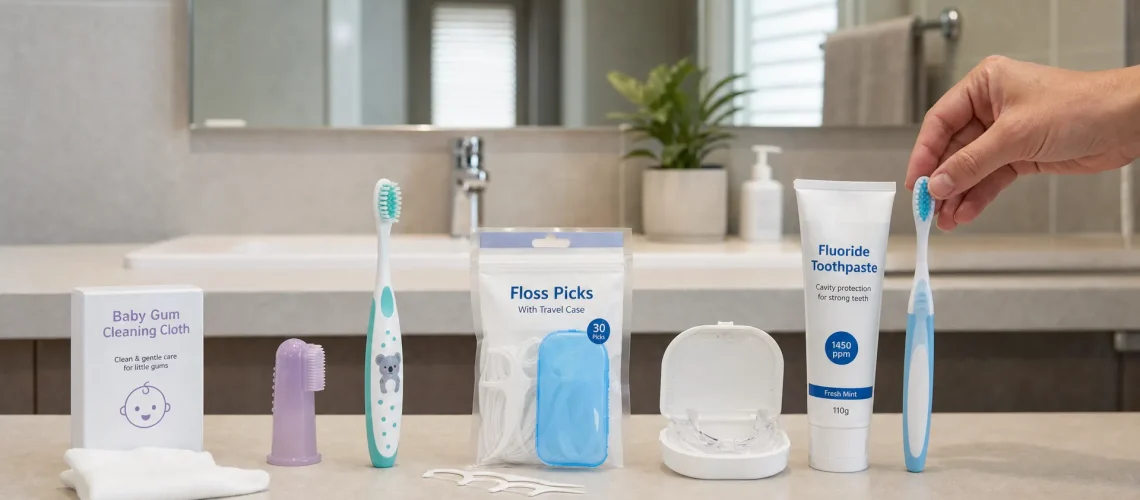
Family dental care is not a single routine that stays the same forever. A toddler learning to brush, a teenager wearing a sports mouthguard, a parent juggling check-ups around work, and an older adult managing dry mouth all need different kinds of support.
The good news is that most dental problems are easier, cheaper, and more comfortable to manage when they are found early. A family-focused approach helps you build simple habits at home, plan preventive appointments, and know when a dental concern should be checked sooner rather than later.
This practical guide walks through family dental care at every age, with clear priorities for babies, children, teens, adults, and seniors.
Why family dental care changes with age
Teeth, gums, jaws, diet, hormones, medications, and daily routines all change over a lifetime. That is why a good dental plan should be personalised rather than copied from one family member to another.
For children, the focus is usually prevention, tooth eruption, brushing skills, diet habits, and building confidence at the dentist. For teens, orthodontic concerns, wisdom teeth, sport, and sugary drinks often become more important. For adults, gum health, tooth wear, restorations, pregnancy-related changes, and cosmetic goals may come into focus. For seniors, dry mouth, medical conditions, dexterity, dentures, implants, and maintaining chewing comfort can become priorities.
A regular dental visit gives your dentist the chance to assess your risk level and recommend an appointment schedule that suits you. Many people benefit from check-ups every six months, but some need more frequent care, while others may be suited to a different interval.
| Life stage | Main dental priorities | Helpful habits |
|---|---|---|
| Babies and toddlers | First teeth, early decay prevention, comfort with dental visits | Wipe gums, avoid bottles in bed, begin brushing as teeth appear |
| Preschool and primary school children | Brushing skills, fluoride, diet, tooth development | Supervise brushing, limit frequent snacking, use a child-friendly dental routine |
| Teenagers | Orthodontics, mouthguards, wisdom teeth, diet choices | Protect teeth during sport, monitor wisdom teeth, reduce acidic drinks |
| Adults | Gum health, restorations, pregnancy changes, cosmetic goals | Brush and floss consistently, attend preventive checks, address problems early |
| Older adults | Dry mouth, root decay, dentures, implants, medical factors | Review medications, keep dentures clean, maintain regular dental visits |
Babies: start before the first tooth
Family dental care starts earlier than many parents expect. Even before teeth appear, you can gently wipe your baby’s gums with a clean, damp cloth. This helps keep the mouth clean and introduces your baby to the feeling of oral care.
Once the first tooth erupts, brushing becomes important. Use a small, soft toothbrush and follow Australian guidance on toothpaste for your child’s age. Healthdirect’s advice on dental care for babies and children is a helpful general reference, but your dentist can give tailored advice if your child has higher decay risk or specific health needs.
The first dental visit is often recommended when the first tooth appears or by around 12 months of age. This early appointment is less about treatment and more about prevention. A dentist can check development, discuss feeding and brushing, and help your child become familiar with the dental environment.
Try to avoid putting babies to bed with bottles containing milk, formula, juice, or sweet drinks. Frequent exposure to natural or added sugars can increase the risk of early childhood decay, especially when teeth are bathed in liquid during sleep.
Toddlers and preschoolers: build confidence, not fear
Toddlers are learning independence, but they still need hands-on help with brushing. Most young children do not have the coordination to clean thoroughly on their own. Parents and carers usually need to brush for them or finish the brushing after the child has had a turn.
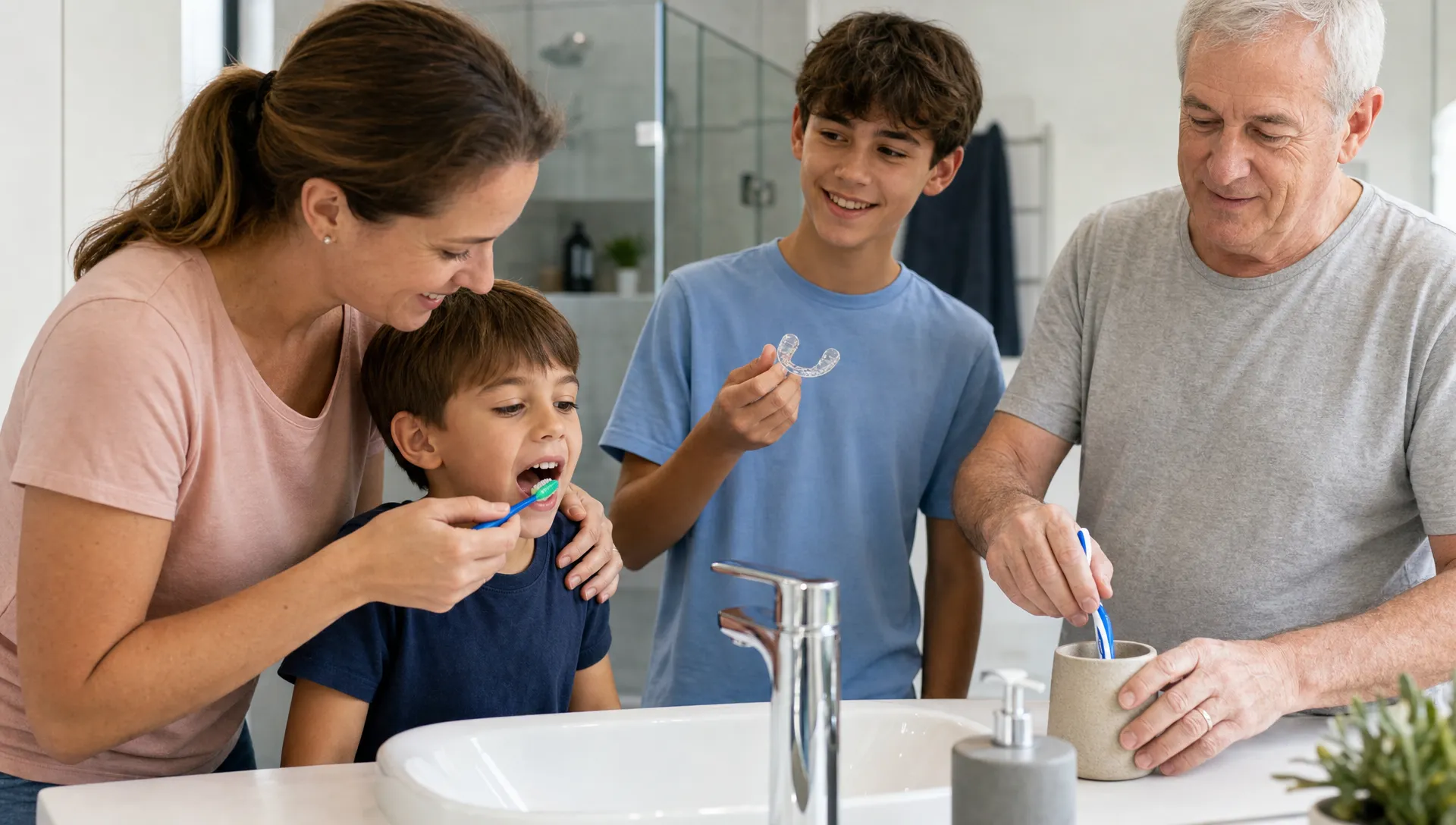
Keep the routine short, calm, and predictable. Brushing twice a day, especially before bed, matters more than making the process perfect every time. Songs, timers, choosing a toothbrush, or brushing together as a family can make the habit feel normal rather than like a battle.
Food routines also matter. It is not only the amount of sugar that affects teeth, but how often teeth are exposed to it. Frequent grazing, juice, sweet snacks, and sticky foods can create repeated acid attacks on enamel. Water and tooth-friendly snacks, such as cheese, vegetables, and plain yoghurt, are better everyday choices.
If your child is eligible, the Australian Government’s Child Dental Benefits Schedule may help cover basic dental services. Eligibility can change, so it is worth checking the official information or asking the dental practice before booking.
Primary school children: protect growing smiles
By primary school, children are usually losing baby teeth and gaining adult teeth. This is an important stage for monitoring jaw growth, tooth eruption, crowding, bite issues, and brushing technique.
Adult molars often erupt at the back of the mouth around age six, and they can be easy to miss because they do not replace a baby tooth. These teeth have deep grooves that can trap food and plaque. Your dentist may discuss fissure sealants if a child’s molars are at higher risk of decay.
Children at this age still need supervision. A good rule of thumb is that if a child cannot tie shoelaces well or write neatly, they may not yet have the fine motor skills to brush every surface properly. Even older children benefit from occasional checks by a parent, especially around the back teeth and gumline.
This is also the age when sport becomes more common. A properly fitted mouthguard can help protect teeth, lips, cheeks, and jaws during contact sports. Over-the-counter mouthguards are better than no protection, but a custom mouthguard made by a dental professional usually offers a better fit and comfort.
Teenagers: independence with a safety net
Teenagers are capable of managing their own oral care, but they also face new risks. Busy school schedules, part-time work, sport, social events, energy drinks, soft drinks, vaping, and irregular eating can all affect oral health.
Orthodontic concerns may become more obvious during the teen years. Crowding, spacing, bite problems, and tooth alignment can affect cleaning as well as appearance. If aligners or braces are being considered, a consultation can help determine what is suitable. Gentle Dental Geelong offers Invisalign treatment, but suitability depends on an individual assessment.
Wisdom teeth also often begin developing in the late teen years or early adulthood. Not everyone needs wisdom teeth removed, but impacted, infected, decayed, or poorly positioned wisdom teeth can cause pain and complications. If your teen has swelling, jaw pain, bad taste, difficulty opening, or pain behind the back molars, it is sensible to arrange a dental assessment.
Teenagers should also be encouraged to take toothache seriously. Pain that comes and goes may still indicate decay, infection, gum inflammation, trauma, or a cracked tooth. For more on when dental pain needs attention, Gentle Dental Geelong has a useful guide on how to deal with toothache in Geelong.
Adults: prevention, repair, and long-term planning
Adulthood is often when dental care gets pushed down the priority list. Work, parenting, study, finances, and caring responsibilities can make it tempting to delay check-ups until something hurts. Unfortunately, many dental problems are already advanced by the time pain appears.
Adult dental care should focus on prevention and early intervention. Gum disease, tooth decay between teeth, cracked fillings, tooth wear, grinding, and enamel erosion can develop gradually. Regular examinations and professional cleans help your dentist detect changes before they become more complex.
Pregnancy is another time when oral health deserves attention. Hormonal changes can make gums more prone to bleeding and inflammation. Morning sickness and reflux can also expose teeth to acid. If you are pregnant or planning pregnancy, let your dentist know so they can tailor advice and timing of care.
Adults may also start thinking about appearance and function. Whitening, veneers, crowns, bridges, implants, and clear aligners can all play a role in different situations, but they should be planned around health first. Cosmetic treatment works best when gums are healthy, decay is controlled, and the bite is stable.
If cost is a barrier, ask about available payment options before postponing care. Gentle Dental Geelong offers payment plans, which may help some patients plan treatment in a more manageable way.
Older adults: keep comfort, confidence, and function
Ageing does not mean tooth loss is inevitable. Many older adults keep their natural teeth for life, especially with preventive care and early treatment. However, dental needs can become more complex with age.
Dry mouth is a common issue, often linked to medications or health conditions. Saliva helps protect teeth by neutralising acids and washing away food particles. When saliva flow is reduced, decay risk can rise quickly, especially around the gumline and exposed root surfaces. If your mouth often feels dry, sticky, or sore, mention it to your dentist.
Dexterity can also change. Arthritis, tremor, vision changes, and other conditions can make brushing and flossing harder. An electric toothbrush, floss holders, interdental brushes, or modified handles may make home care easier.
Dentures, bridges, and implants also need maintenance. Dentures should be cleaned daily and checked if they rub, feel loose, or make eating difficult. Implants cannot decay, but the gums and bone around them still need careful cleaning and monitoring. Regular dental visits help protect the investment and keep the mouth comfortable.
For older adults in residential care or those supported by family, oral care should be part of daily health routines. Pain, loose teeth, mouth ulcers, difficulty chewing, or changes in eating habits should not be dismissed as normal ageing.
A simple family dental care routine that works
The best dental routine is one your household can repeat consistently. It does not need to be complicated, but it does need to cover the basics.
For most families, a strong routine includes:
- Brushing twice a day with age-appropriate fluoride toothpaste.
- Cleaning between teeth once a day when teeth touch.
- Drinking tap water where available, especially after meals and snacks.
- Limiting frequent sugary and acidic drinks.
- Wearing a mouthguard for contact sport.
- Booking regular dental check-ups based on individual risk.
Make oral care visible in the home. Keep toothbrushes and toothpaste easy to reach, set reminders for children and teens, and avoid making dental visits sound frightening. Instead of saying a dentist will hurt if a child does not brush, frame visits as a normal part of staying healthy.
It also helps to book family appointments together when possible. This can reduce scheduling stress and show children that dental care is a normal part of adult life too.
When to book a dental appointment sooner
Routine check-ups are important, but some symptoms should be assessed promptly. Dental infections and injuries can worsen if left untreated, and early care may give your dentist more treatment options.
Book a dental appointment if someone in your family has:
- Toothache, swelling, or facial pain.
- Bleeding gums that do not improve with gentle brushing and flossing.
- A broken, chipped, loose, or knocked tooth.
- Sensitivity that lingers after hot, cold, or sweet foods.
- Mouth ulcers that do not heal within two weeks.
- Jaw pain, clicking, or difficulty opening.
- Bad breath or a bad taste that keeps returning.
If there is facial swelling, fever, difficulty swallowing, difficulty breathing, or significant trauma, seek urgent medical or dental care.
Helping anxious family members feel more comfortable
Dental anxiety is common in both children and adults. A gentle approach can make a significant difference, especially when families have had past negative experiences.
Tell the dental team if someone is nervous before the appointment. It may help to agree on a stop signal, ask for each step to be explained, or book a shorter consultation first. For more practical ideas, Gentle Dental Geelong has advice on how to feel less afraid of the dentist.
Some patients may also benefit from sleep dentistry, depending on their needs and the type of treatment required. This should always be discussed during a consultation so the dentist can explain appropriate options, risks, and suitability.
Frequently Asked Questions
How often should my family visit the dentist? Many people benefit from a check-up every six months, but the right interval depends on age, decay risk, gum health, medical history, and previous dental problems. Your dentist can recommend a schedule for each family member.
When should my child first see a dentist? A first visit is commonly recommended when the first tooth appears or by around 12 months of age. Early visits help with prevention, feeding advice, brushing guidance, and making the dental setting feel familiar.
Do baby teeth really matter if they fall out? Yes. Baby teeth help children chew, speak, smile, and hold space for adult teeth. Untreated decay in baby teeth can cause pain, infection, sleep disruption, and problems with eating or learning.
What is the most important daily habit for family dental care? Brushing twice daily with age-appropriate fluoride toothpaste is one of the most important habits. Cleaning between teeth, limiting frequent sugar exposure, and drinking water also make a big difference.
Are bleeding gums normal? Bleeding gums are common, but they are not something to ignore. They may be a sign of plaque build-up, gingivitis, gum disease, brushing technique issues, or other factors. If bleeding continues, book a dental assessment.
Can the whole family see the same dentist? Yes, many families prefer seeing one dental practice because it keeps records in one place and helps children feel more comfortable. A family dentist can also understand shared habits, risk factors, and treatment preferences.
Keep every smile in the family on track
A practical approach to family dental care is about prevention, confidence, and timely support at each stage of life. Small habits, such as supervised brushing, regular check-ups, mouthguards for sport, and early attention to toothache, can protect your family’s oral health for years to come.
If you are looking for gentle, family-focused dental care in Geelong, Gentle Dental Geelong offers general family dentistry along with services such as wisdom teeth removal, sleep dentistry, dental implants, Invisalign, emergency dental care, and child dental benefits support. Book a consultation to receive advice tailored to your family’s needs.