

A dental care family routine does not need to be complicated to be useful. For most households, the habits that matter are simple: brushing well, cleaning between teeth, limiting frequent sugar exposure, drinking water, using protection during sport and knowing when to arrange a dental check-up. Small routines can reduce the chance of preventable dental problems, although every person’s needs will be different.
For families in Geelong, the challenge is often not knowing what to do, but fitting oral care into busy mornings, school lunches, work, sport and bedtime. This guide focuses on practical, everyday habits that suit children, teenagers, adults and older family members, while also explaining when a dentist should assess symptoms or concerns.
A simple dental care family routine starts at home
A consistent home routine is the foundation of oral health. Professional dental care matters, but plaque can build up daily, so the small things done at home have the biggest influence between appointments.
For many households, the most effective dental care family habit is choosing a routine that is realistic. A child who is rushed every morning, a teenager with braces or aligners, a parent working late and an older adult managing dry mouth may all need slightly different support. The goal is not perfection. It is a routine that can be repeated most days.
If you want a broader age-by-age overview, Gentle Dental Geelong has also published a practical guide to family dental care at every age, which may be useful for parents and carers planning care across different life stages.
Brushing twice daily, with the right technique
Brushing helps remove plaque, a sticky film of bacteria that forms on teeth and gums. If plaque is left undisturbed, it can contribute to tooth decay, gum inflammation and bad breath.
A practical brushing routine usually includes:
- Brushing morning and night with a soft toothbrush
- Using fluoride toothpaste suitable for the person’s age and needs
- Brushing for about two minutes, covering the outside, inside and chewing surfaces
- Replacing toothbrushes or brush heads when bristles become worn
- Helping young children until they have the coordination to brush effectively
The Australian Dental Association’s patient resource Teeth.org.au provides general oral health information for Australians, including advice about brushing, flossing and diet. Your dentist can also advise on toothpaste type, brushing technique and whether extra preventive products may be suitable.
Cleaning between teeth without making it difficult
Toothbrush bristles cannot always reach between teeth. That is why interdental cleaning, such as floss, floss picks or interdental brushes, can be useful for many people.
This dental care family approach is not about insisting that everyone uses the same product. Some adults manage floss well. Some teenagers find floss picks easier. Some people with larger gaps, bridges or gum recession may be better suited to interdental brushes. If gums bleed when cleaning between teeth, it may be due to plaque build-up, technique, gum inflammation or another issue. Persistent bleeding should be checked by a dentist.
Food and drink habits that protect teeth
Tooth decay is not only about how much sugar someone has. Frequency matters. Teeth are exposed to acid each time sugary foods or drinks are consumed, and frequent snacking can give teeth less time to recover.
Water is generally the best everyday drink. In many Victorian communities, fluoridated tap water may contribute to tooth decay prevention as part of overall oral health care. Milk can also be a tooth-friendly option for many people, depending on dietary needs.
Make lunchboxes and snacks easier on teeth
Family food choices do not need to be strict or unrealistic. It can help to keep sweet foods to mealtimes rather than frequent grazing, choose water most often and include snacks that are less sticky.
Tooth-friendly snack options may include cheese, plain yoghurt, fresh fruit, vegetables, eggs, nuts where age-appropriate and safe, wholegrain crackers or sandwiches. Dried fruit, muesli bars, sweet biscuits, juice, sports drinks and soft drinks can be more challenging for teeth when consumed frequently or sipped over time.
A practical dental care family plan should also allow for celebrations, school events and normal life. The main aim is to reduce repeated sugar and acid exposure across the day, not to make families feel guilty about occasional treats.
Be careful with sports drinks and acidic drinks
Sports drinks, energy drinks, soft drinks, cordial and juice can expose teeth to sugar, acid or both. Even sugar-free acidic drinks may contribute to enamel wear if sipped often.
If someone in the family plays sport, water is usually the better everyday drink unless a healthcare professional has advised otherwise. If acidic or sugary drinks are consumed, having them with a meal and avoiding slow sipping can reduce exposure time.
Habits for children, teenagers and adults
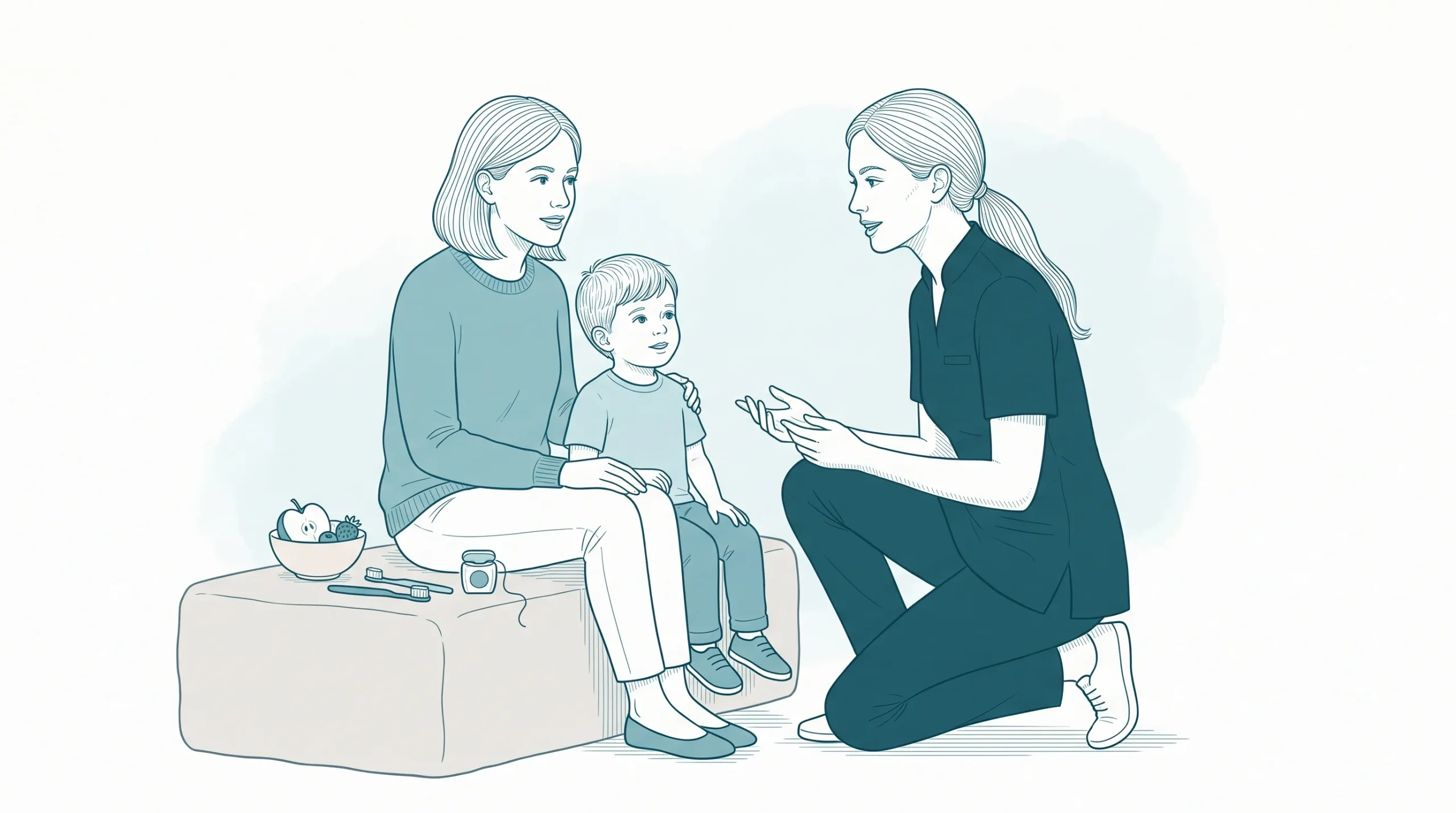
Every age group has different dental risks. Children may need help with brushing and diet routines. Teenagers may be managing orthodontic care, wisdom teeth concerns or sports injuries. Adults may be balancing gum health, worn fillings, stress-related grinding, pregnancy-related gum changes or medical conditions that affect the mouth.
The table below outlines common everyday priorities. It is general information only, and a dentist can give advice based on an individual assessment.
| Family member | Everyday focus | When to ask a dentist |
|---|---|---|
| Babies and toddlers | Early brushing habits, avoiding bottles in bed, first dental checks | White or brown marks, tooth injury, feeding concerns affecting teeth |
| Primary school children | Assisted brushing, fluoride toothpaste advice, lunchbox habits | Toothache, crowding concerns, ongoing thumb sucking, dental fear |
| Teenagers | Brushing around orthodontic appliances, sports mouthguards, wisdom teeth monitoring | Jaw pain, swollen gums, impacted wisdom tooth symptoms, chipped teeth |
| Adults | Gum health, interdental cleaning, managing worn restorations, dry mouth | Bleeding gums, tooth sensitivity, broken fillings, persistent bad breath |
| Older adults | Denture care where relevant, dry mouth management, cleaning around crowns or bridges | Loose teeth, mouth ulcers that do not heal, pain when chewing |
If your dental care family routine is difficult to maintain, it may not mean you are doing something wrong. It may simply mean the routine needs adjusting. A dentist or oral health professional can suggest options that better suit age, dexterity, medical history, anxiety levels and daily schedules.
Mouthguards for contact sport
Dental injuries can happen during contact sport and recreational activities. A custom-fitted mouthguard may be recommended for some sports because it is made to fit the person’s mouth. Over-the-counter options are available, but fit and comfort can vary.
A dentist can assess whether a mouthguard is appropriate and discuss options. This is especially relevant for children and teenagers involved in football, basketball, hockey, martial arts, netball or other activities where knocks to the face can occur.
Supporting anxious family members
Dental anxiety is common and can affect children and adults. Helpful habits include talking about dental visits in calm, neutral language, avoiding frightening stories and giving the dentist accurate information about past experiences.
Some people benefit from shorter appointments, clear explanations or agreed signals during treatment. For readers wanting more detail, this article on gentle dental care for anxious patients explains how communication and planning can support a more comfortable appointment experience.
Regular dental visits and what they may involve
Dental check-up timing should be based on individual risk. Some people need more frequent reviews because of gum disease, high decay risk, medical conditions, dry mouth or complex dental work. Others may be advised to attend less often. Healthdirect provides general public information about dental care and dental visits, but your dentist can advise what is appropriate for your circumstances.
At a routine appointment, a dentist may check the teeth, gums, bite, existing fillings, crowns or dentures, signs of wear and soft tissues of the mouth. X-rays may be recommended if clinically needed, but they are not required for every person at every visit.
A calm dental care family appointment can help identify small concerns before they become more difficult to manage. It is also a chance to ask practical questions about brushing, children’s habits, mouthguards, diet, wisdom teeth, tooth sensitivity or cosmetic concerns.
For a clearer explanation of routine dental care, you may find Gentle Dental Geelong’s guide to what general dental treatment may include helpful.
Children’s dental benefits and payment planning
Some children may be eligible for dental benefits through Medicare’s Child Dental Benefits Schedule. Services Australia explains eligibility and covered services on its Child Dental Benefits Schedule page.
Gentle Dental Geelong offers bulk bill children’s dental care through Medicare’s Child Dental Benefits Scheme for eligible patients, along with payment plans for some treatments. Fees, benefits and suitability can vary, so it is sensible to confirm details with the clinic before treatment begins.
Symptoms that should be assessed by a dentist
Many minor dental concerns can wait for a routine appointment, but some symptoms should be assessed promptly. This does not mean the most serious cause is likely. It simply means a dentist should check what is happening.
Arrange a dental assessment if someone in your household has:
- Toothache that does not settle
- Swelling of the face, jaw or gums
- A knocked-out, loose, cracked or broken tooth
- Bleeding that does not stop after an injury
- A sore, ulcer or lump in the mouth that does not heal
- Pain when biting or chewing
- Signs of infection, such as swelling, fever or feeling unwell
If facial swelling affects breathing, swallowing or general wellbeing, seek urgent medical care. For dental injuries, calling a dentist promptly can help you understand what to do next.
Making dental habits easier to maintain
The best home routine is one your family can actually follow. For some households, that means keeping toothbrushes in more than one bathroom. For others, it means setting a phone reminder, brushing children’s teeth before they become too tired or keeping floss picks somewhere visible.
A sustainable dental care family routine might include choosing one habit to improve at a time. For example, you might focus on night brushing first, then add interdental cleaning a few times per week, then review lunchbox drinks. Gradual changes are often easier to maintain than trying to change everything at once.
It can also help to bring questions to your dental appointment. Ask about your child’s brushing technique, whether sensitivity needs assessment, how to clean around a crown or bridge, or whether a mouthguard may be suitable for sport. Good care is easier when advice is specific to the person, not based on general rules alone.
Frequently asked questions
How often should my family visit the dentist? The right interval varies. Your dentist may recommend a review schedule based on each person’s oral health, decay risk, gum health, medical history and previous dental treatment.
When should my child first see a dentist? Many children benefit from early dental visits so parents can receive advice about brushing, diet, fluoride and growth. If you notice tooth marks, pain, swelling, injury or feeding-related concerns, arrange an assessment rather than waiting.
Is bleeding when flossing normal? Occasional bleeding can happen, especially if someone has not cleaned between teeth for a while or is using a new technique. Persistent bleeding, swelling or tenderness should be checked because it may be related to gum inflammation or another issue.
Do all family members need the same toothpaste? Not necessarily. Toothpaste choice can depend on age, decay risk, sensitivity, fluoride needs and whether a person can spit reliably. Your dentist can advise what is suitable.
Can dental care habits prevent every problem? No. Good habits may reduce the risk of common issues, but dental problems can still occur due to injury, medical conditions, medications, tooth shape, genetics, dry mouth or previous dental work. Regular assessment helps tailor advice.
Dental care for families in Geelong
Every family has different routines, health needs and comfort levels. A household with toddlers in Belmont, teenagers in Highton or older adults in Geelong West may need different advice, even when the basic principles are similar.
If you would like to discuss your family’s oral health, a dental examination can help identify current concerns and explain suitable options. To arrange an assessment in Geelong, you can contact Gentle Dental Geelong and speak with the team about booking an appointment.