

If you are looking for all in one dental care for your household, the main question is not whether one clinic can do everything, it is whether one dental team can coordinate the care your family actually needs. For many families in Geelong, having routine check-ups, children’s dentistry, emergency appointments, cosmetic discussions and more complex treatment planning in one place can be convenient. It is still worth knowing where the limits are, when a referral may be appropriate and what to ask before you choose a clinic.
A family’s dental needs can change quickly. A toddler’s first visit is very different from a teenager needing wisdom teeth assessed, an adult considering a crown or an older family member asking about tooth replacement options. One clinic may be a good fit if it offers the right mix of services, communicates clearly and takes time to assess each person individually.
What does all in one dental care mean for families?
In everyday language, all in one dental care usually means a clinic provides a broad range of dental services rather than focusing only on one type of treatment. This may include preventive care, fillings, gum care, children’s dentistry, emergency appointments, wisdom teeth assessments, cosmetic options and restorative treatment such as crowns, bridges or implants.
It does not mean every possible dental procedure should be done in-house. Some situations may still need referral to a registered specialist, hospital service or another health professional. A good dental clinic should be clear about what it can provide safely and when another practitioner’s input may be more appropriate.
A clinic that describes itself as offering all in one dental care should still start with diagnosis, discussion and informed consent. That means examining your teeth and gums, asking about your health history, explaining options and giving you time to consider potential benefits, risks, likely costs and alternatives.
Why some families prefer one clinic for ongoing care
Seeing one dental team can make it easier to keep track of family history, previous X-rays, treatment preferences and comfort needs. Parents may also find it simpler to coordinate appointments for children and adults, especially when school, work and sport schedules are already busy.
The value of all in one dental care is often in continuity. When the same practice sees your family over time, your dentist can compare changes from one visit to the next and explain whether treatment is needed now, can be monitored or may be optional. This does not replace individual assessment, but it can help make decision-making clearer.
For broader background on what families may need across different stages of life, Gentle Dental Geelong has a practical overview of family dental care at every age.
| Family situation | How one clinic may help | What to check |
|---|---|---|
| Young children | Familiar setting and preventive advice | Child-friendly communication and CDBS information |
| Teenagers | Monitoring growth, bite changes and wisdom teeth | Whether orthodontic or surgical referral may be needed |
| Adults | Routine care, fillings, crowns, whitening discussions or gum checks | Clear treatment planning and fee estimates |
| Older adults | Denture, implant, bridge or maintenance discussions | Suitability, medical history and realistic expectations |
| Anxious patients | More time to talk through concerns and comfort options | Whether sedation or sleep dentistry is suitable and available |
Services that may sit under one roof
For households around Geelong, an all in one dental approach may include general family dentistry alongside more advanced treatment discussions. Gentle Dental Geelong offers services such as general dentistry, wisdom teeth removal, sleep dentistry, dental implants, Invisalign treatment, crowns and bridges, porcelain veneers, emergency dental care and payment plans.
Not every service is suitable for every person. For example, Invisalign may be considered for certain orthodontic concerns, but a dental assessment is needed to check tooth position, gum health and bite factors. Dental implants may be an option for replacing missing teeth, but suitability depends on bone volume, oral health, medical history, smoking status and other factors.
If you want a service-by-service overview, the clinic’s article on dental treatment services available explains common treatment categories in more detail without assuming that every patient will need them.
Preventive and routine care
Preventive care is usually the foundation of family dentistry. This may include dental examinations, scale and cleans, fluoride advice, dietary discussion, mouthguard advice and X-rays when clinically indicated.
A routine appointment is not just about finding cavities. Your dentist may also assess gum health, tooth wear, jaw comfort, oral hygiene and signs that need monitoring. If a concern is found early, there may be more options available than if it is left until symptoms become harder to manage.
More complex treatment planning
Some families also want access to restorative or cosmetic treatment from the same clinic. This can include crowns, bridges, veneers, implant discussions or clear aligner treatment. These options require careful planning because they involve natural teeth, gums, bite forces and long-term maintenance.
All dental procedures carry potential risks and benefits. Treatment outcomes and experiences vary between patients, so a dentist should explain what is realistic for your circumstances rather than presenting cosmetic or restorative care as a standard pathway for everyone.
When one clinic may not be enough
Even a broad family dental clinic will not be the right setting for every clinical situation. An all in one dental clinic may manage many common concerns, but some cases are better handled with referral. This can include complex oral surgery, specialist orthodontics, advanced gum disease management, oral medicine concerns or hospital-based care.
Referral is not a failure of care. It can be part of responsible treatment planning. In Australia, dental specialists have additional recognised training and registration in specific fields. You can check practitioner registration through the AHPRA register of practitioners if you want to confirm whether a provider is registered and in what category.
A family clinic should also be comfortable saying when monitoring is reasonable. Not every dental variation needs active treatment, and cosmetic treatment should be considered only if it suits the patient’s goals, oral health and informed preferences.
Questions to ask before choosing an all in one dental clinic
Before choosing an all in one dental clinic, it helps to ask practical questions rather than relying only on a list of services. A clinic can offer many treatments, but the experience depends on communication, planning, safety processes and whether your family feels comfortable asking questions.
Useful questions include whether the clinic sees both children and adults, how emergency concerns are triaged, whether written treatment plans are provided and how fees are explained before treatment begins. If someone in your household feels nervous about dental care, ask how the team supports anxious patients and whether sedation options require a separate assessment.
| Question to ask | Why it matters |
|---|---|
| What services are commonly managed in-house? | Helps you understand convenience and likely referral pathways |
| How are treatment options explained? | Supports informed consent and shared decision-making |
| Are fees and item numbers discussed before treatment? | Helps with budgeting and health fund questions |
| What happens if a specialist opinion is needed? | Shows whether referral is handled transparently |
| How are children’s appointments approached? | Helps parents assess comfort, pacing and prevention advice |
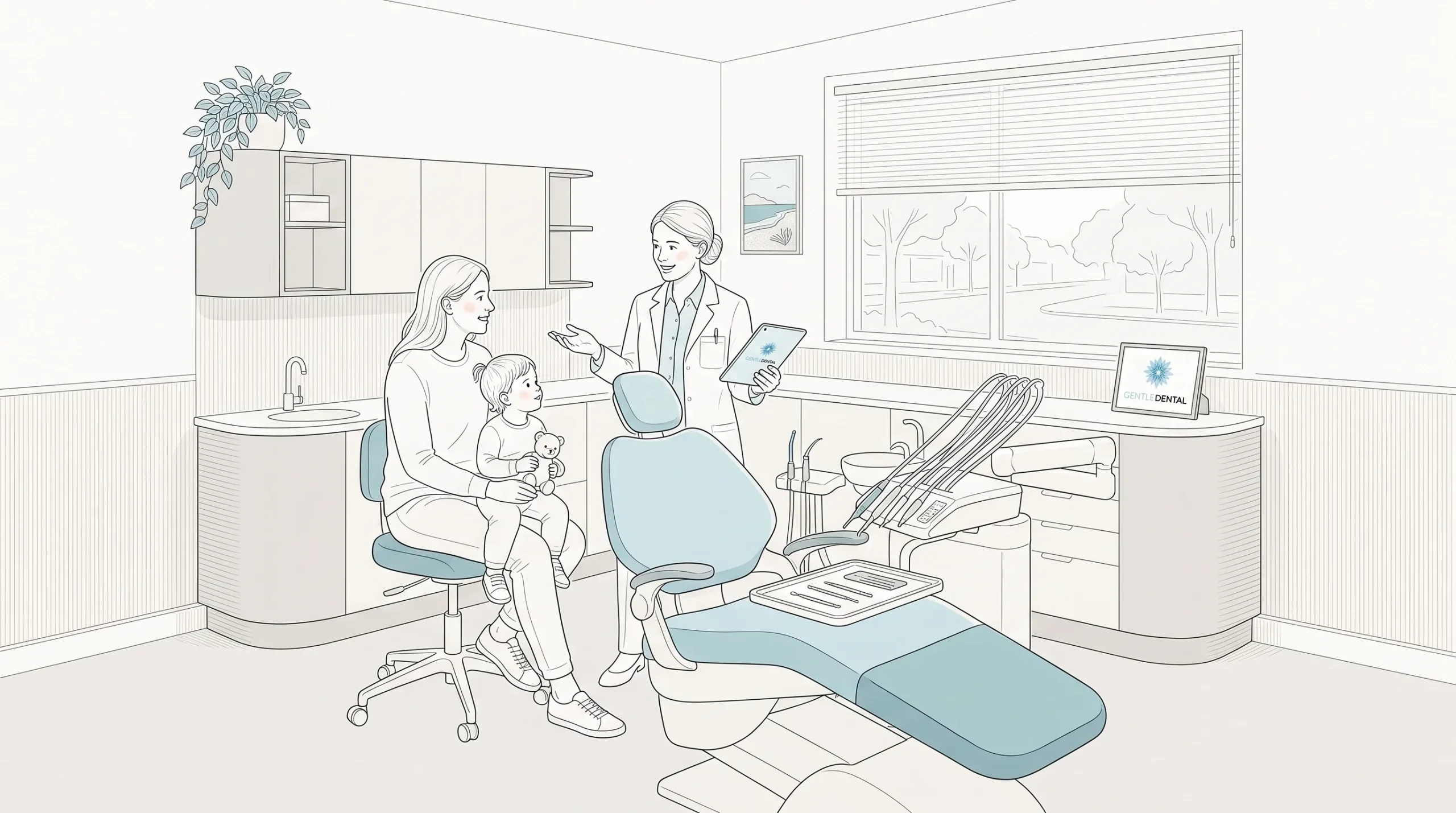
What a first family appointment may involve
An initial appointment is usually about understanding your concerns and checking oral health before discussing options. Your dentist may ask about symptoms, previous dental experiences, medical history, medications, allergies and any goals you have for treatment or maintenance.
For children, the visit may be kept simple depending on age and cooperation. The focus may be becoming familiar with the clinic, checking tooth development, discussing brushing and offering dietary guidance. The Australian Government’s Child Dental Benefits Schedule may assist eligible children with basic dental services, and Services Australia provides current information about CDBS eligibility and claiming.
For adults, the appointment may involve a gum assessment, tooth-by-tooth examination and X-rays if needed. If treatment is recommended, you should have the opportunity to ask why, what alternatives exist, what may happen if you choose to wait and what costs may apply.
Costs, payment planning and practical access
If you are comparing all in one dental care with visiting several separate clinics, cost transparency matters. Dental fees can vary depending on the treatment, materials, complexity, appointment time and whether additional imaging or referrals are needed. A written estimate can help you understand what is proposed before deciding.
Private health insurance may contribute to some dental treatment depending on your policy, waiting periods and annual limits. It is reasonable to ask for item numbers so you can check with your fund. This does not guarantee the fund’s response, but it can help you make a more informed financial decision.
Gentle Dental Geelong offers payment plans, and eligible children may be able to access bulk billed dental care through Medicare’s Child Dental Benefits Schedule. Suitability for any payment arrangement or Medicare-funded service depends on the relevant rules and the individual appointment.
Local convenience in Geelong and surrounding suburbs
Location is not the only factor when choosing a dental clinic, but it does affect whether care is easy to maintain. Families travelling from areas such as Geelong West, Newtown, East Geelong, Belmont or Highton may prefer a clinic that can manage routine care and many common treatment discussions without multiple separate bookings across town.
An all in one dental setting can be especially useful when family members need different types of appointments in the same period. For example, one person may need a routine check, another may need a filling reviewed and another may want advice about wisdom teeth. Having one dental team coordinate these conversations may reduce repetition and make records easier to follow.
If you are still comparing options, the article on how to choose the right dental clinic for your family offers a broader checklist for evaluating communication, prevention, comfort and convenience.
Is one clinic right for your family?
One clinic may be right for your family if it offers the services you are likely to need, explains options clearly and recognises when referral is appropriate. It may also suit families who prefer continuity, shared records and a familiar environment for children, parents and older relatives.
It may not be the best fit if your main need is highly specialised treatment that should be managed by a registered specialist from the beginning. It may also be worth comparing clinics if you need particular accessibility features, appointment times or treatment approaches.
The most balanced approach is to choose a clinic that can provide ongoing general care, discuss advanced options where appropriate and be open about limitations. That gives your family a practical starting point without assuming one practice must handle every possible situation.
Frequently Asked Questions
Does all in one dental care mean my family will never need a referral? No. A broad family dental clinic may provide many common services, but some concerns may require referral to a registered specialist, hospital service or another health professional. Referral can be part of safe and appropriate care.
Is one dental clinic suitable for both children and adults? It can be, depending on the clinic’s services, communication style and your family’s needs. Children, teenagers, adults and older adults often need different approaches, so it is worth asking how appointments are tailored for each age group.
Can an all in one clinic provide cosmetic dental treatment? Some family dental clinics offer cosmetic options such as whitening discussions, veneers, crowns or clear aligners. Suitability depends on oral health, bite, expectations and clinical assessment. Cosmetic treatment is optional and should not be presented as necessary for everyone.
What should I bring to a first appointment? Bring details of your medical history, medications, allergies, private health insurance if you have it and any recent dental X-rays if available. For children, bring Medicare details if you want to check CDBS eligibility.
How do I know whether a dentist is registered in Australia? You can search the public AHPRA register to confirm a practitioner’s registration. This is separate from deciding whether a particular clinic suits your communication preferences and treatment needs.
Discussing your family’s dental care in Geelong
If you are considering whether one clinic could support your household’s dental needs, a dental examination can help clarify what each family member requires and which options may be appropriate. The team at Gentle Dental Geelong can assess your oral health, explain potential benefits, risks and alternatives and discuss care that suits your individual circumstances.
To discuss your concerns, you can book an appointment with Gentle Dental Geelong in Geelong. Treatment recommendations can only be made after an appropriate assessment.