

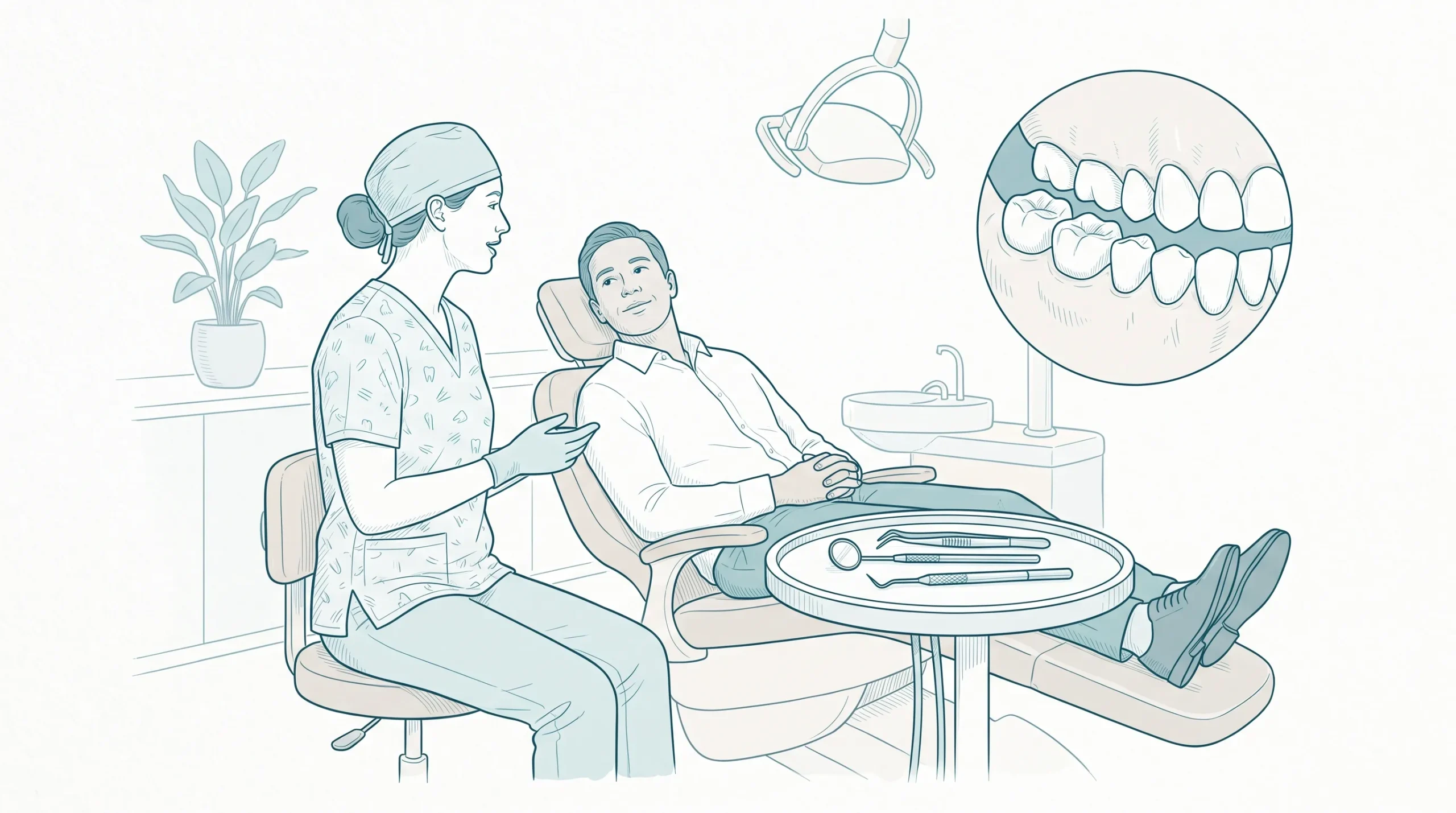
Before a dentist recommends teeth treatments, they need to understand the cause of the concern, not just what can be seen on the surface. A sore tooth, chipped edge, loose filling, crowding, staining or missing tooth can each have more than one possible explanation. A dental examination helps your dentist check your teeth, gums, bite, soft tissues and medical history so they can discuss options that fit your individual situation.
For patients in Geelong, this first appointment is also a chance to ask questions, explain what has been bothering you and understand whether treatment is needed at all. It may help avoid unnecessary care, identify issues that need prompt attention and make sure any next step is based on proper clinical information.
Why a dental examination comes before teeth treatments
A treatment plan is only as useful as the information behind it. Two people may describe the same symptom, such as sensitivity when drinking cold water, but one may have enamel wear while another may have decay, gum recession, a cracked tooth or a recent filling that needs review.
During an examination, your dentist is not only looking for a visible problem. They are assessing how the teeth function together, whether the gums are healthy enough to support treatment and whether there are risk factors that could affect healing or long-term maintenance. In other words, teeth treatments are usually planned after the dentist has enough information to explain the likely cause of the concern and the reasonable options available.
This approach supports informed consent, which means you have a chance to understand the proposed care, the alternatives, the limitations and the possible risks before deciding what feels right for you.
What your dentist checks before recommending care
A dental examination is broader than a quick look at one tooth. It usually combines what you have noticed at home with what the dentist can see, test and measure in the clinic.
Teeth, gums and existing dental work
Your dentist may check for decay, cracks, worn edges, loose fillings, crown margins, gum inflammation and areas that trap plaque. Gum health matters because gums and supporting bone help hold teeth in place. If gum disease is present, it may need to be managed before some restorative or cosmetic options can be considered.
This is one reason teeth treatments should not be chosen from appearance alone. A tooth that looks only slightly damaged may have deeper structural concerns, while a tooth that looks dark or worn may still have several possible management options.
Bite, jaw and soft tissues
The way your teeth meet when you bite can affect fillings, crowns, veneers, dentures and orthodontic options such as clear aligners. A heavy bite, clenching or grinding may influence material choice, tooth preparation and the need for protective measures.
Your dentist may also check the lips, cheeks, tongue, palate and floor of the mouth. These soft tissue checks are a routine part of oral healthcare and can help identify changes that may need monitoring or further assessment.
Medical history and medications
Your general health can affect dental care. Conditions such as diabetes, heart conditions, bleeding disorders, pregnancy, allergies and immune system concerns may influence treatment planning. Some medications can affect saliva flow, bleeding risk, healing or interactions with medicines used in dentistry.
If you are unsure what details matter, it is still worth mentioning them. A complete medical history helps your dentist tailor the discussion to your circumstances.
How examination findings can change the treatment options
A dental concern often has more than one possible pathway. The purpose of the examination is not to push you into a procedure, but to work out what is clinically appropriate and what options are reasonable to discuss.
For many teeth treatments, the key question is not simply “Can this be done?” but “Is this suitable for this tooth, this mouth and this person?” That includes oral health, anatomy, goals, comfort, budget, timeframes and willingness to maintain the result over time.
| Concern you may notice | What the examination may identify | Why it matters for planning |
|---|---|---|
| A broken or chipped tooth | Depth of the fracture, decay, bite pressure or nerve symptoms | A small repair, crown or other care may be discussed depending on remaining tooth structure |
| A missing tooth | Gum health, spacing, bite, bone levels and neighbouring teeth | Options such as a denture, bridge or implant depend on individual factors |
| Crowded or uneven teeth | Bite pattern, gum health, tooth movement needs and oral hygiene access | Clear aligner suitability needs a clinical assessment |
| Wisdom tooth discomfort | Position of the tooth, signs of infection, decay or gum inflammation | Monitoring, cleaning advice, removal or referral may be discussed depending on findings |
| Tooth discolouration | Surface staining, enamel changes, decay, old restorations or trauma history | Whitening is not suitable for every cause of colour change |
If you are looking for a broader overview of common options, Gentle Dental Geelong has a patient guide on what general dental treatment may include.
When X-rays or other records may be needed
Not every appointment requires X-rays. Your dentist may recommend them when they are needed to see areas that cannot be properly assessed by sight alone, such as between teeth, under existing fillings, around tooth roots or around wisdom teeth.
Other records may include photographs, gum measurements, bite checks or scans, depending on the concern. These records can help document the starting point and support a more detailed discussion about possible care.
Healthdirect provides general guidance on dental care and dental check-ups, including the role of regular dental visits in maintaining oral health. The Australian Dental Association’s patient resource, Teeth.org.au, also provides general oral health information for patients.
If you would like to understand the flow of an appointment, this guide to what happens during a dental visit explains the usual conversation, examination and discussion stages in plain language.
Why skipping the examination can create problems
It can be tempting to ask for a specific treatment straight away, especially if the concern feels obvious. For example, you may think a tooth needs whitening when the colour change is linked to an old filling, nerve change or enamel wear. You may think a painful wisdom tooth needs removal when the issue could be temporary gum inflammation, or you may think a chipped tooth needs a simple filling when the crack runs deeper.
Skipping the examination can lead to a plan that misses the real cause of the problem. It can also mean risks are not discussed properly. All dental procedures carry potential benefits and risks, and these vary between patients. Possible risks may include sensitivity, discomfort, infection, damage to nearby structures, changes to the bite, treatment not lasting as expected or the need for further care.
Before cosmetic or more complex care
Cosmetic and advanced dental options often need extra planning. This may apply to crowns, bridges, porcelain veneers, implants, Invisalign treatment, wisdom teeth removal and procedures involving sedation or sleep dentistry.
For example, an implant discussion usually needs assessment of gum health, bone levels, medical history and the condition of neighbouring teeth. Clear aligner planning needs an assessment of bite, gum health and whether tooth movement is suitable. Veneers and crowns need consideration of enamel, tooth structure, bite forces and maintenance needs.
A dental examination does not mean you must proceed with treatment. It means the dentist can explain what they found and what may or may not be suitable.
What happens after the examination?
After the examination, teeth treatments can be discussed in a more practical and personalised way. Your dentist may explain that no active treatment is needed, that monitoring is reasonable, that preventive care may help or that one or more treatment options can be considered.
A clear discussion may cover:
- What the dentist found during the examination
- The likely cause of the concern, where this can be determined
- Treatment options that may be suitable
- The possible benefits, risks and limitations of each option
- Whether X-rays, scans or referral are needed
- Expected appointments, recovery considerations and aftercare
- Estimated fees and payment options, where relevant
You should have an opportunity to ask questions before agreeing to care. If the proposed procedure is surgical, more complex or involves sedation, it is reasonable to ask for extra explanation. This article on understanding dental surgery before you agree to treatment may be useful if that applies to your situation.
How to prepare for a dental examination in Geelong
You do not need to know dental terminology before seeing a dentist. It is often more useful to describe what you have noticed in your own words, such as when symptoms started, what makes them worse and whether they come and go.
The most useful teeth treatments are planned with accurate information, so bring details that may affect care. This includes your medication list, allergies, recent medical changes, past dental concerns and any previous X-rays if you have them available.
If you are comparing options in the Geelong area, including Newtown, Geelong West, East Geelong, Belmont or Highton, it may help to write down your priorities before the appointment. For some people that might be comfort, cost, timing or avoiding treatment unless it is clearly needed. For others it may be appearance, function or replacing a missing tooth.
If dental anxiety is part of the picture, mention it early. Your dentist can discuss ways to make the appointment more manageable, which may include breaks, explanation before each step or sedation options where suitable.
When to arrange an assessment sooner
Some concerns are better assessed promptly rather than waiting for a routine appointment. This does not mean the most complex treatment will be needed, but it does mean a dentist should check what is happening.
Consider arranging a dental examination sooner if you have:
- Swelling in the face, gum or jaw
- Dental pain that is severe, worsening or disturbing sleep
- A broken tooth with sharp edges or sensitivity
- A knocked or loosened tooth after injury
- Bleeding that does not settle after pressure
- Signs of infection such as pus, fever or a bad taste near one tooth
- Difficulty opening your mouth, swallowing or breathing
Difficulty breathing or swallowing, facial swelling that is spreading or significant trauma should be treated as urgent and may require emergency medical care.
Frequently Asked Questions
Can a dental examination show that I do not need teeth treatments? Yes. An examination may show that no active procedure is needed at that time. Your dentist may recommend monitoring, preventive advice or routine maintenance instead, depending on the findings.
Do I need X-rays before every dental treatment? Not always. X-rays are recommended when they are clinically useful for diagnosis or planning. Your dentist should explain why an X-ray is being suggested.
Can I ask for a specific treatment at the first appointment? Yes. You can explain what you are interested in, such as whitening, Invisalign, veneers, implants or wisdom tooth removal. Your dentist will still need to assess whether that option may be suitable for your oral health and circumstances.
What if I feel nervous about the examination? Let the dental team know when you book or when you arrive. They can explain what is likely to happen and discuss ways to make the appointment feel more manageable.
Is a check-up different from a treatment appointment? Often, yes. A check-up or examination focuses on assessment, diagnosis and planning. Treatment may happen at the same visit in some simple situations, but more involved care usually needs a separate discussion or appointment.
Discussing your options with Gentle Dental Geelong
A dental examination can help determine the cause of your symptoms and which options may be appropriate. If you are considering care in Geelong, the team at Gentle Dental Geelong can assess your oral health, explain findings in everyday language and discuss the potential benefits, risks and alternatives before you decide whether to proceed.