

Most families do not need every service a dental clinic provides. Understanding the dental clinic services offered can help you recognise what may be relevant now, what might be useful later and which concerns are worth discussing at an appointment.
For families in Geelong, dental needs can change with age, lifestyle, medical history and personal goals. A young child may need preventive care and guidance on brushing. A teenager may need a sports mouthguard or wisdom tooth assessment. An adult may need a filling, crown, gum care or cosmetic advice. An older family member may want to discuss missing tooth options.
The right starting point is usually a dental examination. Your dentist can assess your mouth, explain what they find and discuss suitable options, including benefits, limitations, risks and alternatives.
Dental clinic services offered for families: a simple overview
A family dental clinic usually provides a mix of preventive, general, restorative and more advanced care. Not every clinic offers the same services, so it is reasonable to ask what is available before booking, especially if your family has specific needs such as dental anxiety, wisdom teeth concerns or children eligible for Medicare support.
| Service area | When it may be relevant | What it may involve |
|---|---|---|
| Preventive dental care | Routine check-ups, cleaning, early advice | Examination, scale and clean, fluoride advice, X-rays if clinically indicated |
| Children’s dentistry | Baby teeth, growing jaws, toothbrushing support | Gentle examination, fissure sealants if suitable, diet and hygiene advice |
| Restorative treatment | Tooth decay, cracks, worn teeth or broken fillings | Fillings, crowns, bridges or other repair options |
| Gum care | Bleeding gums, gum inflammation or gum disease risk | Gum assessment, cleaning below the gumline if required, home care planning |
| Urgent dental care | Toothache, swelling, trauma or broken teeth | Assessment, pain management advice and appropriate treatment planning |
| Wisdom teeth | Pain, infection, crowding concerns or impacted teeth | Examination, imaging and discussion of monitoring or removal options |
| Cosmetic dentistry | Concerns about colour, shape or spacing | Whitening, bonding, veneers or aligner discussions if suitable |
| Tooth replacement | Missing teeth or unstable dentures | Dentures, bridges or dental implants depending on suitability |
| Sleep dentistry | Dental anxiety, longer treatment or complex care needs | Sedation options after medical and dental assessment |
This overview is not a recommendation that your family needs all of these services. It is a guide to the types of care a dentist may discuss after looking at your individual circumstances.
Preventive care is often the foundation
Preventive dental care is usually the service families use most often. It focuses on reducing the chance of problems developing or picking them up earlier, when treatment may be simpler. A preventive appointment may include an examination of the teeth, gums, jaw joints, soft tissues and bite.
Your dentist may also check for plaque build-up, early signs of decay, gum inflammation and wear from grinding or clenching. Dental X-rays are not automatic for every patient. They may be recommended when your dentist needs more information, such as checking between teeth, under existing fillings or around unerupted teeth.
The Australian Dental Association’s patient website, Teeth.org.au, provides useful general information about oral health, brushing, flossing and common dental conditions. At an appointment, your dentist can tailor that advice to your own mouth rather than giving one-size-fits-all instructions.
If you would like more detail on what may happen during routine care, Gentle Dental Geelong has a separate guide explaining what general dental treatment may include.
Children’s dental services and growing mouths
Children’s dental care is not only about checking for cavities. It can also involve monitoring how teeth are erupting, how the jaws are developing and whether habits such as thumb sucking, mouth breathing or frequent snacking may be affecting oral health.
For younger children, appointments may be kept simple and calm. The dentist may count the teeth, check the gums, look for early decay and talk with parents or carers about brushing, toothpaste, diet and fluoride. For children who are at higher risk of decay, fissure sealants or fluoride treatments may be considered, depending on the child’s needs.
Families should also know about the Child Dental Benefits Schedule, often called CDBS. This is an Australian Government program that provides eligible children with a capped benefit for certain basic dental services. You can check current eligibility and coverage through Services Australia’s Child Dental Benefits Schedule information. Gentle Dental Geelong offers bulk bill children’s dental care through Medicare’s CDBS for eligible children.
As children become teenagers, dental needs can change. They may need a custom sports mouthguard, advice about diet and energy drinks, orthodontic assessment or review of wisdom teeth development. For a broader age-by-age overview, you may find this practical guide to family dental care useful.
Restorative services for damaged, decayed or worn teeth
Restorative dentistry aims to repair teeth affected by decay, cracks, wear or previous dental work that has broken down. Common examples include fillings, crowns and bridges.
A filling may be considered when a tooth has a cavity or a small broken area. A crown, sometimes called a cap, may be discussed when a tooth has lost more structure or needs greater coverage. A bridge may be considered when one or more teeth are missing and the teeth on either side can support the restoration.
Root canal treatment may be discussed if the nerve inside a tooth becomes inflamed or infected. This can happen after deep decay, trauma or cracks. The aim is to treat the inside of the tooth and reduce infection risk, but suitability depends on the tooth, the surrounding bone, symptoms and the long-term restorability of the tooth.
All dental procedures have possible benefits, limitations and risks. For restorative treatment, risks may include sensitivity, the need for further treatment, restoration wear or fracture over time. Your dentist can explain what applies to your situation before you decide.
Urgent dental care and when to seek prompt advice
Some dental problems can wait for a routine appointment. Others should be assessed promptly. Toothache that does not settle, swelling, a broken tooth with pain, dental trauma, bleeding that will not stop or signs of infection may need earlier attention.
Healthdirect provides general guidance on dental emergencies in Australia, including when to seek urgent medical help. If you have facial swelling affecting breathing or swallowing, serious injury or symptoms that feel medically urgent, seek emergency medical care rather than waiting for a dental appointment.
When you call a clinic about an urgent concern, describe your symptoms clearly. Useful details include when the problem started, whether there is swelling, whether you have a fever, what makes the pain worse, whether a tooth has broken and any relevant medical conditions or medicines.
If you are unsure how to choose care when time matters, Gentle Dental Geelong has a guide on finding a dental clinic when you need care promptly.
Wisdom teeth and oral surgery appointments
Wisdom teeth are the third molars at the back of the mouth. Some come through without causing problems. Others become partly erupted, impacted or difficult to clean, which may increase the chance of inflammation, decay around the area or repeated infections.
A wisdom tooth appointment may include an examination and dental imaging to check the position of the tooth, its roots and nearby structures. Depending on the findings, your dentist may discuss monitoring, cleaning advice, treatment for infection or removal.
Wisdom tooth removal is not automatically needed for everyone. If removal is recommended, your dentist should explain why, what the procedure may involve, expected recovery, likely costs and possible risks. These can include swelling, bruising, bleeding, dry socket, infection, temporary jaw stiffness and altered sensation. The risk profile varies depending on the tooth position and your individual anatomy.
Gentle Dental Geelong offers wisdom teeth removal, with consultations tailored to the treatment being considered.
Cosmetic and orthodontic options
Cosmetic dentistry may be considered when someone wants to discuss the colour, shape, size or spacing of teeth. Common options may include teeth whitening, composite bonding, porcelain veneers or clear aligner treatment such as Invisalign. Cosmetic treatment is elective, so it should be discussed carefully and never treated as something everyone needs.
A dentist will usually assess oral health first. Active decay, gum disease, tooth grinding or bite problems may need attention before cosmetic treatment can be planned. This is because cosmetic work placed on unhealthy or unstable foundations may not perform as expected.
Orthodontic and aligner treatment focuses on tooth movement and bite relationships. Suitability depends on factors such as gum health, tooth positions, jaw relationships and patient goals. Digital scans and 3D planning are increasingly used in some orthodontic settings. If you are comparing how orthodontic services are explained in different countries, this example of digital orthodontic planning shows the kinds of questions patients may ask about scans, treatment stages and maintenance.
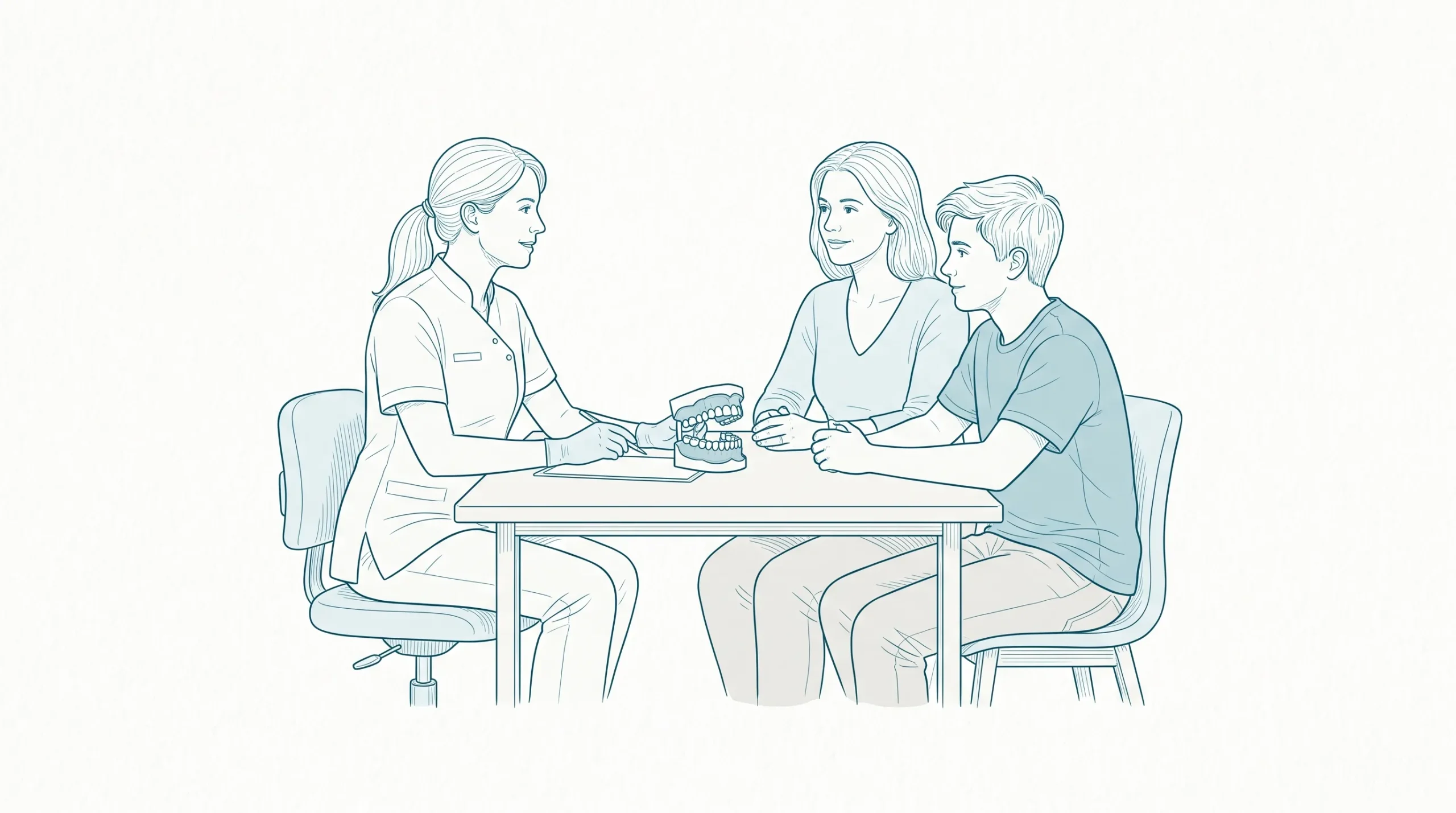
Dental implants, crowns, bridges and missing tooth options
Missing teeth can affect chewing, speech, tooth movement and the way bite forces are shared. Treatment is not the same for every person. Some people manage well without replacing a missing tooth. Others may benefit from discussing dentures, bridges or dental implants.
A dental implant is a small fixture placed into the jawbone to support a crown, bridge or denture. Implant treatment usually requires careful assessment of bone volume, gum health, medical history, smoking status, oral hygiene and bite forces. It is not suitable for every patient.
Crowns and bridges may also be used to restore damaged teeth or replace missing teeth. These restorations require planning because they may involve reshaping teeth, assessing bite forces and considering long-term maintenance.
Before choosing any tooth replacement option, ask about alternatives, risks, expected maintenance and what may happen if you decide not to treat the space. Your dentist can help you compare options without assuming that the most complex treatment is automatically the most suitable.
Sleep dentistry and support for anxious patients
Dental anxiety is common and can affect children, teenagers and adults. Some people avoid appointments for years because of previous experiences, embarrassment, fear of discomfort or concern about costs. A supportive appointment can start with a conversation rather than treatment.
Sleep dentistry usually refers to sedation options used to help a patient feel more relaxed during dental care. It does not mean the treatment is risk-free or suitable for everyone. A dentist needs to consider your medical history, medicines, the type of procedure, fasting requirements, transport arrangements and the level of sedation being discussed.
Sedation may be considered for anxious patients, people needing longer procedures or those who have difficulty tolerating treatment. It should be explained clearly before you consent, including potential risks and alternatives such as staged appointments, local anaesthetic, breaks during treatment or behavioural support strategies.
Gentle Dental Geelong offers sleep dentistry, and suitability can be discussed during consultation.
How to decide which services your family may need
It can be hard to know what to book if different family members have different needs. A practical approach is to start with the reason for the appointment, then let the dentist assess what is happening clinically.
You may want to book an assessment if someone in your family has:
- Tooth pain, swelling, bleeding gums or a broken tooth
- A child due for a dental check or eligible for CDBS care
- Wisdom tooth discomfort or repeated gum swelling at the back of the mouth
- Concerns about missing teeth, loose dentures or chewing difficulty
- Interest in cosmetic options, whitening or Invisalign
- Dental anxiety or a preference to discuss sedation before treatment
It is also reasonable to ask questions before treatment begins. Helpful questions include what options are available, what each option involves, what risks and limitations apply, whether the treatment is urgent or can be monitored and what costs may be expected.
Costs can vary because treatment depends on diagnosis, complexity, materials and the number of appointments required. If payment plans are important for your household budget, ask what may be available and request a written estimate before proceeding where possible.
What an appointment may involve at Gentle Dental Geelong
At Gentle Dental Geelong, an appointment for a new concern will usually begin with understanding why you have booked and what you would like assessed. Depending on the situation, your dentist may ask about symptoms, medical history, previous dental treatment, medicines, allergies and any anxiety or preferences you have.
The clinical assessment may include checking the teeth, gums, bite, jaw joints and soft tissues. X-rays or other imaging may be recommended only if they are needed to assess areas that cannot be seen directly. After this, your dentist can explain the findings and discuss appropriate options.
If treatment is recommended, you should be given enough information to make an informed decision. That includes what the treatment is intended to do, likely alternatives, possible risks, expected maintenance and whether referral may be appropriate for more complex needs.
Families from Geelong and nearby areas such as Newtown, Geelong West, East Geelong, Belmont and Highton may choose to look for a clinic that can manage routine care as well as more specific needs such as wisdom teeth, Invisalign, dental implants, cosmetic dentistry, emergency care and children’s dentistry.
Frequently Asked Questions
How often should my family visit a dentist? The right timing varies. Some people are advised to attend every six months, while others may need more or less frequent review depending on decay risk, gum health, medical history, age and previous dental problems. Your dentist can recommend a review interval after assessing your mouth.
Which dental clinic services offered are most important for children? Children often benefit from preventive care, dental development checks, brushing and diet advice, fissure sealants if suitable and early assessment of tooth decay or bite concerns. Eligibility for the Child Dental Benefits Schedule may also be worth checking.
When should a dental problem be treated as urgent? Prompt advice may be needed for facial swelling, severe or persistent toothache, dental trauma, uncontrolled bleeding, signs of infection or a broken tooth causing pain. If swelling affects breathing or swallowing, seek urgent medical care.
Can one dental clinic look after both general and cosmetic needs? Some family dental clinics provide both general and cosmetic services. Oral health usually needs to be assessed first because decay, gum disease or bite issues can affect whether cosmetic options are suitable.
Is sleep dentistry suitable for everyone? No. Sleep dentistry or sedation requires an individual assessment. Your medical history, medications, procedure type and safety considerations all matter. Your dentist can explain whether it may be suitable and what alternatives are available.
Do all family members need the same dental services? No. A child, teenager, adult and older parent may all need different care. A dental examination can help identify what is relevant for each person rather than recommending the same treatment for the whole family.
Considering dental care for your family in Geelong?
If you are comparing dental clinic services for your household, start with an assessment and clear information. Your dentist can explain what is happening, what options may be suitable and what risks, benefits and alternatives apply.
To discuss your concerns, you can book an appointment with the team at Gentle Dental Geelong. A dental examination can help determine which services may be appropriate for your family’s needs.