
A search for “dentists teeth” may bring tooth health to mind, but a routine examination looks more broadly. Dentists check more than teeth at a routine visit because healthy teeth depend on the tissues and structures around them. Your gums, tongue, saliva and jaw joints all contribute to a comfortable, functioning mouth. Looking at these areas can help explain symptoms, identify changes that need further assessment and guide care that suits your circumstances.
For patients attending a check-up in Geelong, this broader examination does not mean more treatment is automatically needed. Sometimes the appropriate next step is advice, monitoring or a referral. If you want an appointment walkthrough, our guide to what happens during a dental visit explains the usual process.
Why dentists check more than teeth
A tooth can look intact while the gum around it is inflamed. A sensitive tooth might be affected by wear, gum recession or another problem. Difficulty chewing may involve the jaw muscles rather than a cavity.
Checking the whole mouth helps a dentist consider these possibilities rather than treating one visible area in isolation. It also gives them a starting point for comparing changes at later appointments.
A routine examination is an assessment, not a commitment to treatment. Your dentist should explain what they find, how certain they are about its significance and whether anything needs to happen next.
Gums reveal how well teeth are supported
Gums form a protective seal around the teeth. Beneath them, other tissues and bone help hold teeth in place. Checking this support is different from checking the tooth surface for decay.
Your dentist may look for redness, swelling, bleeding or recession, where the gum moves away from its usual position. They may also use a small measuring instrument to assess the spaces between teeth and gums. These measurements help evaluate gum health and track changes.
The Australian Government-supported Healthdirect information on gum disease explains the distinction between gingivitis, inflammation of the gums, and periodontitis, which affects the supporting tissues around teeth. Gum problems may develop without obvious pain.
Bleeding gums do not establish a diagnosis on their own. Your dentist considers the examination findings alongside cleaning habits, medical conditions and other relevant factors. Advice may involve adjusting home care, professional cleaning or further assessment, depending on what is found.
The tongue, cheeks and lips can show changes worth investigating
The soft tissues of your mouth include your tongue, inner cheeks, lips, gums and the roof and floor of the mouth. They can develop ulcers, irritation, patches or lumps that have little to do with tooth decay.
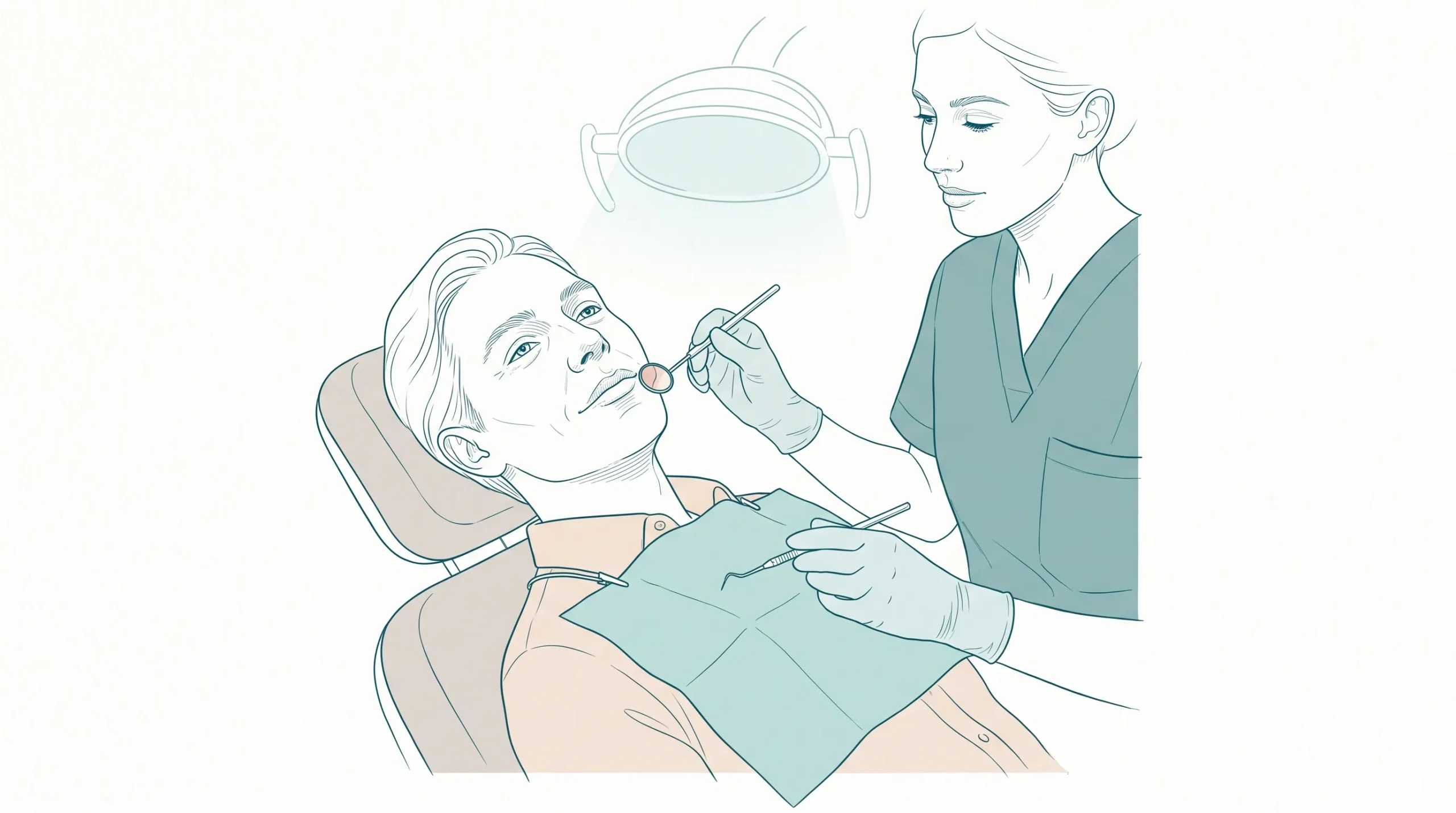
Your dentist may gently move your tongue or cheek to see areas that are difficult to inspect yourself. Depending on your history and findings, they may also examine or feel areas around the jaw and neck.
Many mouth changes have non-cancerous explanations, such as accidental biting or irritation. However, appearance alone cannot reliably establish the cause. A persistent or unusual change may need review, referral or a biopsy, where a small tissue sample is examined.
Healthdirect’s information on mouth cancer describes symptoms that warrant assessment. Arrange a dental or medical appointment for an unexplained ulcer, patch or lump that lasts more than two weeks, or sooner if it is worsening.
A routine oral examination can identify suspicious changes, but it cannot rule out every condition or confirm cancer by itself.
Saliva matters for comfort and protection
Saliva does more than keep your mouth moist. It helps with swallowing, clears food particles and helps neutralise acids that can damage teeth. Although less obvious in a search for “dentists teeth”, saliva protection is part of understanding tooth health.
A dentist may ask about dryness, difficulty eating dry foods or needing water during the night. They may also notice changes in the mouth that suggest reduced saliva.
Dry mouth can have several causes, including medicines, dehydration and certain health conditions. Healthdirect’s dry mouth guidance outlines common causes and management approaches. Persistent dryness can increase the risk of decay and make wearing dentures or eating less comfortable.
Your dentist can consider the likely contributing factors and discuss suitable options. These may include reviewing oral care, fluoride protection or saliva substitutes. A medicine review may require input from your GP or pharmacist. Do not stop prescribed medicines because of dry mouth without speaking with the prescribing clinician.
Your bite and jaw help explain how your mouth functions
Your bite is the way your upper and lower teeth meet. The jaw joints, located just in front of your ears, and the surrounding muscles allow your mouth to open and move.
Checking these areas can help your dentist assess reported discomfort, limited opening, difficulty chewing or unusual tooth wear. They may ask whether symptoms are worse on waking, whether your jaw locks or whether you have noticed clenching.
Wear marks can provide useful information, but they do not prove that you grind your teeth during sleep. Tooth wear can have several contributing causes, including acid exposure and mechanical wear.
Similarly, a clicking jaw does not automatically require treatment. The significance depends on pain, function and other findings. A splint, bite adjustment or orthodontic treatment should not be assumed necessary simply because a sound or wear pattern is present.
Medical history helps make dental care appropriate
Questions about your general health are relevant even when you are attending for a routine check-up. Conditions such as diabetes can influence gum health, while some medicines affect saliva, bleeding or healing.
Your dentist also needs to know about allergies, changes to medicines and previous reactions to dental treatment. Pregnancy and recent medical treatment may be relevant to planning care.
These details help the team interpret findings and consider precautions where needed. They do not mean your dentist can diagnose a general medical condition from your mouth alone.
If a finding might relate to your wider health, your dentist may suggest discussing it with your GP or another clinician. Dental and medical care have different roles, and sometimes both are needed to understand a concern.
What broader findings may mean for your care
Finding something during an examination does not always mean it needs a procedure. Your dentist should distinguish between a change that needs treatment, one that needs investigation and one that can reasonably be monitored.
| Finding | What it may prompt |
|---|---|
| Gum bleeding or inflammation | Assessment of gum health, cleaning advice and treatment if indicated |
| Persistent mouth dryness | Review of contributing factors and discussion of protective measures |
| An unexplained mouth patch or ulcer | Further examination, review or referral depending on its features and duration |
| Tooth wear or jaw symptoms | Assessment of possible causes and whether management is needed |
This is one reason a dental examination comes before teeth treatments. Understanding the cause helps avoid choosing a treatment simply because a change is visible.
If treatment is recommended, ask about its purpose, likely benefits, potential risks and alternatives. Where appropriate, this includes discussing monitoring or no treatment. Suitability and treatment experiences vary between patients.
How to make your routine visit more useful
You do not need to know which symptoms are “dental” before mentioning them. Dryness, a sore spot or difficulty opening your mouth can be relevant even when your teeth feel fine.
Before your appointment, it can help to prepare:
- An up-to-date list of medicines and supplements, including any recent changes.
- A description of symptoms, when they started and whether they come and go.
- Details of medical conditions, allergies or previous treatment reactions.
- Any concerns about comfort, costs or treatment preferences.
If you feel anxious, tell the dental team. You can discuss how explanations, pauses or an agreed stop signal might make the examination more manageable. You can also ask which parts of the assessment are being carried out and why.
Frequently asked questions
Do I need a dental check-up if my teeth do not hurt? An absence of pain does not confirm that teeth, gums and other mouth tissues are healthy. Routine assessment may identify changes you have not noticed. The timing of visits should be based on your oral health, risk factors and previous findings rather than one schedule for everyone.
Does every routine visit require X-rays? No. Dental X-rays are recommended when they are expected to provide information that is useful for assessment or care. Your dentist considers symptoms, examination findings, previous images and individual risk. X-rays involve radiation exposure, so their use should be clinically justified.
Can a dentist tell if I have another health condition? Some mouth findings may suggest that medical assessment would be useful, but they rarely establish a general medical diagnosis by themselves. Your dentist may recommend speaking with your GP or arrange a referral where appropriate.
Should I wait for my next check-up if I notice a change? Persistent bleeding, unexplained mouth changes or worsening discomfort should be assessed rather than left until a distant routine appointment. Facial swelling with difficulty breathing or swallowing requires immediate emergency medical care. In Australia, call 000.
Discuss your concerns at a dental assessment
If you arrived here by searching “dentists teeth”, the key point is that tooth checks are only part of a dental assessment. A routine visit is an opportunity to understand the health of your whole mouth, not just check for cavities. To discuss a symptom or arrange a routine examination, you can contact Gentle Dental Geelong. Bring your questions so the team can explain the findings and any options relevant to your needs.