

If you are searching for a Corio dentist, you are probably looking for care that is practical to access, easy to understand and suited to your dental needs. The closest clinic is not automatically the right fit for every person. It is worth comparing a few factors before booking, especially if you have children, feel nervous about dental visits or need advice about a specific concern such as wisdom teeth, tooth pain, Invisalign or dental implants.
Choosing a dentist is not about finding the most impressive advertisement. It is about finding a clinic where you can ask questions, understand your options and receive care that is appropriate for your oral health, medical history and personal circumstances.
Start with what you need from a Corio dentist
Before comparing clinics, think about why you are booking. A routine check-up is different from a wisdom tooth assessment or a cosmetic consultation. Your reason for visiting can help you decide which clinic is likely to be suitable.
You may be looking for:
- Routine dental examinations, cleans and preventive advice
- Care for children or teenagers
- Assessment of toothache, swelling, broken teeth or dental trauma
- Advice about wisdom teeth, extractions or oral surgery
- Cosmetic options such as veneers, crowns or Invisalign
- Replacement options for missing teeth, including bridges or implants
- A clinic that can discuss sleep dentistry or anxiety management options
Not every person needs a clinic that offers advanced treatment. For many people, a dentist who communicates clearly, focuses on prevention and explains when further care may or may not be needed is enough. For others, it may be useful to choose a practice that can assess a broader range of treatment options in one place.
Check registration and professional standards
In Australia, dentists must be registered with the Dental Board of Australia. If you are unsure, you can search the national public register through AHPRA. This is a practical first check because it confirms whether a practitioner is currently registered to practise.
It is also sensible to be cautious with titles. A general dentist can provide a wide range of dental treatment, but the word specialist has a specific meaning in Australia and should only be used by practitioners registered in a recognised dental specialty. If a clinic mentions specialist care, you can ask who is providing the treatment and what their registration category is.
Good dental care should also include informed consent. This means your dentist explains the nature of the treatment, possible benefits, limitations, risks, alternatives and likely costs before you decide whether to proceed. You should not feel rushed into treatment that you do not understand.
Look for clear explanations, not pressure
A helpful dental consultation should leave you with a clearer understanding of what is happening in your mouth. That does not mean you need to learn dental jargon. It means your dentist should be able to explain findings in plain language and answer reasonable questions.
Depending on your concern, an appointment may include a discussion of your symptoms, medical history, dental examination and X-rays when clinically indicated. If treatment is recommended, ask why it is being suggested and whether there are alternatives, including the option of monitoring a condition where appropriate.
| Question to ask | Why it matters |
|---|---|
| What is the main dental issue you can see? | Helps you understand the diagnosis or working explanation |
| What are my treatment options? | Allows you to compare approaches rather than feeling locked into one path |
| What are the risks and limitations? | All dental procedures carry potential risks and outcomes vary |
| What happens if I wait or monitor it? | Some issues need prompt care, but others may be reviewed over time |
| Can I have the estimated costs in writing? | Helps you make an informed financial decision |
If you want a broader framework for comparing local practices, Gentle Dental Geelong has also published guidance on how to choose a dentist in Geelong for your needs, including factors such as communication style, services and fees.
Match the clinic’s services to your likely needs
When choosing a dental clinic near Corio, it can help to look beyond your immediate appointment and think about what care you may reasonably need over time. A person booking a check-up may only need preventive care. Someone with wisdom tooth pain, missing teeth or a heavily broken tooth may need a clinic that can explain more involved treatment options.
Gentle Dental Geelong offers general family dentistry and services such as wisdom teeth removal, sleep dentistry, dental implants, Invisalign, crowns and bridges, porcelain veneers and emergency dental care. Suitability for any treatment depends on your oral health, anatomy, medical history, goals and a clinical assessment.
For a general overview of common categories of care, you can read more about what dental treatment services are available. This can be useful if you are unsure whether your concern is likely to involve preventive care, restorative treatment, cosmetic dentistry or more urgent assessment.
Consider location, access and appointment logistics
Convenience matters because dental care often involves more than one visit. If you live or work in Corio, you may be comparing clinics in Corio itself, Norlane, North Geelong, Geelong West, central Geelong, Belmont, Highton or nearby suburbs.
Think about the practical details:
- How long does it take to get there from home, work or school?
- Is parking or public transport manageable for you?
- Are appointment times suitable for your schedule?
- If treatment needs follow-up, would repeat visits be practical?
- Can the clinic accommodate children, carers or mobility needs if relevant?
A slightly longer drive may be worthwhile if the clinic offers the services, communication style or anxiety support you need. For routine care, however, a location that you can attend consistently may make preventive visits easier to maintain.
Comfort matters, especially if you feel nervous about dental care
Many people feel uneasy about dental appointments. Some have had difficult past experiences, some are sensitive to sounds and sensations, and some feel embarrassed about how long it has been since their last visit. A considerate dental team should respond without judgement and explain what will happen before starting treatment.
If you feel anxious, ask the clinic how they approach nervous patients. This may include allowing time for questions, explaining instruments before they are used, agreeing on a signal to pause or discussing sedation options when clinically appropriate. Sedation and sleep dentistry are not suitable for everyone, so a dentist needs to assess your medical history and the planned treatment before advising whether they may be appropriate.
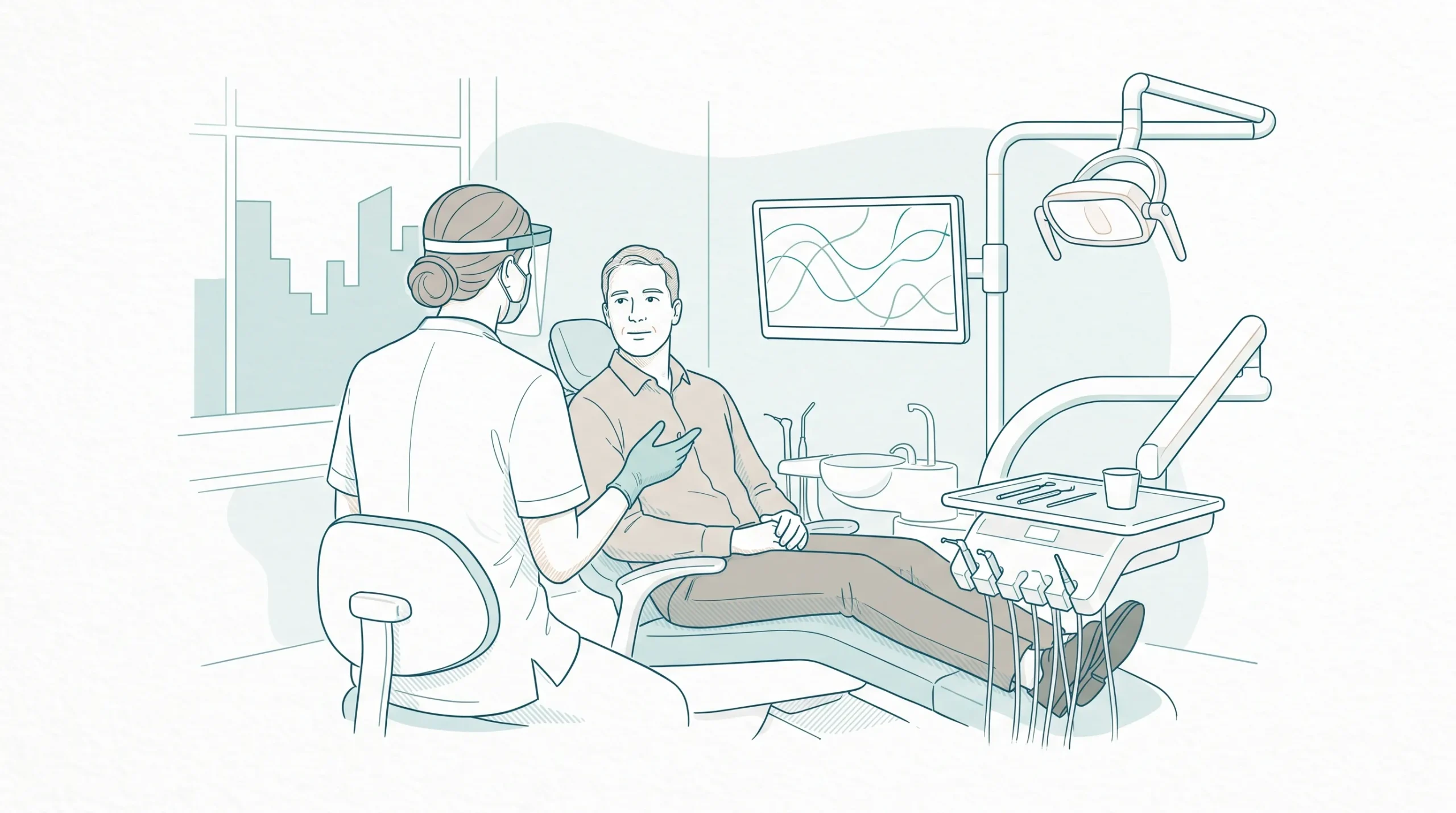
The clinic environment can also affect comfort. Dental settings include unavoidable sounds from suction, handpieces and equipment, but thoughtful room design and communication can make the experience feel more manageable.
Ask about fees, payment options and health fund details
Dental fees can vary because treatment plans differ between patients. A filling, crown, extraction or implant consultation may involve different materials, appointment lengths and complexity. Before starting treatment, ask for a written estimate where possible and check whether the quoted fee includes related appointments, X-rays, temporary restorations or follow-up care.
If you have private health insurance, ask whether the clinic can provide item numbers so you can check your expected rebate with your fund. Health fund cover varies between policies, and a clinic cannot guarantee what your insurer will pay.
Gentle Dental Geelong offers payment plans, but the suitability and terms of any payment arrangement should be discussed directly with the clinic before proceeding. If you are arranging care for a child, ask whether they may be eligible for Medicare’s Child Dental Benefits Schedule. Gentle Dental Geelong provides bulk billed children’s dental care through this scheme for eligible patients, with limits and eligibility rules applying.
Cost should not be the only factor in choosing a dentist. A very low fee may not tell you much about diagnosis, treatment planning, materials, follow-up or whether alternatives have been explained. The more useful question is whether the clinic is transparent and gives you enough information to make a considered decision.
Think about family care and prevention
If you are choosing a dentist for a household, look at how the clinic approaches routine care for different ages. Children, teenagers, adults and older patients can have different dental needs. A family dental clinic should be able to discuss brushing, diet, fluoride, mouthguards, gum health and early signs of dental problems in a way that is practical for everyday life.
For children, the first few appointments can shape how they feel about dental care in the future. A calm, age-appropriate approach may help them become more comfortable with examinations, although each child responds differently. If your child is anxious, has additional needs or has had a difficult previous experience, mention this when booking so the team can advise what may be possible.
Families comparing options may find it useful to review what to look for when choosing the right dental clinic for your family, including communication, emergency access and children’s dental care.
Know what to do if you need prompt dental care
Sometimes the choice of dentist becomes more urgent because a tooth breaks, pain develops or swelling appears. In these situations, the main priority is to find an appointment where a dentist can assess the cause and explain suitable next steps.
Symptoms that may need prompt professional advice include facial swelling, dental pain that is worsening, a knocked-out adult tooth, uncontrolled bleeding after trauma or extraction, fever with dental symptoms, or difficulty swallowing or breathing. Difficulty breathing or swallowing is a medical emergency and should be treated urgently through emergency medical services.
If you are unsure how quickly to act, this guide on finding a dental clinic when you need care promptly explains what information to provide when calling and what symptoms may require faster attention.
A simple checklist before booking
Once you have narrowed down your options, use a short checklist to compare clinics in a practical way.
- Is the dentist registered in Australia?
- Does the clinic provide the type of care you are likely to need?
- Are treatment options, risks and alternatives explained clearly?
- Can the clinic provide written fee estimates before treatment?
- Is the location practical from Corio, work, school or home?
- Does the clinic discuss children’s care, anxiety support or sedation options if relevant?
- What process does the clinic use for urgent dental concerns?
You do not need to find a clinic that ticks every possible box. The aim is to choose a dentist who can assess your needs properly, communicate clearly and provide care that is suitable for your circumstances.
Frequently Asked Questions
Should I choose the closest Corio dentist? The closest clinic may be convenient, but it is not the only factor to consider. Registration, communication, services, fees, comfort and appointment availability can all affect whether a clinic is a suitable fit.
How often should I see a dentist? The right interval varies between patients. Some people benefit from regular preventive visits, while others may need a different schedule based on gum health, decay risk, medical conditions or past dental treatment. Your dentist can recommend a review interval after examining your mouth.
Can a general dentist provide cosmetic treatment? Many general dentists provide cosmetic dental treatments such as veneers, crowns, whitening or Invisalign. Suitability depends on your oral health, bite, tooth structure and goals. Your dentist should explain potential benefits, limitations, risks and alternatives before treatment.
What if I feel anxious about dental treatment? Tell the clinic before your appointment. They may be able to allow extra time, explain procedures in advance, agree on a pause signal or discuss sedation options where clinically appropriate. Sedation is not suitable for every patient, so an assessment is needed.
Does Medicare cover children’s dental care? Some children are eligible for Medicare’s Child Dental Benefits Schedule, which covers certain basic dental services up to a set limit. Eligibility rules apply. Gentle Dental Geelong provides bulk billed children’s dental care through this scheme for eligible patients.
Considering dental care near Corio?
If you are comparing a Corio dentist with clinics across the wider Geelong area, a dental examination can help determine the cause of any symptoms and which options may be appropriate. To discuss routine care, a specific dental concern or possible treatment options, you can arrange an appointment with Gentle Dental Geelong in Geelong.
Your dentist can assess your oral health, explain the potential benefits, risks and alternatives, and help you decide what is appropriate for your individual circumstances.