
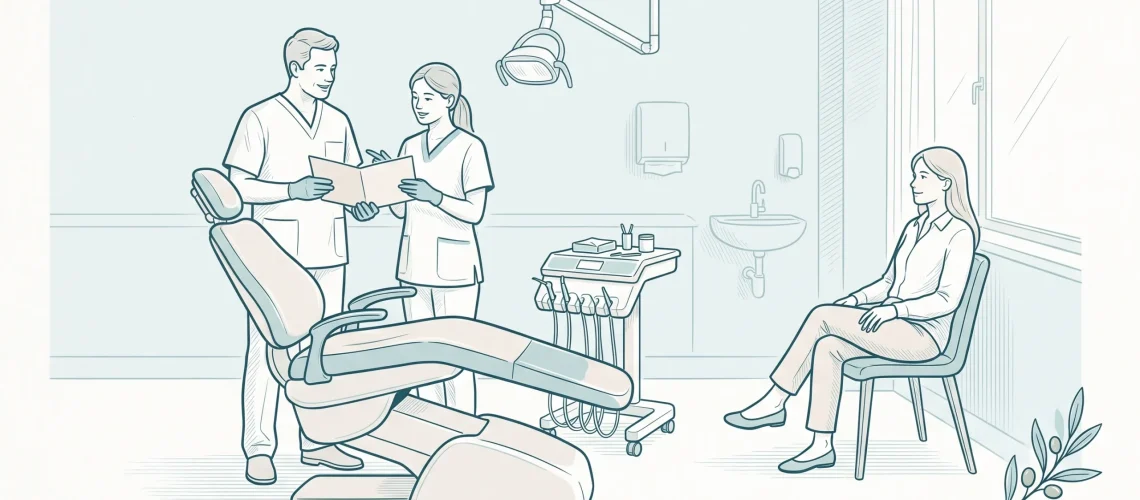
When you walk into a dental practice, you usually see the reception desk, treatment rooms and dental team. What you may not see is the preparation, infection control, record keeping, treatment planning and communication that happen before, during and after an appointment. These background steps help your visit run more smoothly and support safer, more informed dental care.
This article looks at the parts of dental care that patients do not always notice. It is not a substitute for personal advice, but it can help you understand why appointments involve more than the time spent in the dental chair.
Why the behind-the-scenes work at a dental practice matters
Good dental care relies on much more than a quick look at a tooth. Before a dentist recommends treatment, they may need to consider your symptoms, dental history, medical history, medications, X-rays where appropriate, risk factors and personal preferences.
The behind-the-scenes work helps the team answer practical questions such as:
- Is this appointment routine, urgent or related to a specific concern?
- Are there medical conditions or medications that may affect dental treatment?
- Are there previous X-rays, notes or treatment plans that need to be reviewed?
- Does the room need specific equipment or materials for the planned appointment?
- What information does the patient need before making a decision?
In a dental practice, these steps are part of providing care that is organised rather than rushed. They also help the dentist explain possible benefits, risks and alternatives in a way that suits your situation.
If you are more interested in what happens from the patient’s point of view, Gentle Dental Geelong also has a guide on what happens during a dental visit.
Before your appointment: notes, health information and planning
Before you arrive, the team may check appointment notes, update contact details and review the reason for your visit. If you are a new patient, you may be asked about your medical history, allergies, current medications and any dental concerns you want to discuss.
This information matters because oral health and general health often overlap. For example, some medications can affect bleeding, dry mouth or healing. Some health conditions may influence whether a procedure should be modified, delayed or coordinated with your GP or another health professional.
A dental practice also needs accurate records so that future care is based on what has happened previously. Notes may include previous treatment, findings from examinations, X-rays taken, advice given, consent discussions and treatment options considered.
You can make this part easier by bringing an updated medication list, mentioning any recent medical changes and writing down questions before you attend. If you want a practical checklist, this article on how to prepare for a dentist appointment may be useful.
Room preparation and infection control
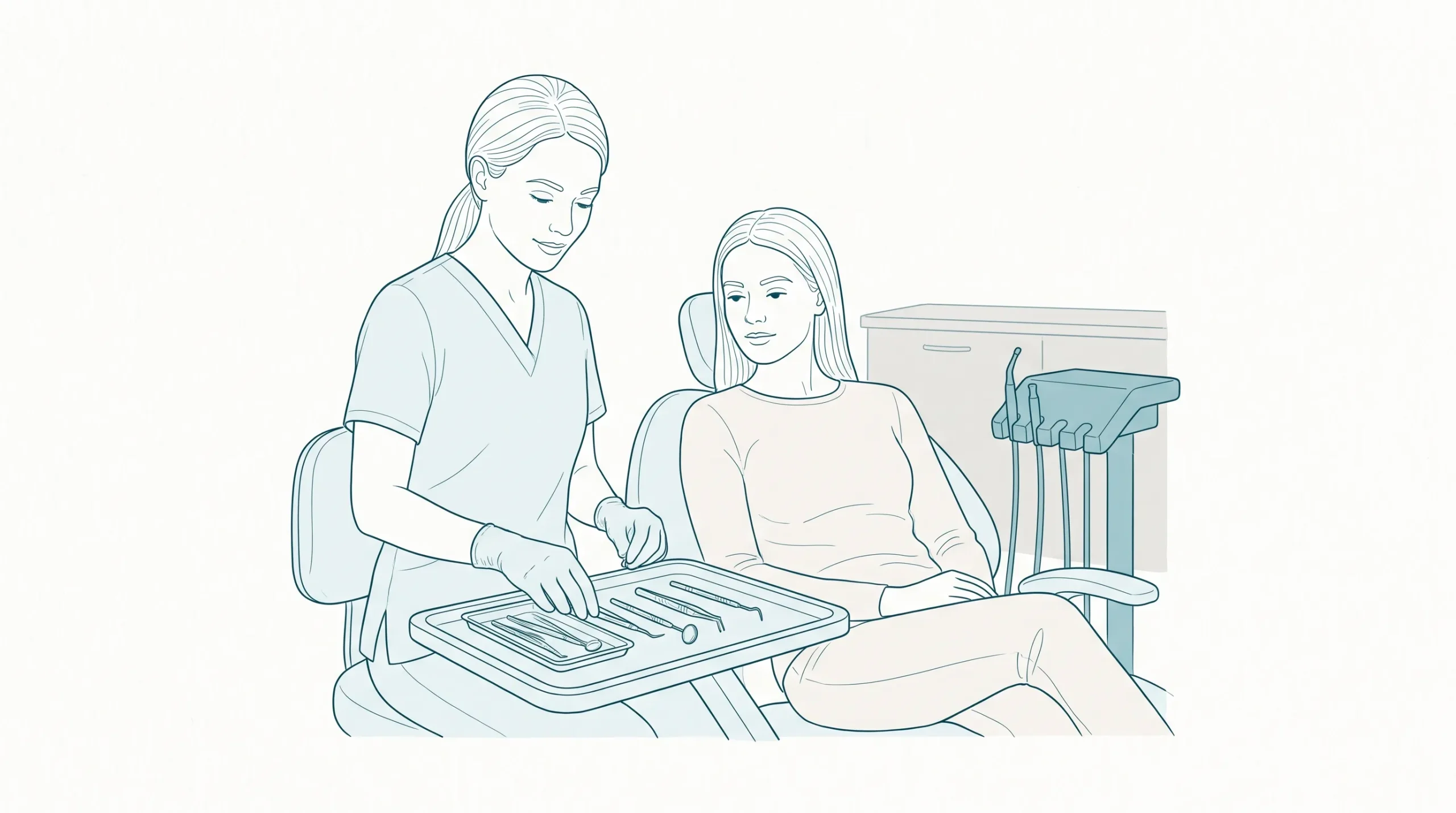
A treatment room is prepared before each patient. This may involve cleaning surfaces, setting up sterile instruments, checking equipment and ensuring the materials needed for the appointment are ready.
Infection prevention is a core part of dental care in Australia. Dental teams follow infection control processes so instruments, surfaces and clinical areas are managed appropriately. This includes separating clean and contaminated items, using personal protective equipment where needed and handling sharps safely.
At a dental practice, many of the most important safety steps are deliberately routine. They may not look dramatic from the patient’s side of the chair, but they help reduce avoidable risks during dental examinations, cleaning, fillings, extractions, crowns, implants and other procedures.
Not every appointment requires the same setup. A routine examination may need different instruments from wisdom teeth assessment, Invisalign records, emergency dental care or a cosmetic consultation. The aim is to have the right tools ready without adding unnecessary items to the room.
What happens with X-rays, scans and diagnostic information
Dental X-rays and other records are not taken simply for convenience. Your dentist considers whether the information is needed for assessment, diagnosis or treatment planning. For example, an X-ray may be discussed if decay is suspected between teeth, a wisdom tooth needs assessment or the dentist needs to review bone levels around teeth.
The team may also check whether previous images are available, whether they are recent enough to be useful and whether new images are appropriate. Dental imaging should be clinically justified, which means it should help answer a relevant question about your oral health.
Once information is gathered, the dentist may compare your symptoms, examination findings and images before explaining what they have found. This is why a dental practice may sometimes need extra time to review records before giving a clear treatment plan, especially when there are several possible options.
Treatment planning is more than choosing a procedure
A treatment plan should be based on an assessment, not assumptions. Before recommending a filling, crown, extraction, implant, veneer, aligner treatment or another option, the dentist considers the condition of the tooth, gum health, bite, symptoms, medical factors, likely maintenance needs and your goals.
This is also where limitations and alternatives matter. For example, a cracked tooth may have more than one possible management option depending on how deep the crack appears, whether the nerve is involved and how much healthy tooth structure remains. A missing tooth may be managed in different ways, and not every option is suitable for every patient.
All dental procedures carry potential benefits and risks. Treatment experiences, recovery and outcomes vary between patients, so your dentist should explain what is known, what is uncertain and what applies to your circumstances.
| Behind-the-scenes step | What it helps with |
|---|---|
| Reviewing medical and dental history | Identifying factors that may affect care or appointment planning |
| Checking previous notes and images | Avoiding repeated information and understanding past treatment |
| Preparing instruments and materials | Matching the room setup to the appointment type |
| Assessing X-rays or scans where appropriate | Supporting diagnosis and treatment planning |
| Discussing options, risks and alternatives | Helping patients make informed decisions |
| Recording consent discussions | Keeping a clear account of what was explained and agreed |
For more on why assessment comes first, you may find why a dental examination comes before teeth treatments helpful.
The people involved behind the scenes
A patient may mainly speak with the dentist, but dental care often involves several team members. Reception staff help manage bookings, forms and communication. Dental assistants help prepare rooms, support infection control processes, assist during procedures and help keep appointments organised.
Inside a dental practice, the clinical team also has to manage timing. Some appointments need longer than others because of the discussion involved, the treatment itself or the patient’s medical or comfort needs. Emergency dental concerns may require triage, which means the team asks questions to understand how quickly a person should be assessed.
For more complex treatment, there may also be communication with dental laboratories, suppliers or other health practitioners. For example, crowns, bridges, some implant components, mouthguards and certain cosmetic restorations may involve a dental laboratory. The patient may not see that communication, but it can affect timing and planning.
If a concern falls outside the scope of general dental care, a dentist may discuss referral to another appropriately qualified practitioner. Referral is not a failure of care. It can be part of making sure the patient is assessed by the right person for that particular issue.
Consent, costs and patient choice
In Australia, patients should be given information that supports informed consent. This means you should have the opportunity to understand what is being recommended, why it may be recommended, what alternatives may exist and what risks or limitations may apply.
The AHPRA advertising guidance also reflects an important principle for health information in Australia: communication should not be misleading, create unrealistic expectations or encourage unnecessary treatment.
For a local dental practice in Geelong, this means patient communication should be clear, balanced and relevant to the person in the chair. If treatment is optional, such as many cosmetic procedures, the discussion should make that clear. If treatment is recommended because of disease, pain, infection or function, the dentist should still explain options where reasonable.
Costs are another part of the background work. Fees can vary depending on the procedure, complexity, materials and number of visits needed. At Gentle Dental Geelong, known service areas include general family dentistry, wisdom teeth removal, sleep dentistry, implants, Invisalign treatment, crowns and bridges, porcelain veneers, emergency dental care, payment plans and children’s dental care through Medicare’s Child Dental Benefits Schedule where eligible. Suitability, fees and options need to be discussed for the individual patient.
How patients can make the process easier
You do not need to know dental terminology to take part in your care. Clear communication from both sides is often enough.
A few practical steps can help the dental team understand your needs:
- Tell the team if you are anxious, have had difficult dental experiences or need information explained slowly.
- Bring a current medication list, including prescribed medicines, over-the-counter medicines and supplements.
- Mention pregnancy, recent surgery, heart conditions, diabetes, allergies or changes to your general health.
- Describe symptoms clearly, including when they started, what triggers them and whether they are getting worse.
- Ask about the benefits, risks, costs, alternatives and likely maintenance needs before agreeing to treatment.
A dental practice can only plan well with the information available at the time. If something changes after your appointment, such as swelling, increasing pain, a broken temporary crown or a reaction to medication, contact the clinic for advice.
You can also read about how to take an active role in your dental care if you would like more guidance on asking questions and understanding options.
Frequently asked questions
Why does the dental team ask about my medical history? Your medical history may affect dental care, including bleeding risk, healing, medication interactions, dry mouth, infection risk or whether extra precautions are needed. Sharing accurate information helps your dentist assess what may be suitable for you.
What records does a dental practice keep? Records may include your medical history, dental charting, examination findings, X-rays or images where taken, treatment notes, consent discussions, referrals, correspondence and fee information. These records support continuity of care.
Why might I need another appointment before treatment starts? Sometimes a dentist needs more information before recommending treatment. This may include X-rays, scans, periodontal assessment, discussion of medical factors or time to compare options. This can be especially relevant for wisdom teeth, implants, crowns, aligners or dental surgery.
Can I ask how instruments are cleaned or sterilised? Yes. It is reasonable to ask general questions about infection control. Dental teams are used to explaining how rooms are prepared, why protective equipment is used and how instruments are managed between patients.
Does behind-the-scenes planning mean treatment will be recommended? Not necessarily. An assessment may lead to preventive advice, monitoring, referral, no active treatment or a treatment plan. The right pathway depends on your oral health, symptoms, preferences and clinical findings.
Arranging a dental appointment in Geelong
If you are due for a check-up, have a dental concern or want to understand your options, a dental examination can help identify what is happening and what choices may be appropriate. The team at Gentle Dental Geelong can assess your oral health, explain findings in plain language and discuss possible next steps based on your individual needs.
To discuss your concerns, you can contact Gentle Dental Geelong to arrange an appointment in Geelong, VIC.