

If you are looking for sleep dentistry in Geelong, you may be feeling nervous about treatment, planning a longer procedure or wondering whether sedation could make an appointment easier to manage. The short answer is that sleep dentistry is not one single treatment. It is a broad term for using medicines or anaesthetic techniques to help a patient feel more relaxed, drowsy or unaware during dental care.
Before any form of sedation is recommended, your dentist needs to understand your oral health, medical history, medications, allergies, past dental experiences and the treatment being considered. That assessment helps determine whether sleep dentistry may be suitable, which option is appropriate and what preparation is needed.
Sleep dentistry Geelong: what the term actually means
In everyday conversation, sleep dentistry often sounds like being fully asleep for dental treatment. In practice, it can refer to different levels of sedation. Some patients remain awake and able to respond. Others feel very drowsy and may remember little about the appointment. A smaller group may need general anaesthesia, where they are unconscious and cared for in an appropriate clinical setting.
The exact options available can vary between dental clinics and procedures. At Gentle Dental Geelong, sleep dentistry is listed among the services available, but your dentist will still need to assess your individual circumstances before discussing what may be appropriate for you.
Sedation is different from local anaesthetic. Local anaesthetic numbs a specific area of the mouth. Sedation affects relaxation, awareness and memory. For many dental procedures, both may be used, depending on the treatment plan and the type of sedation.
| Term you may hear | What it generally means | Points to discuss with your dentist |
|---|---|---|
| Inhalation sedation | A calming gas is breathed through a small nosepiece | Whether it is suitable for your procedure and health history |
| Oral sedation | Sedative medicine is taken by mouth, usually as a tablet or liquid | Timing, supervision, transport home and possible drowsiness |
| IV sedation | Sedative medicine is given through a vein by an appropriately trained provider | Monitoring, fasting, recovery and who provides the sedation |
| General anaesthetic | You are unconscious during treatment | Facility arrangements, anaesthetist involvement, risks and recovery instructions |
Not every patient needs sedation, and not every sedation option suits every patient. Your dentist can explain alternatives, such as staged appointments, extra time, communication signals, local anaesthetic adjustments or referral when another setting is more suitable.
Who might ask about sleep dentistry?
People consider sleep dentistry for many reasons. Some have dental anxiety from a previous experience. Some have a strong gag reflex, difficulty keeping their mouth open for long periods or concerns about a more complex procedure. Others may be planning treatment that is expected to take longer than a routine check-up.
Sleep dentistry may be discussed for procedures such as wisdom teeth removal, some restorative treatment, implant-related appointments or multiple treatments in one visit. That does not mean sedation is automatically recommended. The decision depends on your dental needs, medical history, the planned procedure, your preferences and the judgement of the treating dentist.
If anxiety is the main concern, it is still worth talking about it directly. A calm explanation, breaks during treatment, a clear stop signal and a gradual approach may be enough for some people. For others, sedation may be considered as part of a broader plan.
What happens before a sleep dentistry appointment?
A sleep dentistry appointment usually starts before the day of treatment. Your dentist will want to understand why sedation is being considered and whether there are any health factors that could affect safety or planning.
This pre-assessment may include questions about:
- Medical conditions such as sleep apnoea, asthma, heart conditions, reflux, diabetes or pregnancy
- Regular medicines, supplements, allergies and previous reactions to sedatives or anaesthetic
- Smoking, alcohol intake and recreational drug use, as these can affect sedation planning
- Previous dental experiences, anxiety triggers and what has helped or not helped before
- The procedure being considered and whether X-rays or scans are needed
A dental examination is usually needed so the dentist can identify the cause of your symptoms and plan treatment properly. If you are unsure what a standard visit involves, this guide to what happens during a dental visit explains the usual stages, including discussion, examination and treatment planning.
You should also receive information about the expected benefits, limitations, risks, alternatives and fees before deciding whether to proceed. If sedation is being planned, written instructions may be provided. These instructions matter, especially if fasting, an escort or changes to usual medicines are required.
Preparing for the day
Preparation depends on the type of sedation. For lighter options, instructions may be simple. For deeper sedation or general anaesthesia, preparation may be more detailed.
Your dental team may ask you to avoid food or drink for a set time, arrange for a responsible adult to take you home or avoid driving, alcohol, important decisions and machinery for a period after treatment. Follow the instructions given for your specific appointment rather than relying on general advice. Healthdirect’s overview of sedation explains why fasting, monitoring and recovery instructions can be important when sedative medicines are used.
Bring any requested paperwork, your Medicare or private health fund details if relevant, a list of medicines and any questions you would like answered. Wear comfortable clothing and avoid wearing heavy makeup or nail polish if you have been told monitoring equipment will be used, as this can sometimes interfere with clinical observation or devices.
If you become unwell before the appointment, such as developing a chest infection, fever or worsening asthma symptoms, contact the clinic before attending. Your dentist may need to review whether it is appropriate to continue as planned.
What to expect when you arrive
On arrival, the dental team will usually confirm your details, review your medical history and check that you have followed any preparation instructions. This may include confirming when you last ate or drank, who is taking you home and whether there have been any changes to your medicines or health since the assessment.
Before treatment begins, you should have an opportunity to ask questions. Consent is not just a signature on a form. It is the process of understanding what is planned, why it is being recommended, what the likely alternatives are and what risks may apply to your situation.
During the appointment, monitoring may be used depending on the type of sedation. This can include observation of breathing, pulse, oxygen levels and blood pressure. The dental team may also continue to use local anaesthetic for the treatment area, because sedation and numbing have different roles.
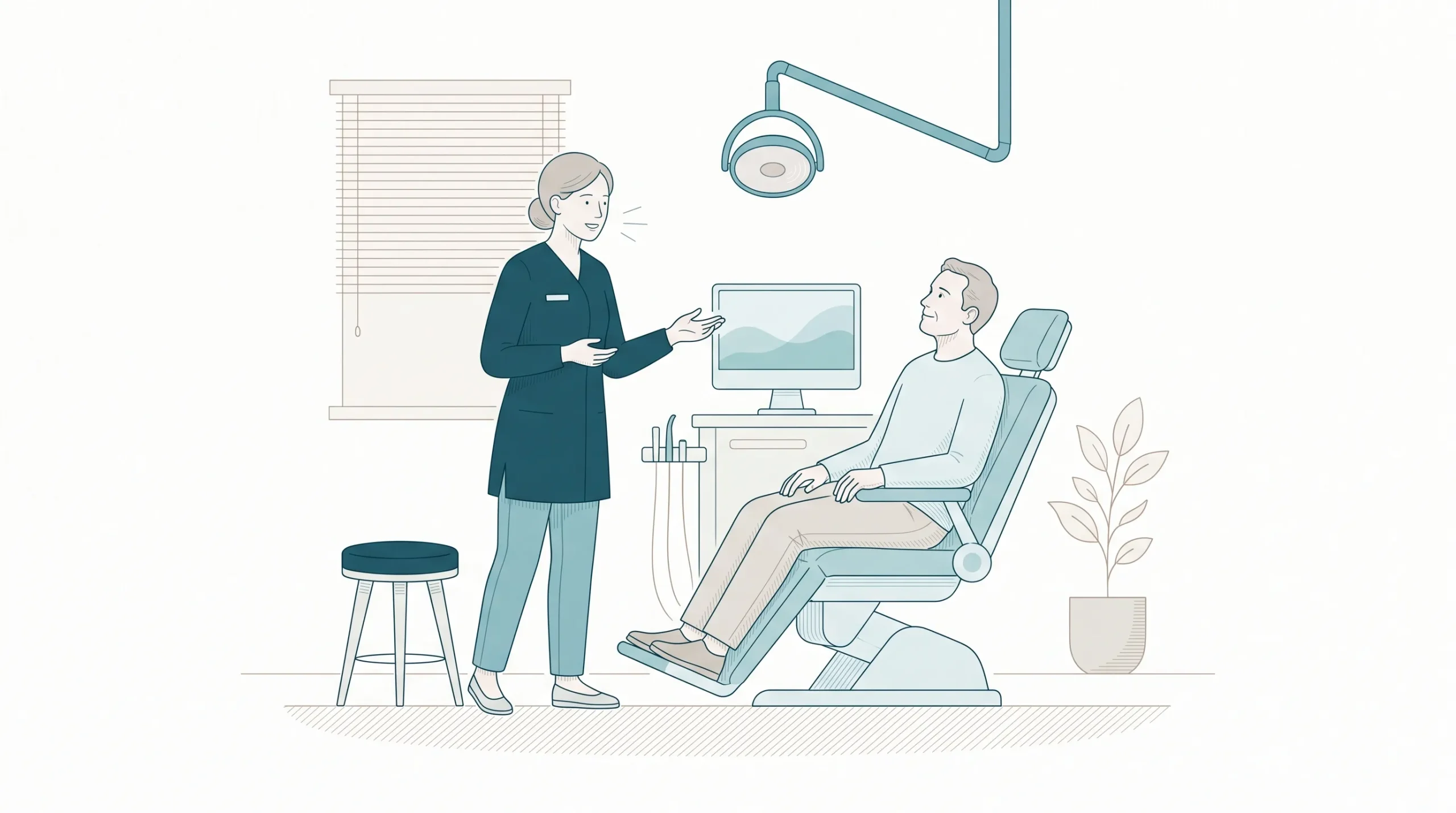
During treatment: what you may notice
Your experience will depend on the type and depth of sedation. With some forms, you may feel relaxed but awake and able to respond to instructions. With deeper sedation, you may feel very drowsy and have limited memory of the appointment. Under general anaesthetic, you are unconscious and will not be aware of the procedure while the anaesthetic is active.
Some patients still notice pressure, vibration or movement, particularly with lighter sedation. That does not necessarily mean the tooth or gum is not numb. If you feel discomfort or need a break and you are awake enough to respond, the dental team can assess what is happening and adjust the plan where appropriate.
The length of the appointment varies with the procedure, your response to sedation and recovery requirements. Your dentist can give you a more realistic estimate after assessing the treatment needed.
Recovery after sleep dentistry
Recovery is not the same for everyone. It depends on the sedative medicine used, the length of the appointment, your general health and the dental procedure performed.
After lighter sedation, some people feel alert sooner. After oral sedation, IV sedation or general anaesthesia, drowsiness and slower reaction times can last longer than the appointment itself. This is why you may be told not to drive home or travel alone after certain types of sedation. You may also need someone to stay with you for a period after you return home.
Eating and drinking instructions depend on the procedure and sedation. If local anaesthetic has been used, take care with hot drinks or chewing until normal sensation returns, as it can be easier to bite your cheek, lip or tongue without noticing.
Your dentist may also give procedure-specific aftercare. For example, recovery advice after a filling is different from advice after an extraction. Follow the written instructions you are given and contact the clinic if anything is unclear.
Benefits, limitations and risks to understand
For suitable patients, sleep dentistry may make dental care more manageable. It may help reduce anxiety, assist with gag reflex concerns or make longer appointments easier to tolerate. These are possible benefits, not guaranteed outcomes.
There are also limitations. Sedation does not treat the underlying dental problem by itself. It may add cost, preparation time and recovery requirements. Some patients are not suitable for certain sedative medicines because of their medical history, medication interactions or the setting required for safe care.
All dental procedures and sedative medicines carry potential risks. These can include nausea, drowsiness, dizziness, breathing changes, unexpected reactions, inadequate sedation, interactions with other medicines and complications related to the dental procedure itself. Serious complications are uncommon but possible, which is why proper assessment, monitoring and aftercare instructions matter.
| Area to consider | What to ask |
|---|---|
| Suitability | Is sedation appropriate for my health history and treatment? |
| Type of sedation | Which option is being considered and how awake might I be? |
| Monitoring | What monitoring is used during and after the appointment? |
| Recovery | When can I eat, drink, work, drive or exercise again? |
| Alternatives | Could treatment be done with local anaesthetic, staged visits or another approach? |
| Costs | What fees apply and what might my health fund cover? |
If you are comparing clinics or treatment pathways, this article on how to choose a dentist in Geelong for your needs may help you think through communication style, services, registration, fees and comfort.
What if you feel anxious about the appointment?
Dental anxiety is common, and you do not need to apologise for it. Tell the clinic when you book if you are worried about treatment, needles, gagging, sounds, past experiences or feeling out of control. This helps the team plan enough time for discussion rather than rushing straight into a procedure.
It may help to agree on a stop signal, ask for explanations before each stage or request breaks. Some people prefer minimal detail during treatment, while others feel calmer when they know what is happening. Both preferences are reasonable. The aim is to create a plan that fits your needs and supports safe, appropriate care.
For some patients, a first appointment may focus mainly on conversation, examination and planning rather than treatment. That can be a useful way to discuss options without feeling committed to a procedure on the same day.
When to seek advice after your appointment
Most aftercare questions can be handled by contacting your dental clinic. You should contact the clinic promptly if you have worsening pain, swelling, bleeding that does not settle with the instructions provided, fever, a bad taste or discharge, persistent vomiting or concerns about how you are recovering.
Seek urgent medical help if you have breathing difficulty, chest pain, fainting, confusion that is not improving or a severe allergic-type reaction such as facial swelling or trouble breathing. These symptoms need medical assessment rather than waiting for a routine dental review.
Frequently asked questions
Is sleep dentistry the same as general anaesthetic? Not always. Sleep dentistry is a general term and may include lighter sedation, deeper sedation or general anaesthesia. Your dentist can explain which option, if any, may be suitable for your treatment and health history.
Will I be asleep for the whole appointment? That depends on the type of sedation. Some patients remain awake but relaxed. Others feel very drowsy and remember little. Under general anaesthetic, the patient is unconscious while the anaesthetic is active.
Can I drive after sleep dentistry? For some types of sedation, you should not drive afterwards and will need a responsible adult to take you home. Your dental team will provide instructions based on the specific medicine or anaesthetic used.
Do I still need local anaesthetic? Often, yes. Sedation helps with relaxation and awareness, while local anaesthetic numbs the treatment area. Your dentist can explain what will be used for your procedure.
Is sleep dentistry suitable for wisdom teeth removal? It may be considered for some wisdom teeth appointments, depending on the complexity of the extraction, your anxiety level, medical history and the setting required. A clinical assessment is needed before making a recommendation.
What should I tell my dentist before sedation? Tell your dentist about medical conditions, medicines, allergies, pregnancy, previous reactions to anaesthetic, alcohol or recreational drug use, sleep apnoea and any recent illness. These details can affect sedation planning.
Speak with a dentist about sleep dentistry in Geelong
If you live in Geelong or nearby suburbs such as Newtown, Geelong West, East Geelong, Belmont or Highton, mention your interest in sleep dentistry when booking so the clinic can advise what type of assessment may be needed.
A dental examination can help clarify what treatment is required and whether sedation may be appropriate for your situation. The team at Gentle Dental Geelong can discuss your concerns, explain available options and outline the potential benefits, risks and alternatives before you decide how to proceed.