
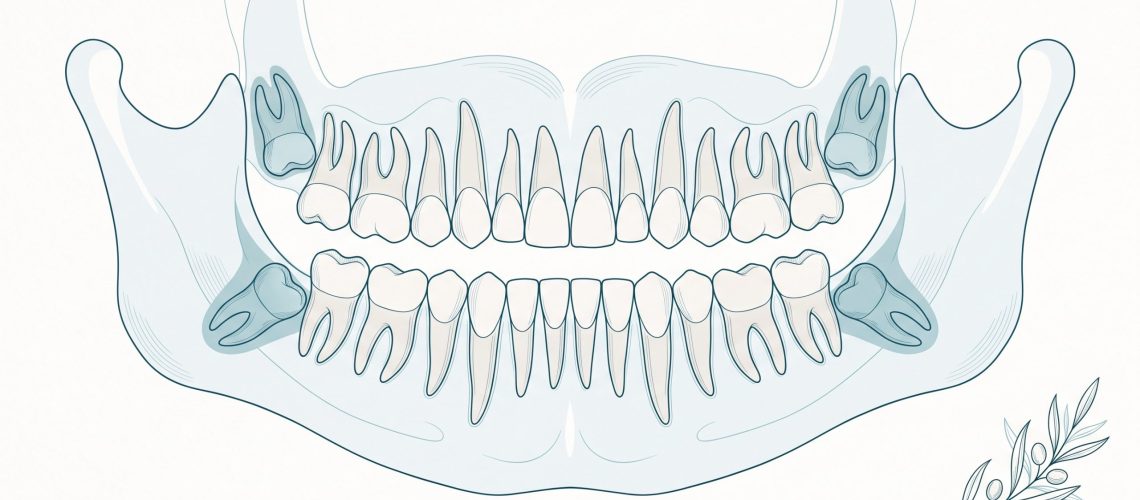
If you are noticing pain at the back of your mouth, swelling around the gums or a bad taste that keeps coming back, it may be related to your wisdom teeth. Dental wisdom teeth concerns are common in the late teens, twenties and sometimes later, but symptoms can have several causes. A dentist’s assessment is the safest way to understand what is happening and whether treatment is needed.
Wisdom teeth are the third molars at the very back of the mouth. Some come through without causing trouble. Others become partly trapped under the gum, angled against the tooth in front or difficult to clean. Not every wisdom tooth needs to be removed, but certain symptoms are worth checking rather than guessing at home.
Dental wisdom teeth symptoms that should be assessed
A dental wisdom tooth may need assessment if symptoms are persistent, worsening or affecting normal activities such as eating, sleeping or opening your mouth. Pain alone does not always mean removal is required, but it can be a sign that the gum, tooth or surrounding area is irritated or infected.
Symptoms that should be assessed by a dentist include:
- Pain or tenderness at the back of the mouth
- Swelling, redness or bleeding around the gum near a back molar
- Food getting trapped under a gum flap
- A bad taste, unpleasant smell or pus near the gum
- Difficulty opening your mouth fully
- Pain when biting down or chewing
- Swelling in the cheek or jaw
- Fever, feeling unwell or swollen glands
- Pain spreading to the ear, jaw or throat
If swelling is spreading, you have difficulty swallowing or breathing, or you feel very unwell, seek urgent medical or dental advice. These symptoms are not common for routine wisdom tooth irritation and may need prompt care.
Why wisdom teeth can cause symptoms
Wisdom teeth often appear after most of the adult teeth are already in place. If there is limited room, a wisdom tooth may erupt only partly or remain impacted, which means it is stuck under the gum or against another tooth.
A partly erupted wisdom tooth can leave a small flap of gum over the tooth. Food and bacteria can collect under this area, making it difficult to clean properly with a toothbrush. This may lead to gum inflammation around the tooth, known as pericoronitis.
Symptoms can also occur if decay develops in the wisdom tooth or the molar next to it. Because the area is hard to see and reach, decay may progress before it becomes obvious. The Australian Dental Association’s patient information on wisdom teeth notes that wisdom teeth may require assessment when they are painful, infected, decayed or affecting nearby teeth.
A dental wisdom assessment is not only about the wisdom tooth itself. Your dentist also considers the neighbouring molar, the gum, the bite and whether there are signs of infection or other dental issues that could explain your symptoms.
Symptoms that may suggest infection or inflammation
Inflammation around a wisdom tooth can be mild, but it can also become more uncomfortable if bacteria are trapped under the gum. You might notice soreness that comes and goes, especially after eating, or gum tissue that feels puffy around the back molar.
Possible signs of infection or more significant inflammation include:
- Increasing pain rather than occasional tenderness
- Swelling around the gum or cheek
- Pus or discharge near the tooth
- A bad taste that returns after brushing
- Pain when closing your teeth together
- Difficulty opening the mouth due to jaw stiffness
- Fever or generally feeling unwell
These symptoms do not confirm a diagnosis on their own. Similar discomfort can come from tooth decay, a cracked tooth, gum disease, jaw joint problems or ulcers. This is why a clinical examination is important before deciding on treatment.
For a related overview, Gentle Dental Geelong has a patient guide on when to see a dentist about wisdom teeth that explains common warning signs and what a dentist may check.
When pain at the back of the mouth is not from wisdom teeth
It is easy to assume any pain behind the molars is wisdom tooth pain, but that is not always the case. A large filling, cracked tooth, gum pocket, sinus pressure or clenching can cause pain in a similar area.
Referred pain can also make the source difficult to identify. For example, a lower molar problem may feel like ear or jaw discomfort. An upper molar issue may feel like sinus pressure. Sometimes the gum around a wisdom tooth is sore because the opposing tooth is biting into it.
In some cases, dental wisdom tooth pain may be only one part of a broader issue, such as decay in the tooth beside it. A dentist may use a mirror, periodontal probe and X-rays where clinically appropriate to narrow down the cause. This helps avoid unnecessary treatment and supports a plan based on the actual problem.
If you are unsure whether your symptoms are urgent, it is reasonable to contact a dental clinic and describe what you are experiencing. Mention swelling, fever, difficulty opening, pain level, how long it has been happening and whether symptoms are getting worse.
What a dentist may check during an assessment
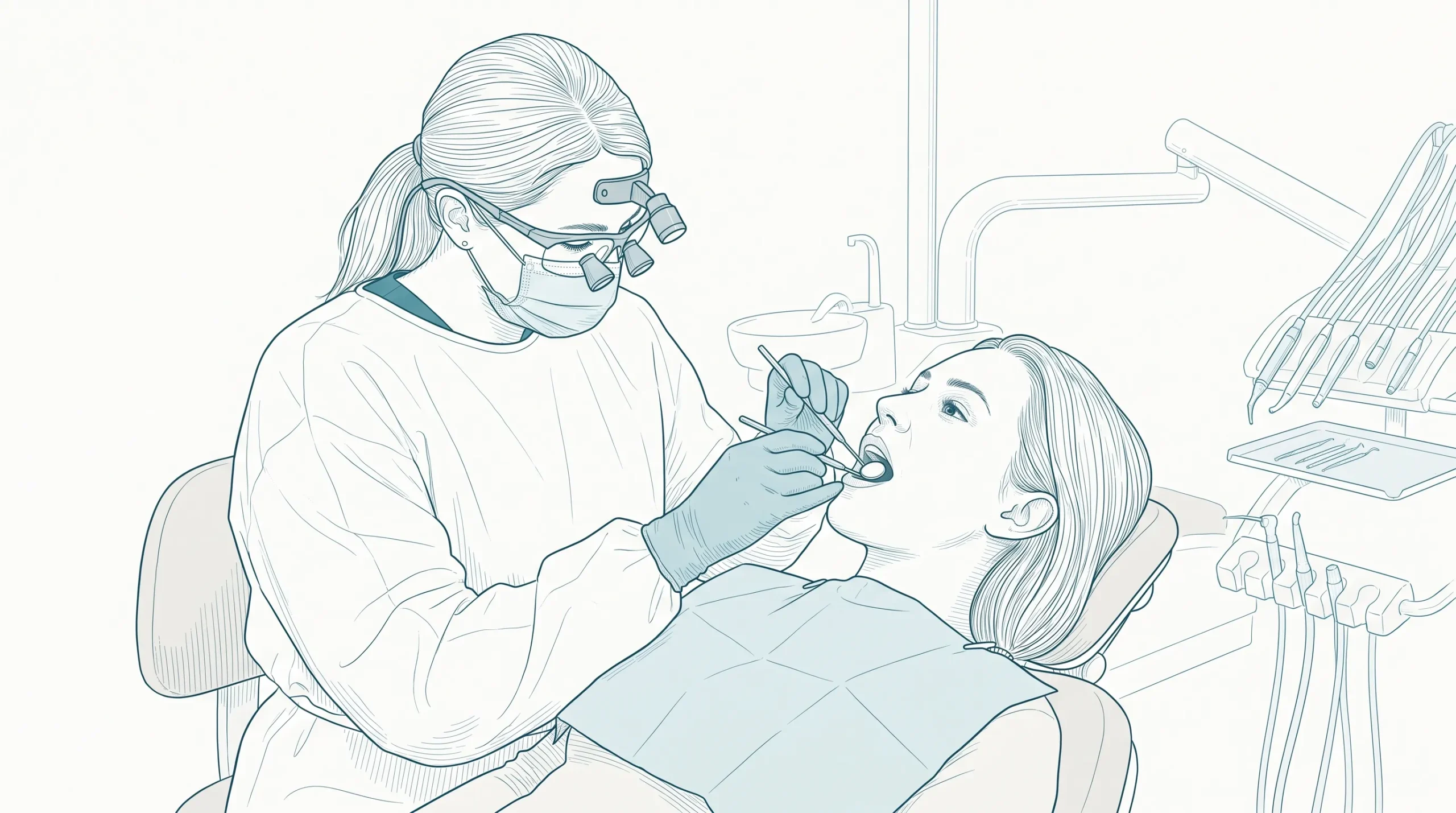
A wisdom tooth appointment usually starts with a conversation about your symptoms, medical history and any previous dental problems. Your dentist may ask when the pain started, what triggers it, whether it comes and goes and whether you have had swelling or a bad taste.
During the examination, your dentist may check:
- How much of the wisdom tooth has erupted
- Whether the surrounding gum is inflamed
- Whether food or plaque is trapped around the tooth
- Signs of decay in the wisdom tooth or neighbouring molar
- Your bite and whether the tooth is pressing on gum tissue
- Jaw opening, tenderness and facial swelling
- Whether an X-ray is needed to assess the tooth position
X-rays can help show the angle of the wisdom tooth, whether it is impacted and how close it is to important structures. For lower wisdom teeth, this may include the nerve that supplies feeling to the lower lip and chin. For upper wisdom teeth, your dentist may consider their relationship to the sinus area.
Gentle Dental Geelong explains the broader reason for assessment before treatment in its article on why a dental examination comes before teeth treatments.
Possible outcomes after a wisdom tooth assessment
After assessing the area, your dentist can explain what may be causing the symptoms and which options may be appropriate. The right approach depends on the tooth position, your symptoms, oral health, medical history and the risks and benefits of each option.
Possible outcomes include monitoring the tooth if it is not currently causing problems, cleaning the area and improving home care if the gum is mildly inflamed, or treating decay if the tooth can be predictably restored. If there are signs of spreading infection, additional care may be required. Antibiotics may be considered in some cases, but they do not remove the source of a dental problem by themselves.
Wisdom tooth removal may be discussed if the tooth is impacted, repeatedly infected, badly decayed, damaging the tooth beside it or unlikely to be kept clean. Removal is not automatically recommended for every wisdom tooth. Your dentist should explain why it may or may not be suitable for your circumstances.
If removal is being considered, the discussion should include potential benefits, alternatives and risks. Possible risks can include bleeding, swelling, infection, dry socket, jaw stiffness, sinus-related issues for upper teeth or altered sensation due to nerve irritation for some lower wisdom teeth. Experiences and recovery vary between patients.
For further reading on when extraction may be considered, see Gentle Dental Geelong’s article on when teeth removal may be the best treatment option.
What you can do while waiting for an appointment
Home care may help keep the area cleaner while you are waiting to be assessed, but it should not replace dental advice if symptoms are significant or recurring. Brush gently around the back teeth and try to remove trapped food without injuring the gum.
Warm salt water rinses may help flush the area and soothe irritated gum tissue. Use a soft toothbrush and avoid poking under the gum with sharp objects. If you use pain relief medicine, follow the label directions and check with a pharmacist, GP or dentist if you have medical conditions, are pregnant or take other medications.
Avoid putting aspirin directly on the gum or tooth, as this can irritate or burn the soft tissues. If symptoms are worsening, the gum or face is swelling, or you feel unwell, arrange professional advice rather than waiting to see if it settles.
A dental wisdom concern that keeps returning is also worth reviewing, even if symptoms calm down between episodes. Repeated inflammation can make the area difficult to manage and may affect the nearby tooth.
When to seek prompt advice in Geelong
If you live in Geelong, Newtown, Geelong West, East Geelong, Belmont, Highton or surrounding areas, it can be useful to contact a local dental clinic when symptoms make eating, sleeping or working difficult. You do not need to know whether the problem is definitely a wisdom tooth before making an appointment.
When you call, describe your symptoms clearly. Mention whether there is swelling, fever, discharge, difficulty opening your mouth, trouble swallowing or pain that is getting worse. This helps the dental team guide you on appointment timing and whether urgent medical care may be more appropriate.
At Gentle Dental Geelong, wisdom tooth concerns can be assessed as part of general dental care. If further treatment is being considered, your dentist can explain the options, limitations and possible risks based on your individual assessment.
Frequently asked questions
Do all wisdom teeth need to be removed? No. Some wisdom teeth erupt into a healthy position and can be kept clean. Removal may be considered if a wisdom tooth is causing repeated infection, decay, damage to a neighbouring tooth or other clinically relevant problems. A dentist can assess whether monitoring or treatment may be suitable.
Can wisdom tooth pain go away on its own? Mild gum irritation can sometimes settle, especially if the area is cleaned well. However, symptoms that return, worsen or include swelling, pus, fever or difficulty opening your mouth should be assessed. Temporary improvement does not always mean the underlying cause has resolved.
What does an impacted wisdom tooth mean? An impacted wisdom tooth is one that cannot come through normally. It may be trapped under the gum, angled against another tooth or partly covered by gum tissue. Some impacted teeth cause no symptoms, while others may contribute to pain, infection or decay.
Will I need an X-ray for wisdom tooth symptoms? Not always, but an X-ray may be recommended if the dentist needs to see the position, angle or root shape of the wisdom tooth. It can also help assess the tooth beside it and nearby structures before treatment options are discussed.
Is swelling around a wisdom tooth urgent? Swelling should be taken seriously, especially if it is increasing or comes with fever, difficulty swallowing, trouble breathing or feeling unwell. Seek prompt dental or medical advice if these symptoms occur.
Arrange a wisdom tooth assessment in Geelong
Wisdom tooth symptoms can be uncomfortable and confusing, particularly when pain comes and goes. A dental examination can help determine whether the issue is a wisdom tooth, gum inflammation, decay or another dental concern.
To discuss your symptoms, you can book an appointment with the team at Gentle Dental Geelong. Your dentist can assess your oral health and explain the potential benefits, risks and alternatives before any treatment is recommended.