
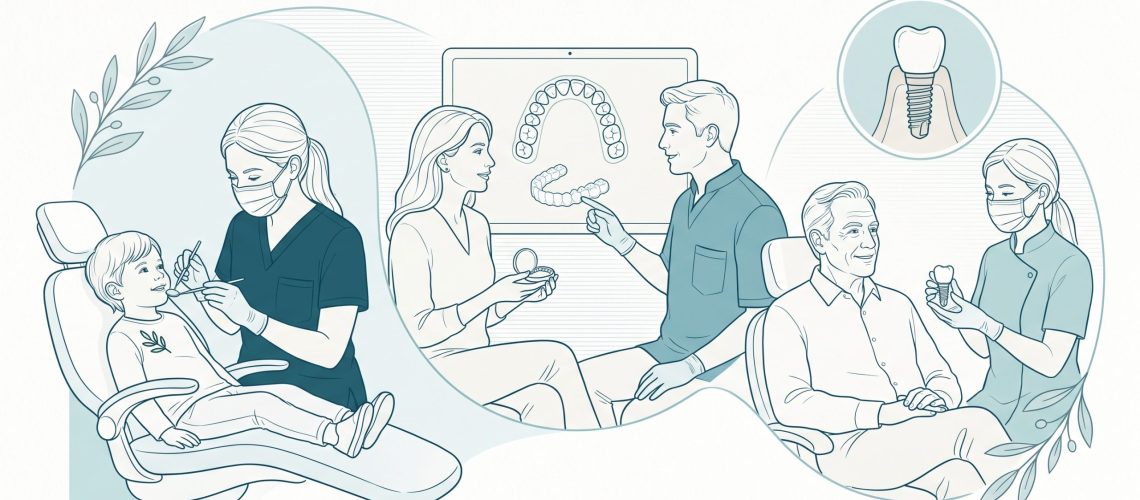
Geelong family dental care may include checking a toddler’s first teeth, monitoring a teenager’s developing bite, repairing an adult’s damaged tooth or helping an older person manage dry mouth. Age provides context, but it does not determine which treatment someone needs. Recommendations should follow an examination, a discussion of medical history and an understanding of the person’s concerns.
For families, the useful question is not simply which services are available. It is what a dentist may look for at each stage, when treatment could be appropriate and which options can reasonably be monitored instead.
What Geelong family dental care may include
Family dentistry combines prevention, assessment and treatment when needed. Some priorities remain relevant throughout life, including tooth decay, gum health and comfortable chewing. Others change as teeth develop, medical conditions arise or daily care becomes more difficult.
This overview describes possible areas of attention, not a treatment checklist:
| Life stage | What a dentist may assess | Care that may be discussed if indicated |
|---|---|---|
| Babies and toddlers | First teeth, early decay risk and oral development | Parent guidance and preventive care |
| School-aged children | Baby and adult teeth, eruption and injury risk | Decay management, fissure sealants or mouthguards |
| Teenagers | Bite development, gum health and wisdom teeth | Orthodontic assessment or wisdom tooth review |
| Adults | Gums, existing dental work and damaged teeth | Gum care, fillings or other restorative options |
| Older adults | Dry mouth, chewing, tooth wear and cleaning ability | Adapted prevention and review of tooth replacement options |
Geelong family dental care should respond to findings and individual risk, rather than automatically adding treatments as someone reaches a particular birthday.
Babies and toddlers: establishing a starting point
The Australian Dental Association’s guidance for babies and toddlers recommends a first dental visit when the first tooth appears or by 12 months of age, whichever comes first. This visit can focus on assessment and advice rather than a procedure.
A dentist may check how the first teeth are coming through, look for early signs of decay and discuss feeding patterns, cleaning and fluoride toothpaste. Fluoride is a mineral that helps protect teeth against decay. Advice about its use should be appropriate to the child’s age and circumstances.
Baby teeth matter even though they are eventually replaced. They support eating and speech and help maintain space for developing adult teeth. However, finding a concern does not mean every child needs the same treatment. The tooth’s condition, symptoms and expected time before it falls out all influence decisions.
At this stage, Geelong family dental care also gives parents an opportunity to ask about habits such as thumb sucking, tooth eruption or difficulties cleaning their child’s teeth.
School-aged children: managing two sets of teeth
Children usually spend several years with a mixture of baby and adult teeth, called mixed dentition. A tooth that looks newly erupted may already be a permanent tooth, so identifying which teeth are present is an important part of assessment.
The dentist may monitor how adult teeth are emerging, whether baby teeth are being lost as expected and whether there are signs of decay or crowding. Dental X-rays may be recommended when they are likely to provide information needed for diagnosis or treatment planning, not simply because a child has reached a certain age.
For some children, preventive options may include fissure sealants. These are protective coatings placed in the grooves of selected back teeth. Suitability depends on factors such as groove depth and decay risk, and sealants need ongoing review because they can wear or become damaged.
If a child plays contact sport or another activity with a risk of dental injury, discuss mouthguard protection. A mouthguard reduces injury risk but cannot prevent every injury.
Teenagers: development does not automatically mean treatment
During adolescence, a dentist may review gum health, tooth alignment and the way the upper and lower teeth meet. Geelong family dental care can also include discussing how sports, eating patterns or an orthodontic appliance affect oral health.
Crowded or uneven teeth do not automatically require treatment. If orthodontic care is being considered, the assessment should distinguish appearance preferences from concerns about bite, cleaning or function. Options may include braces or clear aligners, depending on the findings, and referral may be appropriate.
Gentle Dental Geelong offers Invisalign treatment. Whether it is suitable requires an individual assessment. Clear aligners require consistent wear and cleaning, can cause temporary discomfort and do not suit every orthodontic concern.
Wisdom teeth may also need review as they develop. Their presence alone is not a reason for removal. Monitoring or treatment depends on symptoms, position and evidence of problems affecting the wisdom tooth or nearby teeth. If removal is recommended, the dentist should explain the reasons, alternatives and potential risks, including infection, dry socket and nerve injury where relevant.
Adults: reviewing changes rather than replacing everything
Adult appointments often involve checking existing fillings, gum health and any new symptoms. An older filling does not necessarily need replacement if it remains sound and there is no associated problem.
When a tooth is damaged, the options depend on how much healthy tooth remains, the condition of its nerve and the forces placed on it during chewing. A filling may be appropriate in some situations. A crown, which covers the remaining tooth, may be considered in others. Root canal treatment may be discussed if the tissue inside the tooth is inflamed or infected.
Geelong family dental care should include explaining why one option is being proposed over another. Restorative procedures have limitations: fillings can cause temporary sensitivity, crowns generally require removal of tooth structure and treated teeth still need maintenance.
Medical changes also matter. Tell the dentist about pregnancy, diabetes, new medicines or changes to your health. Routine dental care can generally be provided during pregnancy, with treatment planning adjusted to individual circumstances.
Cosmetic treatment is optional. If you are interested in whitening or veneers, ask about suitability, alternatives and risks rather than assuming they are part of routine care. Whitening can cause sensitivity, while veneers may require irreversible tooth preparation.
Older adults: adapting care to health and daily function
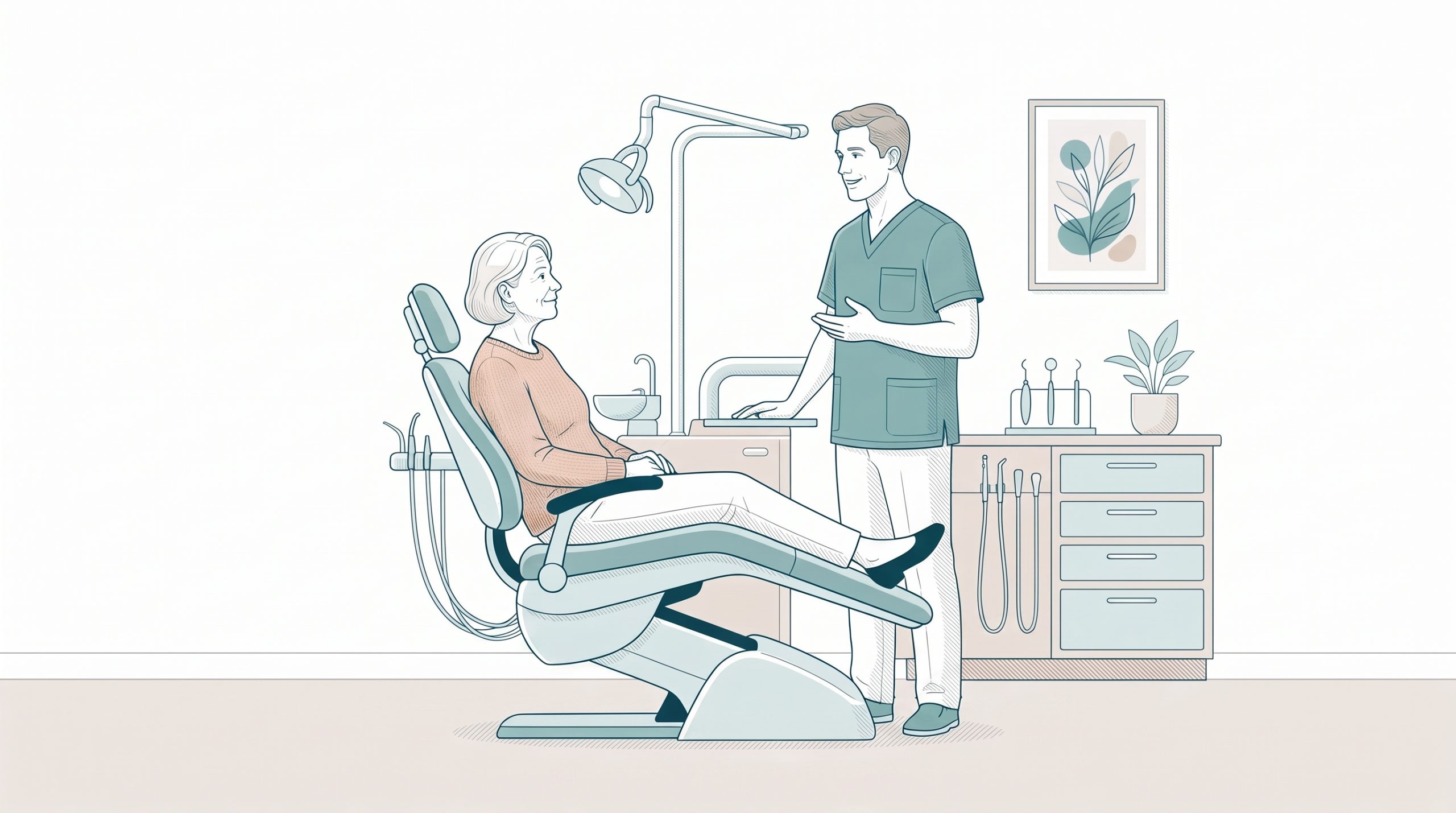
Later-life dental care is not limited to dentures or missing teeth. Many older adults retain their natural teeth, and appointments may focus on maintaining them, reviewing existing restorations and making daily cleaning manageable.
Dry mouth deserves attention. It can be associated with medicines and health conditions and may increase the risk of decay or make eating uncomfortable. The Victorian Government’s information about dry mouth explains common causes and management approaches. Do not stop a prescribed medicine without speaking with the prescribing clinician.
Reduced hand movement, arthritis or changes in memory may affect cleaning. A dentist can discuss practical adjustments, such as a different toothbrush handle or an electric toothbrush, according to the person’s needs.
Geelong family dental care may also involve reviewing chewing difficulties or an existing denture’s fit. If teeth are missing, options might include a denture, bridge or implant, but replacement is not automatically necessary in every situation. Suitability depends on oral health, function, medical history and preferences. Implants involve surgery, require ongoing maintenance and are not suitable for everyone.
What an appointment may involve at any age
A useful appointment starts with the reason for the visit. Mention pain, bleeding gums, difficulty chewing or a change you have noticed, even if the appointment was originally booked as a check-up.
The dentist may review medical history, examine the teeth and gums and recommend further assessment when needed. Our explanation of what general dental treatment may include provides more detail about examinations, cleaning and other routine care.
Before agreeing to treatment, useful questions include:
- What has been found? Ask the dentist to explain the concern in everyday language.
- What are the options? Discuss treatment, monitoring and referral where appropriate.
- What are the trade-offs? Ask about benefits, risks, likely maintenance and costs.
- How soon is a decision needed? Clarify whether the concern needs prompt attention or can be reviewed.
If anxiety, a disability or a previous difficult experience may affect the visit, mention it when arranging the appointment. Understanding how dental care is tailored to individual needs can help you prepare for that discussion.
Planning family appointments and children’s dental costs
Different family members may need different appointment lengths, assessments or review intervals. Geelong family dental care does not mean everyone should follow the same schedule. The dentist can recommend timing according to each person’s oral health and risk.
For children, the Child Dental Benefits Schedule may help cover specified basic dental services for eligible children aged 0 to 17. Eligibility rules, benefit limits and exclusions apply. Orthodontic and cosmetic dental services are not covered by the scheme.
Gentle Dental Geelong bulk bills eligible children’s dental care through the Child Dental Benefits Schedule. Before an appointment, confirm eligibility, the available benefit balance and whether the proposed services are covered. Do not assume all treatment is included.
For other care, ask for a treatment plan and cost information before proceeding. Gentle Dental Geelong also offers payment plans, with terms and suitability to be discussed with the practice.
Symptoms that should not wait for a routine review
Persistent toothache, a broken tooth, swelling or an injury should be discussed with a dental practice promptly. The team can advise how soon an assessment is needed based on the symptoms you describe.
A knocked-out adult tooth needs urgent dental care. A knocked-out baby tooth should not be replanted. If you are uncertain which type of tooth has been lost, seek immediate advice.
Swelling that affects breathing or swallowing requires emergency medical attention. Call 000 if there is an immediate threat to breathing. These situations are different from booking a routine preventive appointment.
Frequently asked questions
Does everyone in the family need a check-up every six months? Not necessarily. Review intervals should reflect individual risk, current oral health and any treatment being monitored. Ask your dentist what interval is appropriate and why.
Can one practice care for children and adults? A family practice can provide care across different ages, but some concerns may need referral. Gentle Dental Geelong offers general family dentistry alongside services including wisdom teeth removal, implants and Invisalign. Suitability is assessed individually.
Are dental X-rays needed at every visit? No. The decision depends on symptoms, examination findings, previous images and whether an X-ray would help guide care. Age alone does not determine the need.
Can I arrange Geelong family dental care if it has been years since my last visit? Yes. Tell the practice about your concerns and any symptoms when booking. An examination can establish your current needs without assuming you require extensive treatment.
Discuss your family’s current needs
To discuss a concern or arrange an assessment, you can contact Gentle Dental Geelong. Bring an up-to-date medicine list and any questions about symptoms, treatment preferences or costs. The dentist can explain which options may be appropriate, including whether monitoring rather than treatment is reasonable.