

If you are looking for a dental care dentist in Geelong because something has changed, you do not need to wait for your next routine check-up. Toothache, ongoing gum bleeding, a broken tooth or a sore that is not healing are reasons to contact a dentist and explain what you have noticed.
Some concerns need immediate attention, while others can be assessed at a scheduled appointment. The timing depends on your symptoms, how quickly they are changing and whether you can comfortably eat, drink and open your mouth.
How soon should you seek help?
Difficulty breathing or swallowing, or rapidly spreading swelling around the mouth or neck, requires emergency medical attention. Call Triple Zero (000) if breathing is affected or there is an immediate threat to life. Swelling extending towards an eye also needs urgent medical assessment.
For other dental concerns, the following guide can help you decide whom to contact. It cannot replace an individual assessment.
| What you notice | What to do |
|---|---|
| A knocked-out adult tooth, a displaced tooth or significant dental injury | Seek dental care immediately. Do not wait for a routine appointment. |
| Facial swelling, fever with dental pain or severe pain that is not settling | Contact a dentist urgently, preferably the same day. Seek emergency medical care if symptoms are spreading or you feel very unwell. |
| A broken tooth or filling, pain on biting or recurring toothache | Contact a dentist promptly and describe your symptoms so the clinic can advise on timing. |
| Repeated gum bleeding, ongoing sensitivity or a mouth sore lasting more than two weeks | Arrange an assessment rather than waiting for a distant check-up. |
| A question about tooth appearance without pain, damage or other symptoms | Discuss it at a planned appointment. Treatment may not be necessary. |
When contacting a dental care dentist, describe swelling, fever, injury or difficulty eating first. These details help the clinic assess how urgently you need to be seen.
Signs to discuss with your dental care dentist before a check-up
A symptom does not tell you its cause on its own. Similar discomfort can come from different problems, and the appropriate response may range from monitoring to treatment.
Toothache or sensitivity that keeps returning
Brief sensitivity to cold can occur for several reasons, including exposed tooth surfaces, tooth wear or decay. Pain that lingers after hot or cold food, wakes you at night or occurs when biting deserves assessment.
Tell the clinic whether the pain is constant or intermittent, whether it seems to come from one tooth and whether anything triggers it. Mention any swelling, unpleasant taste or recent dental work.
Pain settling does not necessarily mean the underlying problem has resolved. If it returns or changes, let your dentist know. Healthdirect’s guidance on toothache explains common causes and when professional care is needed.
Bleeding, swollen or uncomfortable gums
Repeated bleeding during brushing or cleaning between teeth is worth discussing, even when it does not hurt. It may be associated with gum inflammation, although other factors can contribute.
Swollen gums, persistent bad breath, gum recession or an adult tooth becoming loose also warrant an examination. Gum recession means the gum edge has moved back, exposing more of the tooth.
Continue gentle brushing and cleaning between teeth rather than stopping altogether because of bleeding. Your dentist can check your cleaning technique and assess whether further gum care is appropriate. Sudden swelling or looseness following an injury needs more prompt attention.
Broken teeth, lost fillings or changes when chewing
A chipped tooth or lost filling may expose sensitive tooth structure or leave a sharp edge. Even a painless break can need assessment, particularly if food catches in the area or the tooth feels different when you bite.
Avoid chewing hard foods on the affected side while waiting for advice. Do not use household glue or attempt to file the tooth yourself.
A dental care dentist can assess how much tooth structure remains and whether the tooth needs protection or repair. Options depend on the extent of the damage and the condition of the tooth; a small chip does not automatically require a crown or other extensive treatment.
A mouth sore, lump or patch that does not settle
Mouth ulcers often heal without dental treatment. However, a sore lasting more than two weeks, a persistent red or white patch, an unexplained lump or ongoing bleeding should be assessed.
These changes can have several causes. An examination helps determine whether local irritation, such as a sharp tooth edge or denture rubbing, is involved and whether further investigation or referral is needed.
You should also mention persistent dry mouth. Saliva helps protect teeth and oral tissues, so reduced saliva can affect comfort and oral health. Tell your dentist about your medicines, but do not stop prescribed medication without speaking with the prescribing clinician.
Wisdom tooth discomfort or difficulty opening your mouth
Pain or swelling at the back of the mouth, food repeatedly trapping around a wisdom tooth or an unpleasant taste may justify an appointment. Not all wisdom teeth need removal. Their position, surrounding gum health and effect on nearby teeth help guide decisions.
The clinic’s guide to when wisdom teeth need assessment explains this concern in more detail.
Jaw pain, locking or reduced mouth opening also deserves discussion with a dental care dentist. Clicking without pain or restricted movement does not necessarily require treatment, but a change in function should be assessed. Difficulty opening your mouth alongside swelling or fever needs urgent advice.
What a problem-focused dental appointment may involve
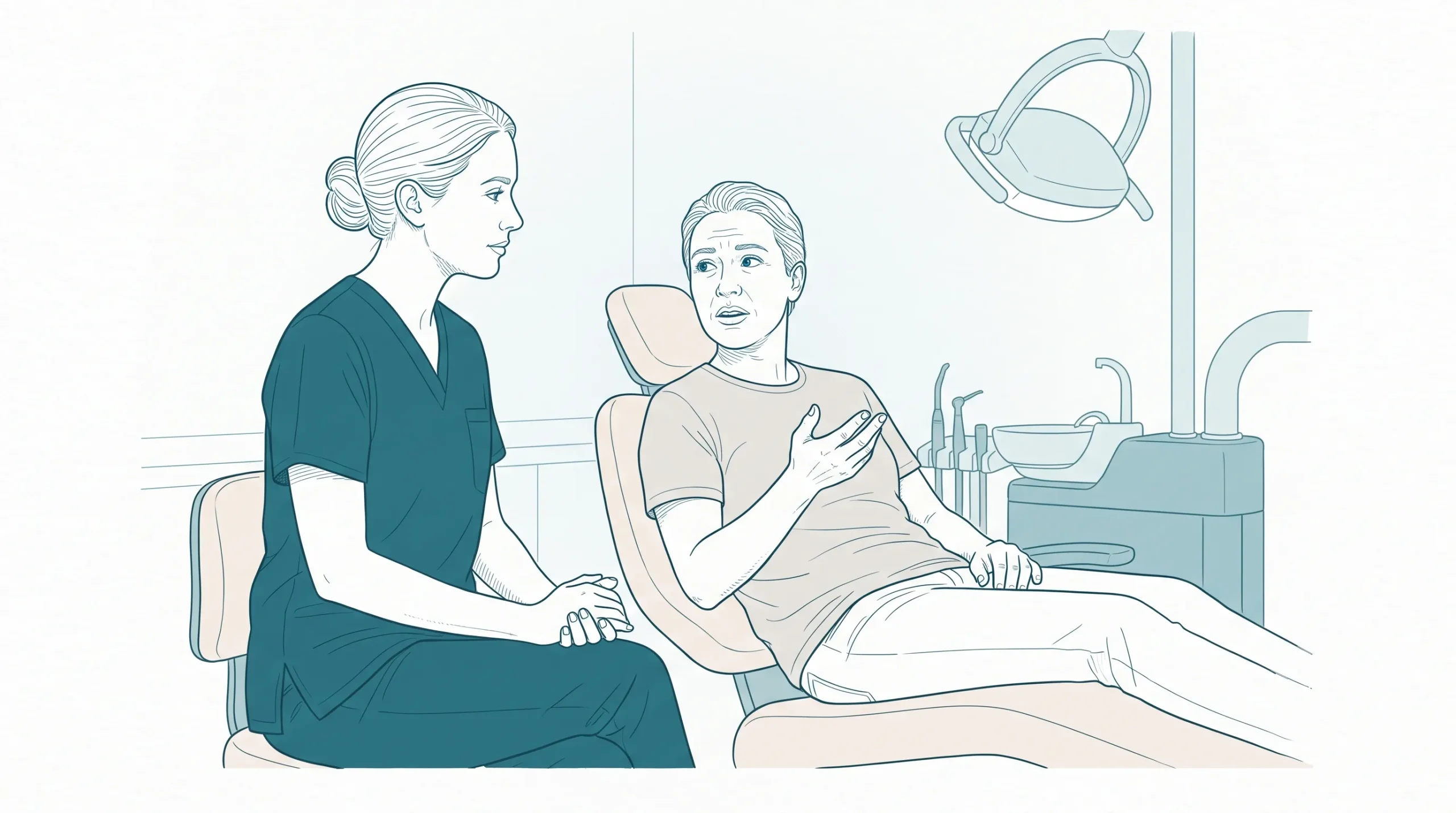
An appointment for a specific concern usually starts with questions about your symptoms: when they began, what makes them better or worse and whether they affect sleep or eating. Your dentist will also ask about relevant medical conditions, medicines, allergies and previous dental treatment.
The examination is directed towards the concern, although nearby teeth, gums or other tissues may also need checking. X-rays or other tests may be recommended when they could provide useful information; they are not automatically required at every visit.
A dental care dentist should explain what the findings suggest, whether anything remains uncertain and which next steps may be appropriate. Sometimes further investigation or a referral is needed before a diagnosis or treatment plan can be confirmed.
Depending on the findings, options may include advice, monitoring, repair, gum treatment or another procedure. All procedures carry potential risks and benefits, and suitability varies between patients. The explanation of why a dental examination comes before treatment provides more context about this decision-making process.
What you can do while waiting for an appointment
Temporary measures may make you more comfortable, but they do not establish the cause or replace assessment. While waiting:
- Continue gentle brushing with fluoride toothpaste and clean between your teeth where comfortable.
- Choose softer foods and avoid chewing on a damaged or painful tooth.
- Ask a pharmacist whether an over-the-counter pain medicine is suitable for you, and follow the label directions.
- Do not place aspirin directly on a tooth or gum, as it can damage the tissue.
- Contact the clinic again if swelling, fever, worsening pain or other new symptoms develop.
If an adult tooth is knocked out, handle it by the crown, not the root, and seek immediate dental advice. If it cannot be put back safely, keep it moist in milk while getting help. Never put a knocked-out baby tooth back into its socket. Healthdirect’s dental injury advice explains the immediate steps.
For everyday prevention once the immediate concern has been addressed, see the clinic’s advice on caring for your teeth between dental visits.
Questions to ask before agreeing to treatment
You can ask what the proposed treatment is intended to address, what alternatives exist and what may happen if you choose to monitor the problem instead. Monitoring is appropriate for some findings, but not for every condition.
Ask about the likely benefits, risks, recovery needs and costs. It is also reasonable to ask whether care can be staged, provided that delaying part of it would be clinically appropriate.
Let your dental care dentist know if anxiety, previous experiences, finances or medical needs affect your choices. Discussing these circumstances helps inform a realistic plan. For non-urgent decisions, you can ask for time to consider the information or seek a second opinion.
Frequently asked questions
Should I wait until my next check-up if the pain is mild? Not necessarily. Mild pain that keeps returning, persists or occurs when biting is worth discussing with a dentist. Call the clinic, describe it and ask about suitable appointment timing.
Can I need dental care even if nothing hurts? Yes. Repeated gum bleeding, a broken filling, a loose adult tooth or a persistent mouth change can need assessment without pain. Your dental care dentist can advise whether treatment, monitoring or further investigation is appropriate.
Does an assessment mean I have to agree to treatment? No. An assessment allows the dentist to explain the findings and options. You can ask questions before deciding, including whether delaying treatment carries risks.
How often should I have routine check-ups? The interval depends on your oral health and individual risk factors. Follow the schedule discussed with your dentist, but contact the clinic sooner if new symptoms develop.
Arranging an assessment in Geelong
If you have noticed a change, contact Gentle Dental Geelong and explain your symptoms, how long they have been present and whether they are worsening. The team can advise on appointment timing. An examination can help establish the cause and clarify which options may be appropriate for your circumstances.