

If the thought of a dental appointment makes your shoulders tense, you are not alone. For anxious patients, gentle dental care can mean being listened to, having treatment explained in plain language and having choices wherever clinically appropriate. It does not mean a dental visit is guaranteed to feel a certain way. Rather, it describes an approach that aims to reduce avoidable stress while still providing safe, appropriate care for your teeth, gums and overall oral health.
Dental anxiety can affect people for many reasons, including previous experiences, fear of discomfort, embarrassment about oral health, a strong gag reflex or feeling out of control in the dental chair. The Better Health Channel explains that dental anxiety and phobia can lead some people to delay care, which may allow dental problems to become more complex over time.
How gentle dental care can support anxious patients
A gentle approach is not one specific treatment. It is a way of planning and delivering dentistry that recognises the person, not just the tooth. This may include slowing down, checking understanding, explaining sensations before they happen and giving the patient time to ask questions.
For many people, the most reassuring part is predictability. Knowing what the appointment may involve can reduce the fear of the unknown. Gentle Dental Geelong has written separately about why some people feel afraid of the dentist and how open communication can help make appointments feel more manageable.
Importantly, gentle dental care still needs to be clinically appropriate. Your dentist should assess your oral health, discuss relevant options and explain the potential benefits, limitations and risks before recommending treatment.
What dental anxiety can feel like
Dental anxiety is different for each person. Some patients feel mildly nervous before a check-up, while others may avoid booking until they have pain or swelling. Anxiety may show up as a racing heart, sweating, difficulty sleeping before an appointment, nausea or a strong urge to cancel.
It can also be linked with specific triggers, such as dental sounds, needles, the feeling of instruments in the mouth or concerns about being judged. Some people feel anxious because they have not visited a dentist for many years and are unsure what will be found.
This is where gentle dental care can be useful. Rather than assuming all patients want the same appointment style, your dental team can ask what worries you most and adapt the appointment where it is safe and practical to do so.
What a gentle first appointment may involve
For anxious patients, the first appointment does not always need to involve treatment. Depending on the reason for your visit, it may begin with a conversation about your concerns, medical history, previous dental experiences and what you would like to achieve.
A dentist may then examine your teeth, gums, bite and jaw. X-rays may be recommended if they are needed to see areas that cannot be checked visually, such as between teeth or below the gumline. Your dentist should explain why any X-rays are suggested and how the information may guide care.
If you are unsure what a routine visit may include, this overview of general dental treatment explains common parts of an appointment, including check-ups, cleaning, fillings, gum care and treatment planning.
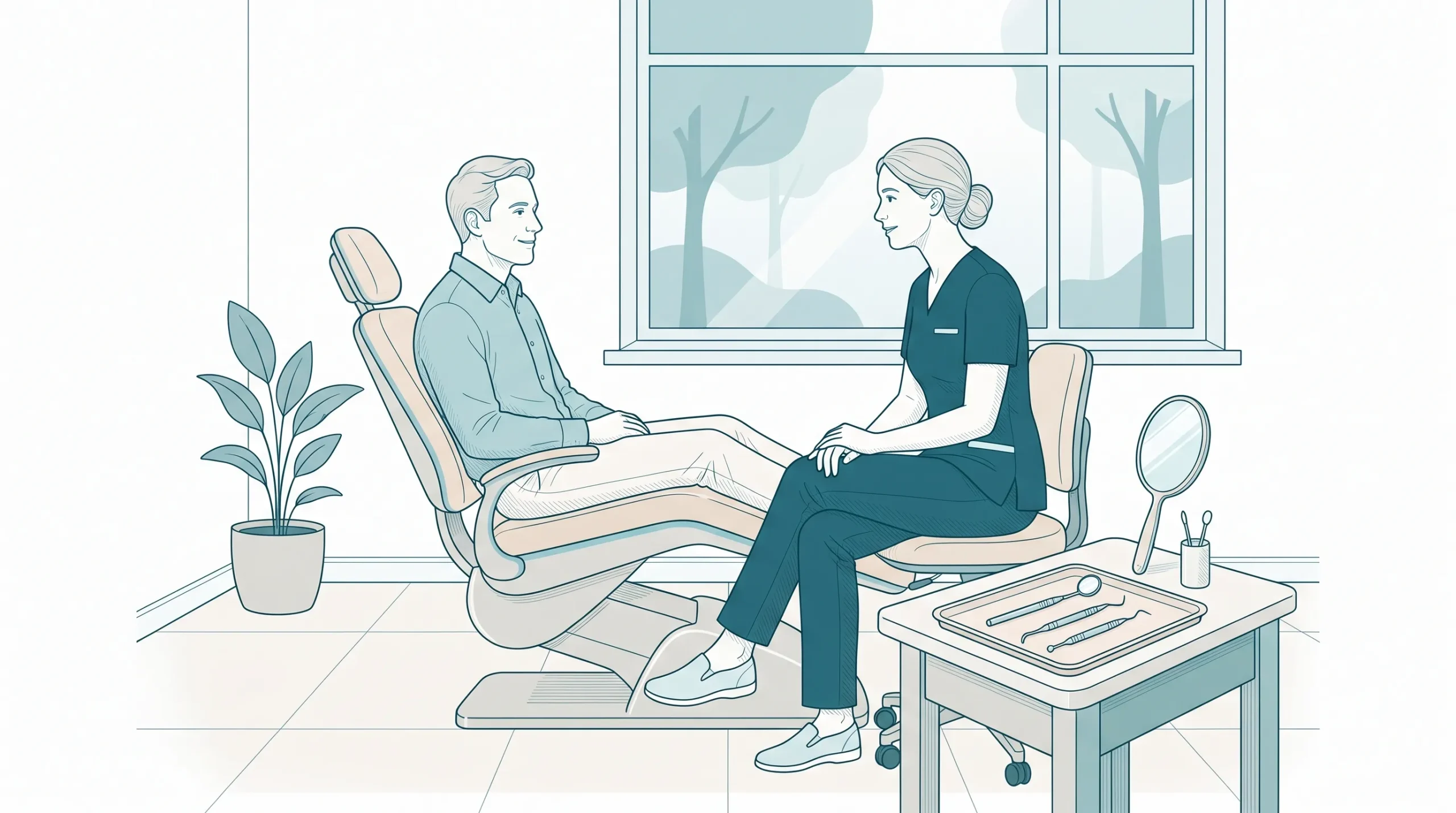
A gentle dental care appointment may also include agreeing on a signal, such as raising your hand, if you need a pause. This does not replace clinical judgement, but it can help you feel more involved in the appointment.
Communication, consent and control
Clear communication matters because anxiety often increases when patients feel surprised or rushed. Before treatment, your dentist should explain what the issue is, what options may be available, what may happen if treatment is delayed and any relevant risks or alternatives.
Informed consent is also more than signing a form. It means you have had a reasonable opportunity to understand the proposed treatment and ask questions before deciding whether to proceed. You can ask your dentist to use simpler wording, show you images or break information into smaller steps.
Good gentle dental care includes respecting that patients may need time to think. In non-urgent situations, you may be able to take information home, consider costs and discuss options before making a decision.
| Anxiety concern | Gentle approach that may help | What to keep in mind |
|---|---|---|
| Fear of not knowing what will happen | A plain-language explanation before the examination or treatment begins | Some findings may only be clear after an assessment |
| Worry about discomfort | Discussion of numbing options and what sensations may still be felt | Local anaesthetic reduces sensation, but experiences vary |
| Feeling out of control | An agreed pause signal and regular check-ins | Treatment may still need to follow safe clinical steps |
| Embarrassment about oral health | A respectful, practical discussion focused on current needs | Dentists commonly see a wide range of dental concerns |
| Difficulty sitting for long appointments | Shorter appointments may be considered where appropriate | Some procedures require enough time to be completed safely |
Options that may be discussed for anxious patients
The right approach depends on your health, the treatment required and the level of anxiety you experience. There is no single option that suits everyone.
Some patients prefer starting with a simple examination and no treatment on the first visit. Others may feel better with short appointments, extra explanation, music or bringing a support person where this is appropriate for the setting.
For some anxious patients, gentle dental care may also include discussing sleep dentistry or sedation. Gentle Dental Geelong offers sleep dentistry, but suitability needs to be assessed carefully. Sedation can involve benefits and risks, and your dentist will need to consider your medical history, medications, the treatment being planned and whether sedation is clinically appropriate.
Local anaesthetic may also be used for many dental procedures. It is intended to reduce sensation in the treatment area. Your dentist can explain what numbness may feel like, how long it may last and what to do while your mouth is still numb after the appointment.
Preparing for an appointment when you feel nervous
Preparation can make the appointment feel more structured. You do not need to solve your anxiety before seeing a dentist, but sharing the right information can help your dental team plan the visit more thoughtfully.
Consider writing down what you want the dentist to know before you arrive. This may be easier than trying to explain everything while you are already nervous. If you would like a practical framework, this article on taking an active role in your dental care explains how to prepare questions and share relevant information.
Useful things to mention may include:
- What specifically makes dental visits difficult for you
- Any previous dental experiences that affected you
- Whether you have a strong gag reflex or difficulty lying back
- Medical conditions, allergies and medications
- Whether you prefer detailed explanations or only essential information
- Any questions about costs, appointment length or treatment choices
This kind of preparation supports gentle dental care because it gives your dentist more context. It also helps shift the appointment from something that happens to you into a discussion you can take part in.
When dental anxiety should not delay assessment
It is understandable to put off care when you feel anxious. However, some symptoms should be assessed promptly because they may indicate infection, trauma or another issue that needs timely attention.
You should consider seeking dental or medical advice as soon as practical if you have facial swelling, severe or worsening toothache, pus, fever, bleeding that does not settle, a knocked-out adult tooth or difficulty swallowing or breathing. If breathing or swallowing is affected, seek urgent medical care.
This advice is not intended to diagnose your symptoms. A dental examination can help determine the likely cause and whether treatment, monitoring or referral may be appropriate.
Choosing a dentist in Geelong if you are anxious
If you live in Geelong, Newtown, Geelong West, East Geelong, Belmont, Highton or nearby areas, it can be helpful to look for a practice where communication feels clear and respectful. You may wish to ask how the practice supports anxious patients, whether longer consultation time can be arranged, what sedation options may be available and how treatment plans are explained.
When you contact Gentle Dental Geelong, you can let the reception team know you are nervous about dental care. They can guide you on booking an appointment for an assessment and note your concerns for the dental team.
For anxious patients, gentle dental care is often built through small, practical steps: a clear conversation, a careful examination, a treatment plan that makes sense and an opportunity to ask questions before deciding what happens next.
Frequently Asked Questions
Is gentle dental care the same as painless dentistry? No. Dental care should aim to reduce unnecessary discomfort where possible, but no treatment experience can be guaranteed to be painless. Your dentist can discuss numbing, pacing and other options that may help depending on your treatment and individual needs.
Can I book just to talk about my dental anxiety? In many cases, a first appointment can include discussing your concerns before any treatment is planned. The exact structure will depend on your reason for visiting, your oral health needs and whether urgent symptoms are present.
What if I feel embarrassed about not seeing a dentist for years? Many people delay dental visits for different reasons. A dentist’s role is to assess your current oral health, explain findings respectfully and discuss suitable options, not to shame you.
Is sleep dentistry suitable for all anxious patients? Not always. Sleep dentistry or sedation may be considered for some patients, but suitability depends on medical history, medications, the procedure being planned and other safety factors. Your dentist can explain potential benefits, risks and alternatives.
How can I tell my dentist I need a break? You can ask before treatment begins to agree on a simple pause signal, such as raising your hand. This can help you communicate during the appointment, although your dentist still needs to follow safe clinical procedures.
Discussing dental anxiety with Gentle Dental Geelong
If dental anxiety has made it harder to arrange care, a calm assessment can be a useful first step. Your dentist can listen to your concerns, check your oral health and explain which options may be appropriate for your circumstances.
To discuss gentle dental care in Geelong, you can contact Gentle Dental Geelong to arrange an appointment. Treatment recommendations will depend on your individual oral health, medical history, symptoms and preferences.