
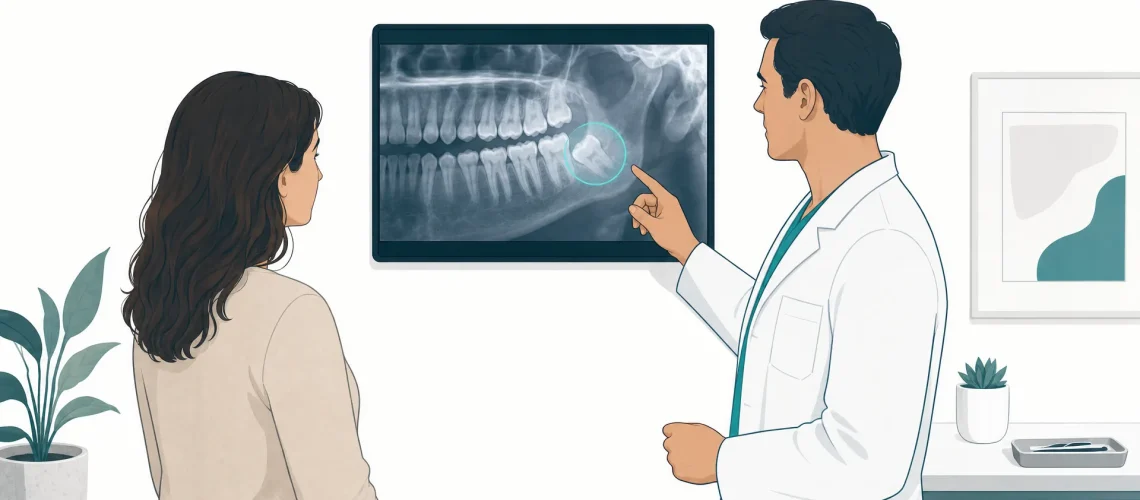
If you are searching for a wisdom dentist because the back of your jaw is sore, swollen or hard to clean, it is worth arranging a dental assessment rather than guessing what is happening. Wisdom teeth can be quiet for years, but they can also cause gum inflammation, decay, infection or pressure around the back molars when there is not enough room for them to come through properly.
A dentist can check whether your symptoms are actually coming from a wisdom tooth, whether an X-ray is needed, and whether monitoring, cleaning, medication, removal or referral may be appropriate for your situation.
What are wisdom teeth?
Wisdom teeth are the third molars at the very back of the mouth. They often start coming through in the late teenage years or early adulthood, although timing varies. Some people have all four wisdom teeth, some have fewer, and some never develop them.
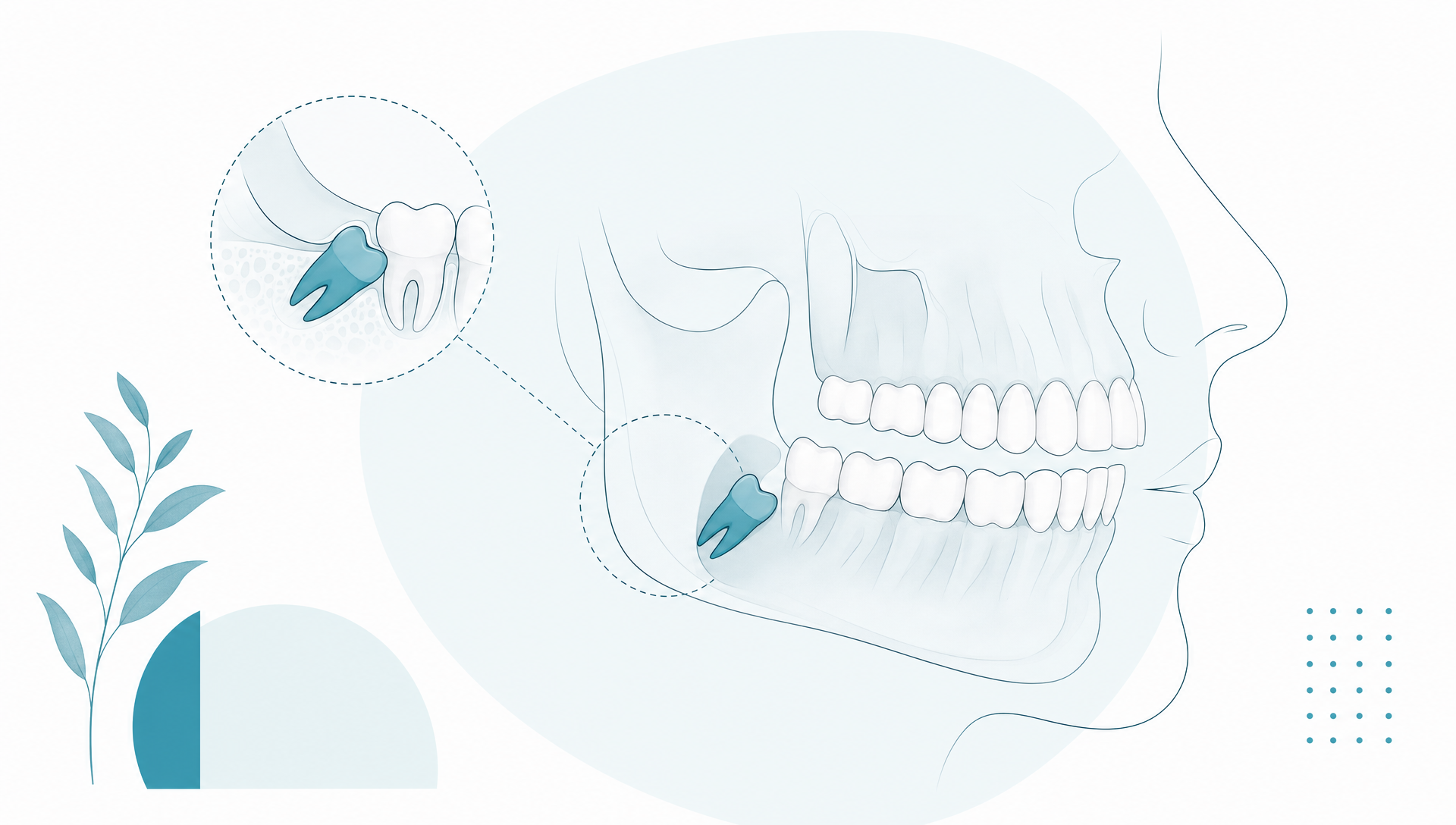
A wisdom tooth may come through normally, partly emerge, or remain under the gum. When a tooth is trapped or unable to come through in a healthy position, it is often called impacted. Impacted or partly erupted wisdom teeth can be harder to clean, which may increase the chance of gum irritation, food trapping, decay or infection.
Importantly, not every wisdom tooth needs to be removed. Some can be monitored if they are healthy, functional, easy to clean and not affecting nearby teeth. The right approach depends on your mouth, symptoms, X-ray findings, general health and treatment preferences.
When should you see a dentist about wisdom teeth?
You should book a dental appointment if you have new, recurring or worsening symptoms around the back of your mouth. This is especially important if the symptoms keep returning after settling for a few days, as repeated episodes can suggest an underlying cleaning problem or lack of space.
Common reasons to see a dentist about wisdom teeth include:
- Pain or tenderness at the back of the jaw
- Swollen, red or irritated gum around a partly erupted tooth
- Food repeatedly getting trapped behind the last molar
- Bad taste, bad breath or discharge near the gum
- Difficulty opening your mouth fully
- Pain when chewing near the back teeth
- Swelling of the cheek, jaw or gum
- Decay in the wisdom tooth or the tooth in front of it
- Jaw stiffness or pressure that does not settle
If your symptoms are mild but persistent, a routine appointment is usually appropriate. If swelling, fever, spreading infection or difficulty swallowing occurs, prompt professional advice is important.
The Australian Dental Association’s patient resource Teeth.org.au explains that wisdom teeth may cause problems when they do not have enough room to come through properly, which is why an assessment can be helpful even before symptoms become severe.
Signs that need prompt dental advice
Some wisdom tooth symptoms may indicate infection or another issue that should be assessed sooner rather than later. Seek prompt dental care if you notice facial swelling, swelling that is spreading, fever, pus, a bad taste that keeps returning, or increasing difficulty opening your mouth.
If you have trouble breathing, trouble swallowing, rapidly increasing facial swelling or feel very unwell, seek urgent medical attention. These symptoms are not common, but they can occur with significant dental infections and should not be ignored.
The table below gives a general guide. It is not a diagnosis, and symptoms can overlap with other dental conditions.
| Symptom or situation | What it may suggest | What to do |
|---|---|---|
| Mild gum tenderness behind the last molar | Erupting wisdom tooth, food trapping or gum irritation | Book a dental check if it lasts more than a few days or keeps returning |
| Recurrent swelling around a partly erupted wisdom tooth | Possible gum infection or inflammation around the tooth | Arrange a dental assessment to identify the cause |
| Bad taste, pus or persistent bad breath from the area | Possible infection or trapped debris | Seek dental advice promptly |
| Difficulty opening the mouth, fever or facial swelling | Possible spreading infection or significant inflammation | Contact a dentist promptly, or seek urgent medical care if severe |
| No pain, but wisdom teeth visible or partly visible | May be healthy, or may be difficult to clean without obvious symptoms | Ask your dentist whether monitoring or X-rays are appropriate |
What a wisdom dentist may check at your appointment
People often use the phrase “wisdom dentist” when they are looking for a dentist who can assess wisdom teeth and explain whether removal may be needed. During an appointment, your dentist will usually start by asking about your symptoms, how long they have been present, whether they come and go, and whether you have had previous infections or dental treatment in that area.
Your dentist may then examine the gum, the wisdom tooth, the molar in front of it and how your teeth come together when you bite. They may also check whether the area is difficult to clean or whether the wisdom tooth is affecting the adjacent tooth.
An X-ray may be recommended if the wisdom tooth is partly erupted, impacted, painful, decayed or difficult to examine fully. A common dental X-ray used for wisdom teeth is an OPG, which shows the teeth, jaws and surrounding structures in a broad view. In some cases, additional imaging may be considered if the roots appear close to important nerves or other structures.
At Gentle Dental Geelong, a wisdom teeth consultation can help clarify what is happening and whether treatment should be considered. If your concern turns out to involve another tooth rather than a wisdom tooth, your dentist can explain the likely cause and suitable next steps.
Does wisdom tooth pain always mean removal?
No. Wisdom tooth pain does not automatically mean the tooth needs to be removed. Sometimes discomfort is related to temporary gum inflammation while the tooth is erupting. In other cases, pain may come from decay, infection, a cracked tooth, gum disease, jaw joint strain or another dental issue.
Possible options may include:
- Monitoring the tooth if it is healthy and not causing problems
- Improving cleaning access around the back molars
- Managing gum inflammation or infection when clinically appropriate
- Repairing decay if the tooth is restorable and accessible
- Removing the wisdom tooth if the risks of keeping it outweigh the risks of extraction
- Referral for more complex cases, depending on anatomy and clinical findings
Antibiotics may sometimes be used when there are signs of spreading infection or specific clinical indications, but they do not remove the source of a dental problem. Your dentist can advise whether medication is appropriate and whether further treatment is needed.
If tooth removal is being discussed, it can also be useful to understand the broader reasons a tooth may be removed. Gentle Dental Geelong has a patient guide on when teeth removal may be considered, including situations where a tooth is badly damaged, infected or causing ongoing problems.
Why early assessment can be useful, even without severe pain
Wisdom teeth can sometimes damage nearby teeth or develop decay before pain becomes obvious. This is because the area is hard to see and clean, especially when the tooth is partly covered by gum or angled into the molar in front.
A dental check can help identify whether a wisdom tooth is:
- Coming through in a position that can be cleaned
- Pressing against or trapping food near the second molar
- Associated with gum inflammation
- Affected by decay
- Close to nerves or sinuses, which may influence treatment planning
- Better monitored rather than treated immediately
For teenagers and young adults, dentists may sometimes discuss wisdom teeth during routine check-ups, especially if the teeth are visible on X-rays or symptoms are starting. For adults, wisdom teeth can still become troublesome later, particularly if cleaning becomes difficult, gum pockets develop or decay starts.
This is where regular preventive care matters. A general dentist can monitor changes over time, discuss oral hygiene strategies and identify issues before they become more complex. If you would like more context about ongoing care, this article on what a general dentist can do for your oral health explains how routine dental visits support prevention and early diagnosis.
What if you feel nervous about wisdom tooth treatment?
It is common to feel uneasy about wisdom teeth, especially if you have heard difficult stories from friends or family. The experience varies widely because wisdom teeth differ in position, root shape, gum coverage and closeness to nerves or sinuses.
A dental consultation does not commit you to treatment. It is an opportunity to understand what is happening, ask questions and consider your options. You can ask your dentist to explain the X-ray, discuss the expected difficulty of treatment, outline alternatives, and describe possible risks and recovery considerations.
For some patients, comfort options may be discussed as part of treatment planning. Suitability depends on your medical history, the procedure and the dental setting. No option can guarantee a particular experience, but clear communication can make the process easier to understand and plan.
If dental anxiety has stopped you from booking an appointment, Gentle Dental Geelong has a helpful article on feeling less afraid of the dentist that covers practical communication strategies, including asking for explanations and agreeing on a stop signal.
What are the possible risks of wisdom tooth removal?
All dental procedures carry potential risks and benefits. If removal is being considered, your dentist should explain the risks that are relevant to your tooth and anatomy.
Possible risks may include bleeding, swelling, bruising, infection, dry socket, jaw stiffness, temporary or rarely longer-lasting altered sensation, sinus involvement for upper wisdom teeth, and damage to nearby teeth or restorations. The likelihood and significance of these risks vary between patients.
The complexity of removal can depend on factors such as tooth angle, root shape, depth in the jaw, age, bone density, infection, and how close the tooth sits to nearby nerves. This is why an examination and appropriate imaging are important before deciding whether removal is suitable.
It is also reasonable to ask what may happen if the wisdom tooth is left in place. For some patients, monitoring may be a sensible option. For others, ongoing infection, decay, food trapping or damage to the tooth in front may make removal worth considering.
Choosing where to book a wisdom teeth assessment
For Geelong patients, choosing a local dental clinic can make assessment, treatment planning and follow-up more convenient. This may be particularly useful if symptoms flare up or if a review appointment is recommended after treatment.
People in Newtown, Geelong West, East Geelong, Belmont, Highton and surrounding areas may prefer a Geelong appointment for practical reasons, while patients who spend most of their week elsewhere may choose care closer to work or study. For example, if you are based in the city rather than Geelong, seeing a Melbourne CBD dentist may be more convenient for assessment and follow-up.
Wherever you book, look for a clinic that explains your options clearly, discusses risks and alternatives, and gives you time to make an informed decision.
Questions to ask your dentist
Before deciding on treatment, it can help to write down your questions. You might ask:
- Is the wisdom tooth healthy, impacted or partly erupted?
- Is it affecting the tooth in front?
- Do I need an X-ray, and what does it show?
- What are the options if I leave it alone for now?
- What are the potential benefits and risks of removal in my case?
- Would the procedure be simple or more complex?
- What should I expect during recovery if removal is recommended?
- Are there any comfort options suitable for me?
- Would referral be appropriate for my situation?
A good discussion should leave you with a clearer understanding of why a treatment is or is not being recommended.
Frequently asked questions
Can a dentist tell if my wisdom teeth need to come out? A dentist can assess your symptoms, examine the area and review X-rays if needed. They can then explain whether monitoring, treatment or removal may be appropriate. A recommendation depends on your individual oral health, anatomy and risk factors.
Should I see a dentist if my wisdom tooth pain comes and goes? Yes, recurring pain is worth checking. Symptoms that settle and return may suggest food trapping, gum inflammation, decay or infection around a partly erupted wisdom tooth. A dental assessment can help identify the cause.
Is swelling around a wisdom tooth serious? Swelling can occur with gum inflammation or infection. Mild local swelling should be assessed if it persists or returns. Facial swelling, fever, difficulty opening your mouth, or trouble swallowing needs prompt professional advice.
Do wisdom teeth have to be removed before they cause pain? Not always. Some wisdom teeth can be monitored if they are healthy, positioned well and easy to clean. In other cases, removal may be considered before severe symptoms develop if there is decay, infection risk or damage to nearby teeth.
What age should wisdom teeth be checked? Wisdom teeth often develop or erupt in the late teens and twenties, but timing varies. They may be discussed during routine dental visits if symptoms arise, if teeth are visible in the mouth, or if X-rays show possible impaction.
When to book an appointment in Geelong
Consider booking a dental appointment if you have pain, swelling, bad taste, food trapping, difficulty cleaning the back teeth, or concerns about wisdom teeth shown on a previous X-ray. You do not need to wait for severe pain before asking for advice.
A dental examination can help determine whether your symptoms are related to wisdom teeth and which options may be appropriate. To discuss your concerns, you can arrange an assessment with the team at Gentle Dental Geelong in Geelong, Victoria.